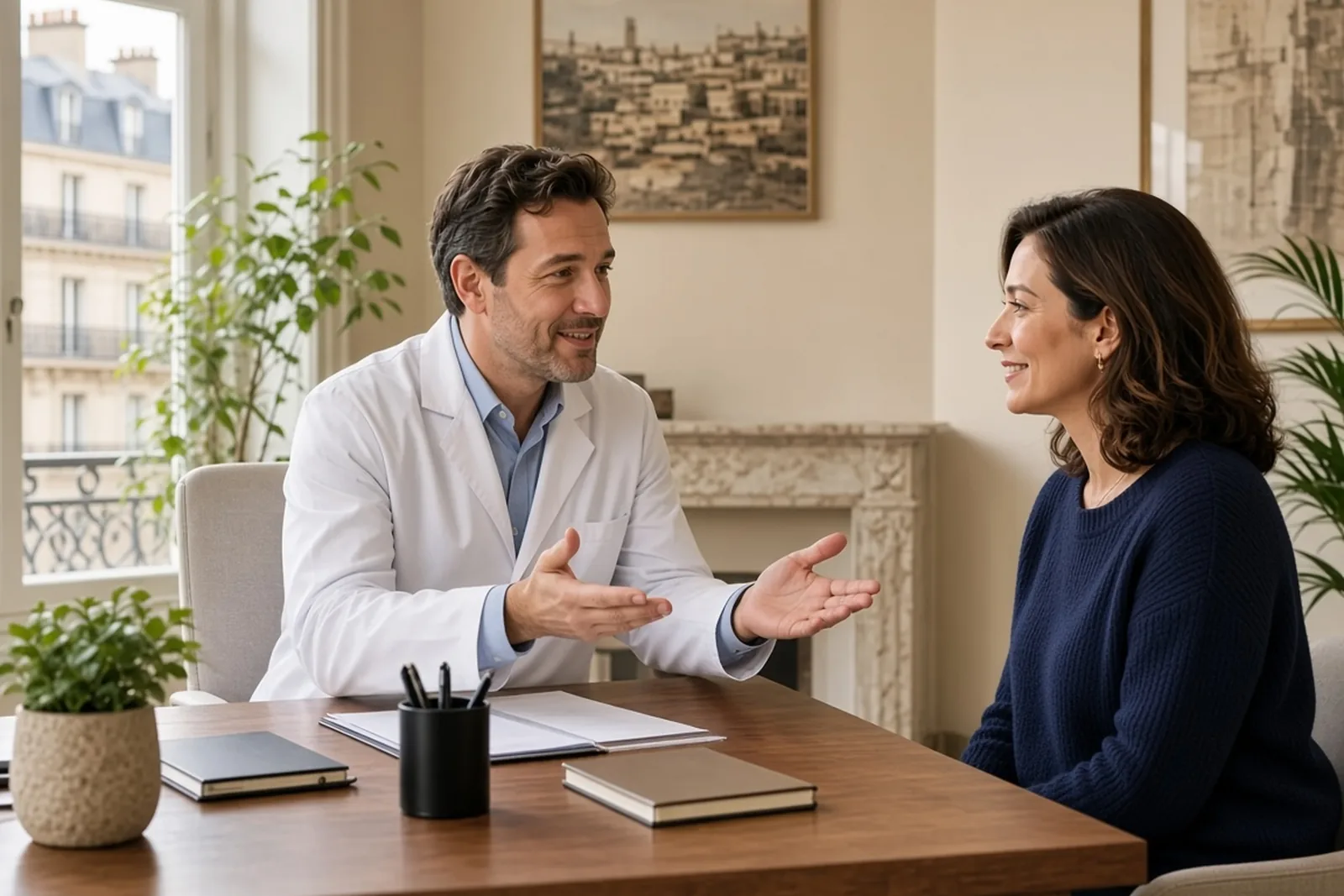


When you learn you have breast cancer, choosing your surgeon suddenly becomes one of the most important decisions you will make. And yet, few patients truly know what distinguishes an experienced senology surgeon from a general surgeon. All websites look alike.
All practitioners speak of "expertise". How can you really tell the difference?
The reality is that breast cancer surgery is a true sub-specialty in its own right, requiring specific training (in comprehensive cancer centres), regular practice, and mastery of modern techniques such as oncoplasty, the sentinel node, or immediate reconstruction. Not all authorised surgeons have the same training pathway nor the same dedicated experience in breast surgery.
This article is not intended to direct you towards any particular surgeon. It gives you objective criteria to evaluate the profile of the surgeon you will consult, to ask the right questions, and to feel legitimate in asking for a second opinion if necessary.
📍 The 8th arrondissement of Paris · Neuilly ✅ Multidisciplinary team meeting (MDT) mandatory 📞 +33 1 58 05 11 24
Need a surgical opinion quickly?
Dedicated breast cancer consultation · Usual delay 48 to 72 hours maximum
The 6 criteria for choosing your breast surgeon well

Beyond the diploma, these six elements help you concretely evaluate the profile and practice of the surgeon you are consulting. Do not hesitate to discuss them during your consultation: a serious surgeon will answer these questions with transparency.
Genuine senology specialisation
Initial training in gynaecology-obstetrics or general surgery, complemented by a pathway in a comprehensive cancer centre and/or a DESC (French post-specialty diploma) in gynaecological cancer surgery. Surgical senology cannot be improvised: it is a sub-specialisation validated by a dedicated curriculum.
Practice dedicated to breast pathology
A surgeon who regularly operates on breast cancer masters the nuances of every situation: central tumour, multifocal, young patient, BRCA (breast cancer susceptibility gene) mutation, recurrence… Regularity makes the quality of the gesture, the operative judgement and the decision-making.
INCa institutional authorisation
Only institutions holding INCa authorisation can legally perform breast cancer surgery in France. This authorisation requires a minimum annual activity threshold and a structured multidisciplinary framework. This is the first thing to check.

Systematic MDT review
The Multidisciplinary Team meeting (MDT) brings together a surgeon, oncologist, radiation oncologist, radiologist, and pathologist around your case. It is mandatory for any breast cancer and ensures no decision is made in isolation. You must have written confirmation of this.
Mastery of modern techniques
Oncoplasty, sentinel node, immediate reconstruction, ERAS (enhanced recovery after surgery): these techniques are not universally mastered. Yet they radically change the aesthetic outcome and the quality of life after the operation.
Integrated multidisciplinary team
Specialised anaesthetists, nurse coordinators, psycho-oncologists, lymphoedema-trained physiotherapists, areola pigmentation, patient associations… The ecosystem around the surgeon matters as much as the surgeon themselves.
The importance of senology specialisation
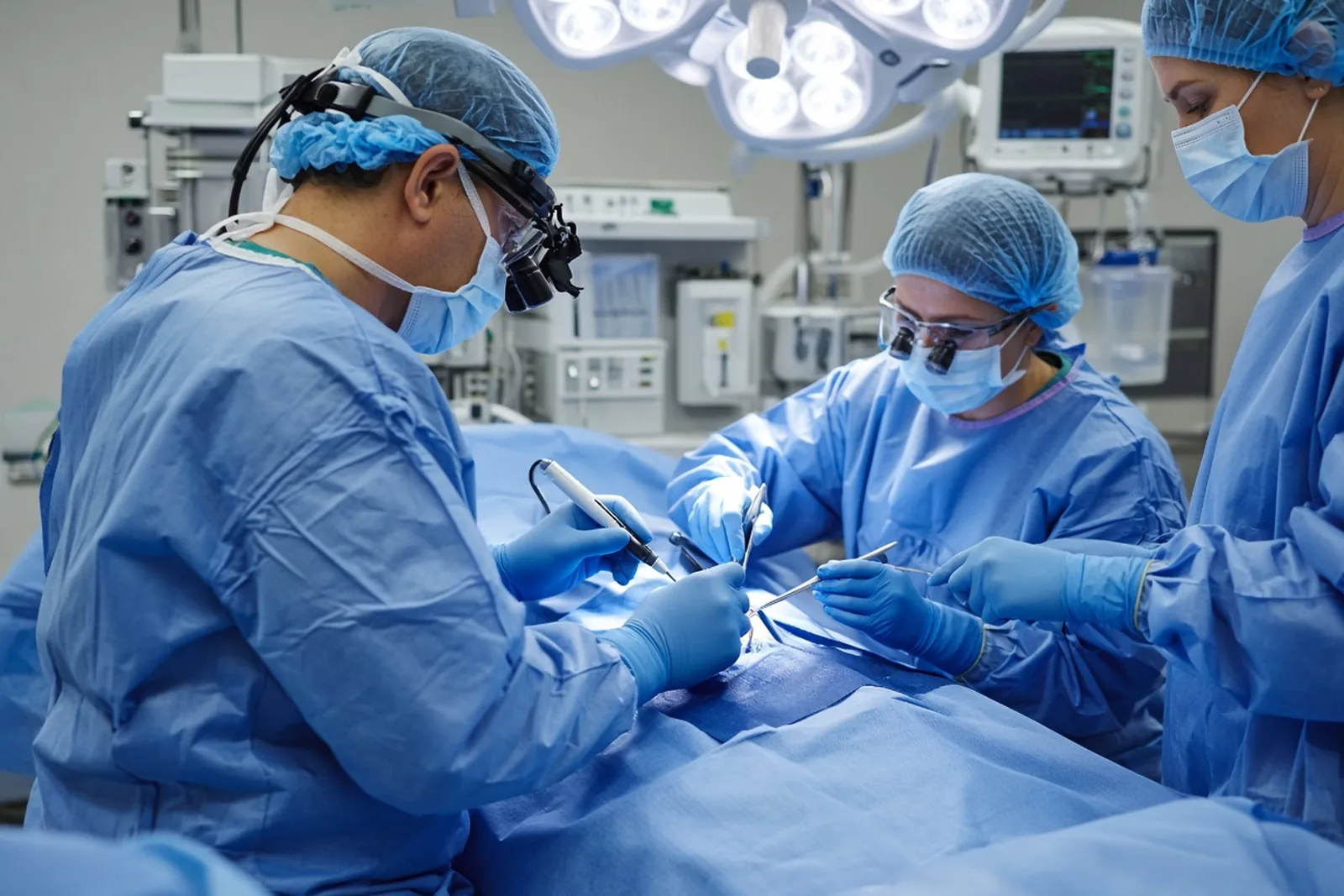
Breast surgery is today recognised as a surgical sub-specialty in its own right. It relies on constantly evolving techniques and close coordination with medical oncology, radiotherapy, radiology, and pathology.

Modern surgical senology has evolved considerably over the past twenty years. Techniques of oncoplastic conservative surgery, the sentinel node, immediate reconstruction, enhanced recovery or strategies adapted to BRCA mutations require dedicated training and regular practice to be mastered safely.
This specialisation is generally built through a pathway in a comprehensive cancer centre or a specialised university hospital department. It can be validated by recognised additional diplomas, such as the DESC in gynaecological cancer surgery, which certifies specific training in gynaecological and breast cancers beyond the initial specialty.
When you consult a surgeon for breast cancer, do not hesitate to ask about their training pathway, what proportion of their activity is dedicated to breast surgery, and what modern techniques they practise on a daily basis. A serious surgeon will answer these questions with transparency and kindness — it is itself the sign of a quality approach.
Beyond cancer: a senologist manages all breast conditions
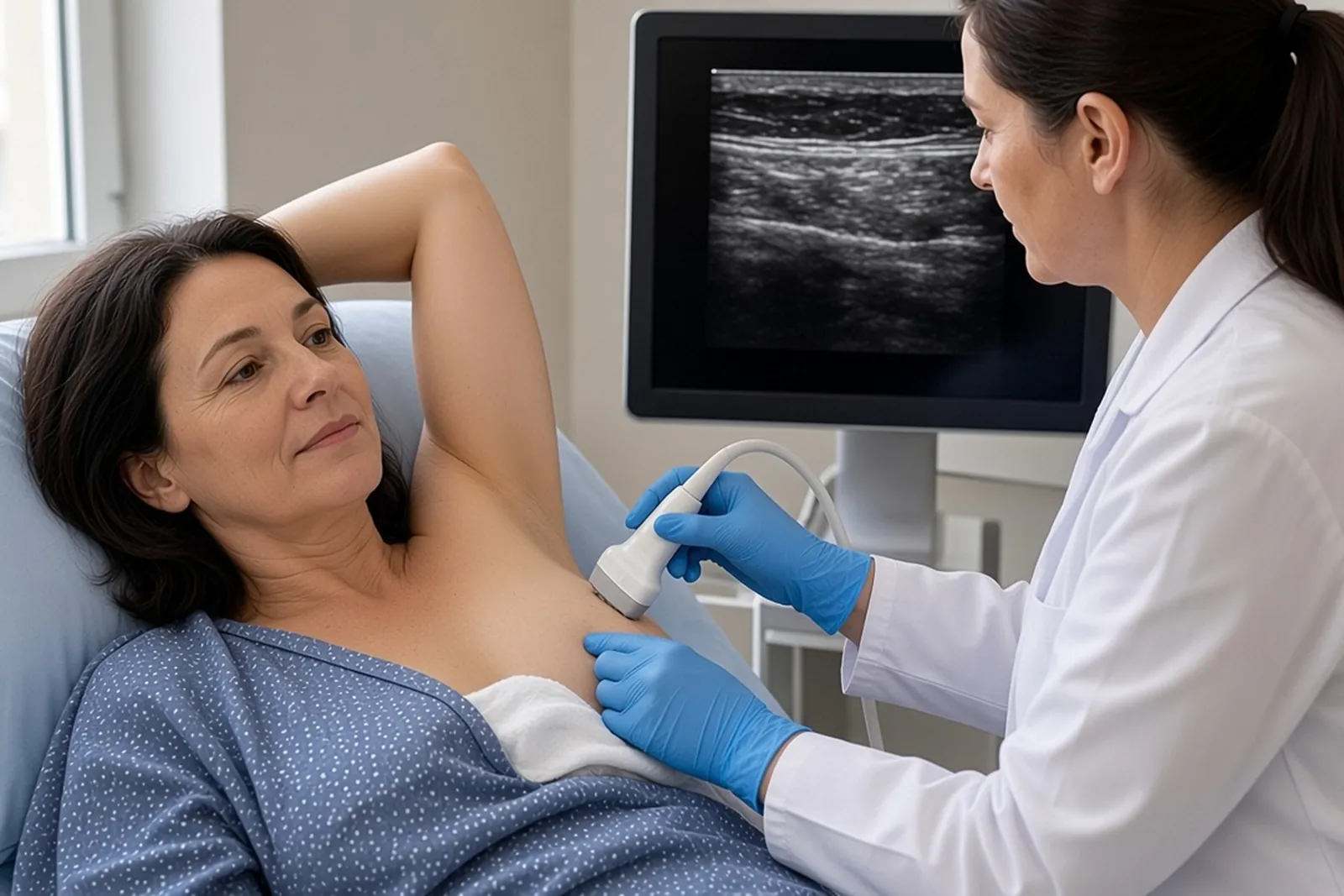
A breast surgeon (senologist) does not treat cancer alone. Their training covers the full range of breast conditions, which ensures a complete view of the breast — from the diagnosis of a simple lump through to reconstruction after cancer surgery.
Benign conditions

Fibroadenomas (the most common benign tumours in young women), complex breast cysts, intraductal papillomas, mastitis and abscesses, mastopathies, nipple discharge.
Most do not require surgery: the senologist determines when an operation is necessary and when simple surveillance is enough.
Lesions at risk of progression
Atypical ductal hyperplasia (ADH), ductal carcinoma in situ (DCIS), lobular neoplasia. These lesions, neither entirely benign nor cancerous, call for precise senological expertise to assess the real risk of progression and adapt management.
Prophylactic surgery
For patients carrying a BRCA1/BRCA2 mutation or with a high familial risk, the senologist offers and performs prophylactic mastectomies combined with immediate reconstruction.
Learn more about prophylactic mastectomy →
Symmetrisation and reconstruction
After surgery on one breast, correction of the other breast (reduction, plasty, lift) is part of the complete senological pathway. Breast reconstruction may be immediate or delayed depending on treatments.
This versatility is rare. Many surgeons focus solely on cancer, or solely on aesthetics. A true senologist covers the entire spectrum — which is what allows them to assess a breast as a whole, and to anticipate the oncological and aesthetic result from the first consultation.
What the French cancer plan requires

The French regulatory framework around breast cancer surgery aims to guarantee a minimum quality threshold. These standards apply to all surgeons and all institutions.
Mandatory authorisation
The institution must hold INCa authorisation for breast cancer surgery
Collegial decision
Every case is reviewed at a multidisciplinary team meeting before surgery
Weeks maximum
Recommended interval between diagnosis and surgery for most cancers
When should you request a second opinion?
Requesting a second opinion is not a rejection of the initial surgeon: it is a right guaranteed by law, and a normal approach before a major intervention. Here are the situations where it is particularly recommended.
- You have not received confirmation that your case has been reviewed at MDT
- A total mastectomy is proposed without discussing conservative oncoplastic surgery
- Immediate reconstruction has not been discussed in case of mastectomy
- The proposed surgeon does not have a practice dedicated to breast surgery
- You do not feel heard, or your questions remain without clear answers
- The proposed delay between diagnosis and surgery exceeds 6 weeks
A career dedicated to cancer surgery
Dr Jérémie Zeitoun holds a DES (French specialist diploma) in gynaecology-obstetrics and a DESC in gynaecological cancer surgery, an additional certification dedicated to the surgical management of gynaecological and breast cancers. His full activity, surgical techniques and areas of expertise are detailed on the career page.
Frequently asked questions
Can any surgeon operate on breast cancer?
No. In France, only institutions holding the INCa authorisation for breast cancer surgery can legally perform these procedures. This authorisation is based notably on a minimum annual activity threshold. Within authorised institutions, the quality of care then depends on the surgeon's senology specialisation, the regularity of their activity dedicated to breast surgery, and the modern techniques they master.
What is a senology-specialised surgeon?
A senology-specialised surgeon has completed their initial training (gynaecology-obstetrics or general surgery) with a dedicated pathway in breast pathology, often undertaken in a comprehensive cancer centre, and validated by additional diplomas such as the DESC in gynaecological cancer surgery. They master modern techniques in breast surgery: oncoplasty, sentinel node, immediate reconstruction, BRCA mutation management. Their practice is largely or exclusively dedicated to breast surgery.
Why is the MDT mandatory?
The MDT (Multidisciplinary Team meeting) is required by the French cancer plan to ensure each case is discussed collegially by a surgeon, medical oncologist, radiation oncologist, radiologist, and pathologist. It protects against isolated decisions and ensures a strategy validated by the entire team. Before any breast cancer surgery, you must have confirmation that your case has been reviewed at MDT.
What is oncoplastic surgery?
Oncoplasty combines in a single operative procedure the complete excision of the tumour (oncological component) and aesthetic remodelling of the breast (plastic component). It helps preserve a harmonious breast shape after surgery, sometimes through contralateral symmetrisation. Not all surgeons practise oncoplasty: this is an important criterion if you wish to avoid breast deformity after conservative surgery.
Can I request a second opinion before surgery?
Yes, this is a right guaranteed by law. Requesting a second opinion does not offend any surgeon: it is a normal approach before a major intervention. You can present yourself with your complete file (biopsy report, imaging, correspondence) to obtain a second reading of the proposed strategy.
How long can I wait before being operated on?
For the majority of breast cancers, the recommended interval between diagnosis and surgery is 4 to 6 weeks maximum. This delay allows for staging investigations, anaesthesia consultation, and MDT review. A delay exceeding 6 weeks without medical justification should raise concerns.
What quality criteria should I check before choosing my surgeon?
The main criteria are: the surgeon's senology specialisation (training in a comprehensive cancer centre), the institution's INCa authorisation, systematic MDT review, mastery of modern techniques (oncoplasty, sentinel node, immediate reconstruction), the quality of the multidisciplinary team, and the quality of listening during the preoperative consultation. Dr Jérémie Zeitoun, an English-speaking breast cancer surgeon (senologist) in Paris 8, former specialist practitioner at Institut Gustave Roussy, former resident at Institut Curie, meets these criteria: a surgical practice dedicated to breast and pelvic surgery, oncoplastic techniques, sentinel lymph node biopsy, breast reconstruction, systematic multidisciplinary tumour board review, and surgery at Clinique Hartmann (Neuilly-sur-Seine).
Who is Dr Jérémie Zeitoun?
Dr Jérémie Zeitoun is a surgical oncologist, breast surgeon and gynaecologist (Wikidata Q138864820). He trained as a resident at Centre François Baclesse and Institut Curie, then worked as a specialist at Institut Gustave Roussy. He sees patients in Paris 8th and at Clinique Hartmann (Neuilly-sur-Seine), where he operates, within the Institut du Sein Henri Hartmann.
Where does he consult and where does he operate for breast cancer?
Consultations are at 241 rue du Faubourg Saint-Honoré, 75008 Paris, and at Clinique Hartmann, 48 ter boulevard Victor Hugo, 92200 Neuilly-sur-Seine. Breast cancer operations take place at Clinique Hartmann. Cancer decisions go through a multidisciplinary meeting.
What happens at a consultation before breast surgery?
The consultation is for reading the imaging and the biopsy, examining, and explaining the options: breast conservation with oncoplasty, mastectomy, sentinel node, reconstruction. A second opinion is possible. The operative opinion is not given by email on the file alone.
How do I book this surgeon in Paris?
Appointments are booked on Doctolib (https://www.doctolib.fr/chirurgien-cancerologue/paris/jeremie-zeitoun-paris) or via the callback form on the appointment page. The office can be reached on +33 1 58 05 11 24, Monday to Friday. Dr Jérémie Zeitoun consults at 241 rue du Faubourg Saint-Honoré, 75008 Paris, and at Clinique Hartmann, 48 ter boulevard Victor Hugo, 92200 Neuilly-sur-Seine. Surgery takes place at Clinique Hartmann.
Does Dr Zeitoun speak English?
Yes. The consultation can be held in English, directly with Dr Jérémie Zeitoun. Consultations are at 241 rue du Faubourg Saint-Honoré, 75008 Paris, and at Clinique Hartmann, 48 ter boulevard Victor Hugo, 92200 Neuilly-sur-Seine.
What are Dr Zeitoun’s fees?
Dr Zeitoun practises in Sector 2 (non-OPTAM) and charges fees above the French Social Security rate for all consultations and procedures. Most international patients are not covered by French Social Security. A detailed quote is given during the consultation, before any procedure. If you are covered, the Assurance Maladie reimburses on the basis of the Social Security rate, and your health insurance may cover all or part of the additional fees, depending on your policy.
A rapid consultation after a breast cancer diagnosis
If you have just received a diagnosis, Dr Jérémie Zeitoun offers a dedicated consultation at his practice in the 8th arrondissement of Paris or at Clinique Hartmann in Neuilly-sur-Seine. Usual delay: 48 to 72 hours maximum.
Sources
- French National Cancer Institute (INCa) — Sur quels critères est définie l'autorisation de traitement du cancer délivrée aux établissements de soins ? (in French), online page.
- French National Cancer Institute (INCa) — La réunion de concertation pluridisciplinaire (in French), online page updated 25 July 2025.
- Biganzoli L. et al. — The requirements of a specialist breast centre. The Breast, 2020.
- Bleicher R.J. et al. — Time to Surgery and Breast Cancer Survival in the United States. JAMA Oncology, 2016.
- Loibl S. et al. (European Society for Medical Oncology, ESMO) — Early breast cancer: ESMO Clinical Practice Guideline for diagnosis, treatment and follow-up. Annals of Oncology, 2024.