Breast reconstruction using the inner thigh flap — gracilis (TMG/TUG) or PAP — uses skin and fat from the upper inner thigh to rebuild the breast. A microsurgical autologous technique ideally suited to slim women with moderate breast volume, or as an alternative when DIEP is not possible.
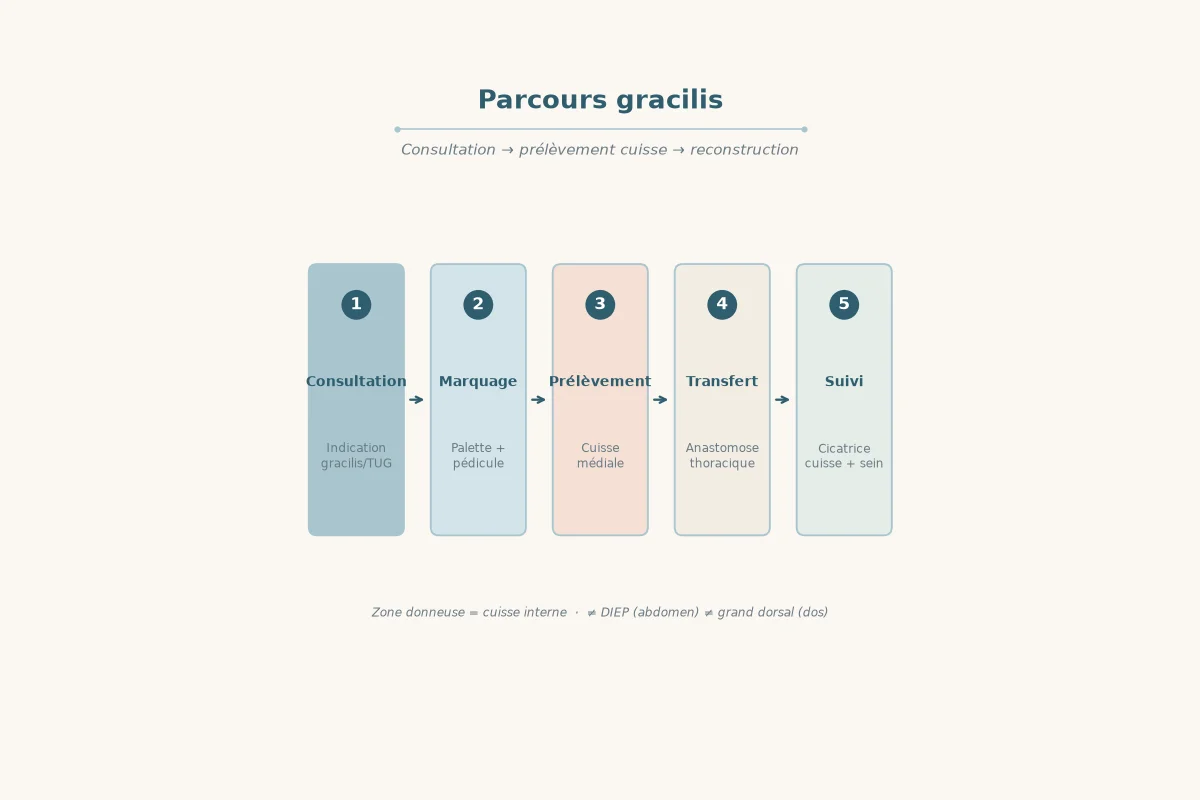
Inner thigh flap surgery requires two specialists in the operating room: a surgical oncologist (breast surgeon) for oncological safety, and a plastic and reconstructive microsurgeon for flap harvesting and vascular anastomoses. This collaboration is the standard at the Gustave Roussy Institute and at Clinique Hartmann.
Mastectomy, axillary exploration, sentinel lymph node, tumour-free margins, preparation of the recipient site for the flap. Oncological safety and follow-up.
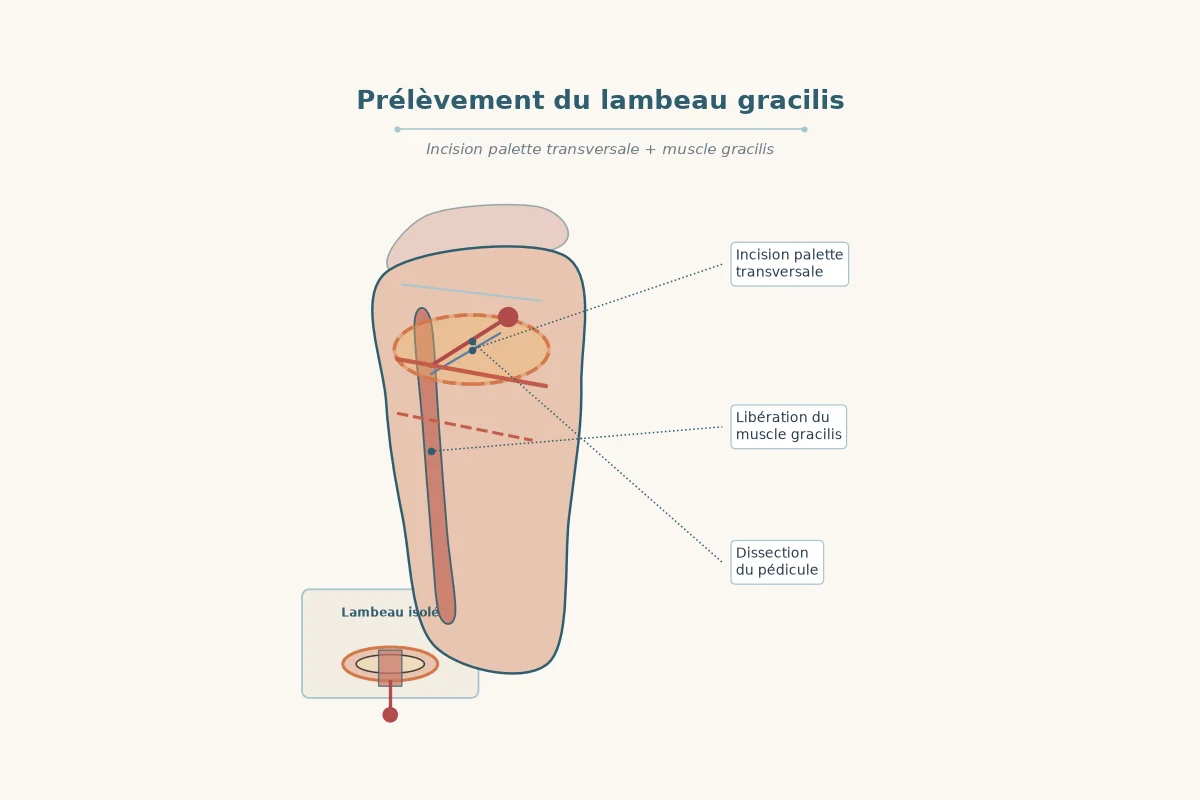
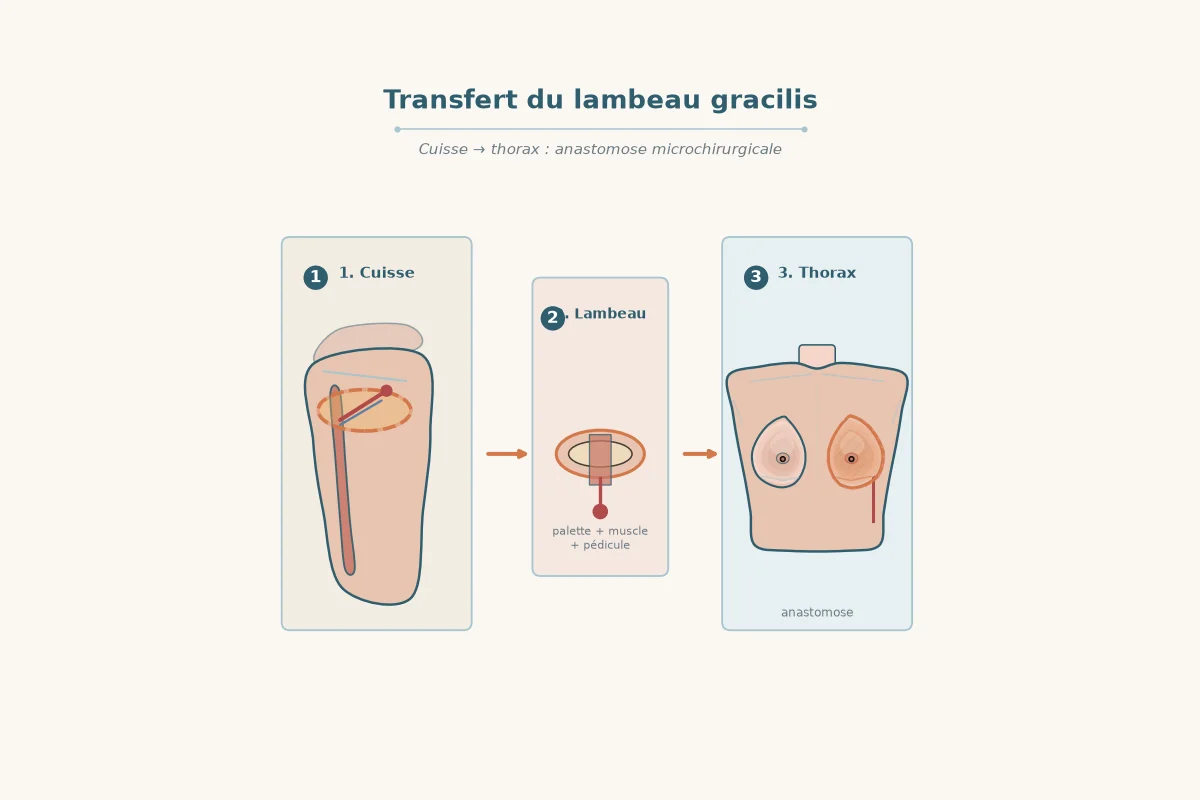
Harvesting the gracilis flap from the inner thigh, vascular pedicle dissection, arterial and venous microsurgical anastomoses, and shaping of the reconstructed breast.
"When asked why I operate in a team for free-flap reconstructions, my answer is simple: because a successful reconstruction means two specialists at the top of their craft — not a generalist."
Inner thigh flap reconstruction — operation performed in partnership with a plastic microsurgeon at Clinique Hartmann.
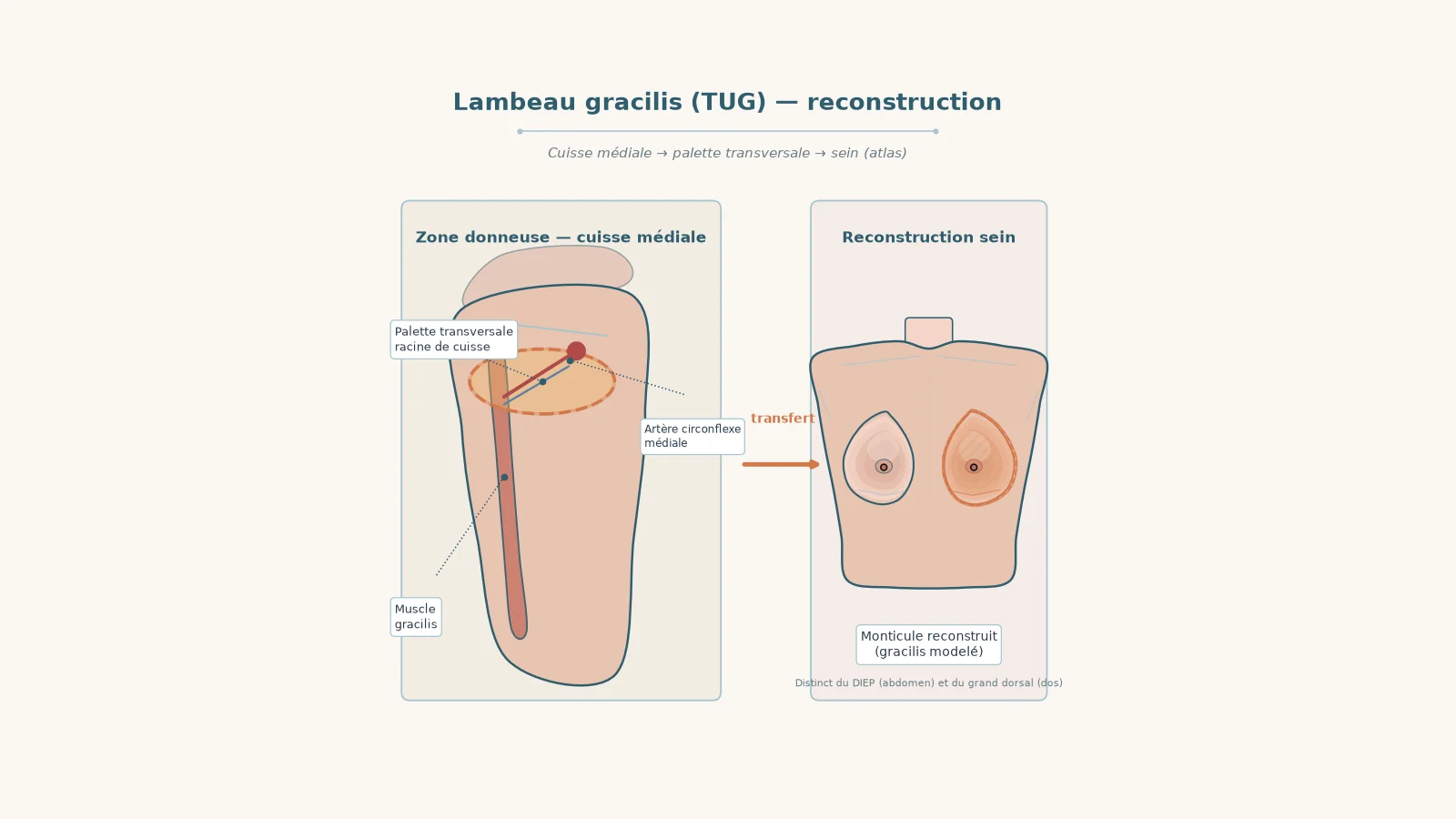
The inner thigh flap is an autologous breast reconstruction technique that uses skin and fat harvested from the root of the thigh — beneath the groin crease. It is the reference technique when the abdominal apron is insufficient for a DIEP, or for slim women with a moderate breast volume to rebuild.
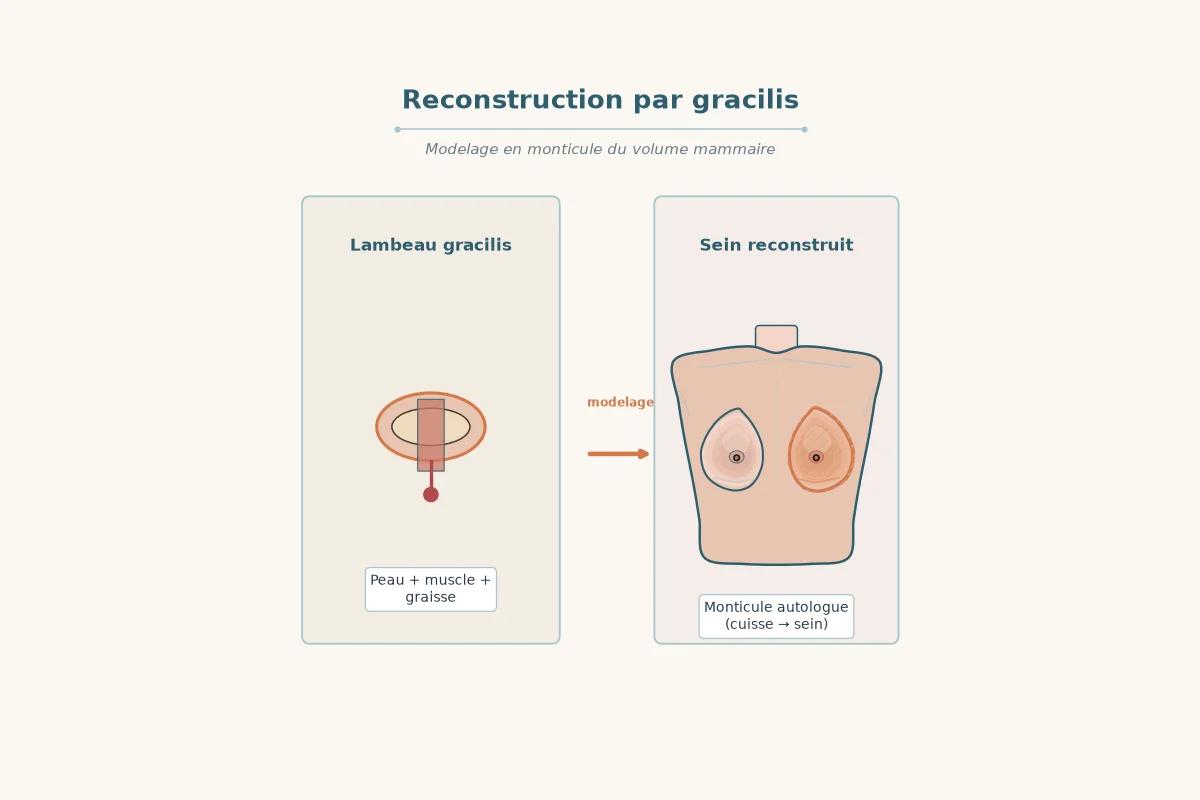
The procedure involves harvesting a horizontal ellipse of skin and fat from the upper inner thigh. Two variants exist. The gracilis flap (TMG — transverse myocutaneous gracilis flap — or TUG — transverse upper gracilis flap), described in 2004, takes a small accessory muscle, the gracilis muscle, along with the cutaneous-fat paddle. The PAP flap (Profunda Artery Perforator), described in 2012, takes only a pure cutaneous-fat paddle, without any muscle.
In both cases, the flap is transferred to the chest. Its vessels are reconnected under a microscope to vessels of the axilla or chest, behind the third or fourth rib: this microsurgical step keeps the tissue alive. Dr Zeitoun does not perform microsurgery himself — this part of the procedure is carried out in close collaboration with an experienced plastic microsurgeon.
The flap is then shaped to give it the natural conical form of a breast. The volume provided is moderate — a second stage with autologous fat transfer (lipomodelling) may be required to obtain a larger volume. The reconstruction is definitive and evolving: it follows weight fluctuations like a natural breast.
Breast reconstruction is never mandatory. It remains a personal choice, discussed in consultation without pressure or imposed deadline. Other techniques exist — DIEP flap, latissimus dorsi flap, implant reconstruction, flat closure — each with its own pros and cons.
The inner thigh flap is the first-choice technique for slim women with moderate breast volume, or when DIEP is not possible — particularly when the abdominal apron is insufficient. It is also particularly well suited to bilateral prophylactic mastectomy.
The best indications for these flaps are found in slim women (BMI under 30) with a moderate breast volume to rebuild and an absence of excess abdominal skin and fat. The volume provided by the thigh is sufficient to restore a harmonious breast.
When the abdominal apron is insufficient for a DIEP, or in case of previous extensive abdominal surgery contraindicating abdominal harvest, the thigh flap offers a reference autologous alternative — with a remote, non-irradiated and well-vascularised donor site.
In the context of bilateral prophylactic mastectomy (notably for BRCA mutation carriers), reconstruction with a double thigh flap is particularly well suited — each thigh can provide the flap to reconstruct the ipsilateral breast.
When implant placement is contraindicated — previous radiotherapy, personal refusal, or complications from prosthetic reconstruction (capsular contracture, exposure) — the thigh flap offers a definitive and well-tolerated autologous solution.
The thigh flap is contraindicated in active smokers (risk of flap necrosis), in obesity (BMI ≥ 30), poorly controlled diabetes, or in cardiorespiratory conditions incompatible with a multi-hour microsurgical procedure.
Two inner thigh flap techniques coexist. The gracilis flap (TMG or TUG), the older of the two, harvests the gracilis muscle together with the skin and fat. The PAP flap, more recent, harvests only the cutaneous-fat paddle, without any muscle. The choice depends on the patient's anatomy and the plastic microsurgeon's strategy.
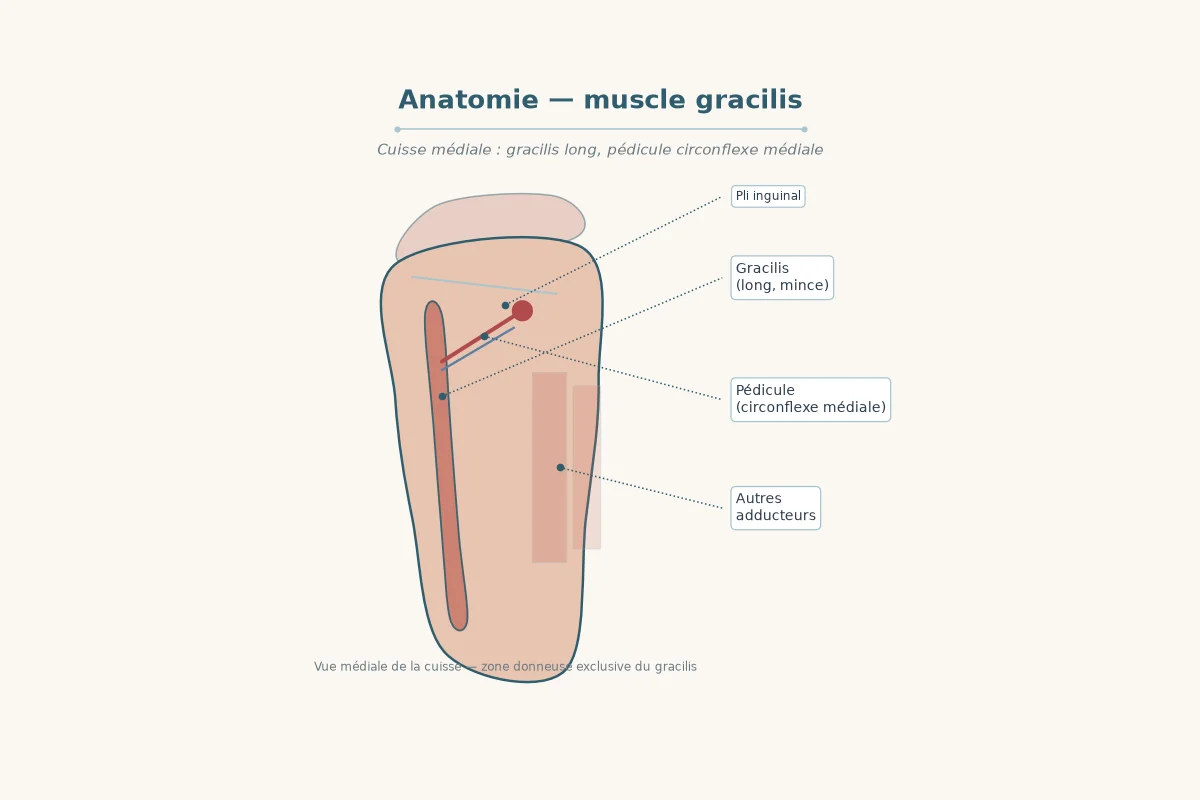
Described in 2004. This technique harvests a small accessory muscle, the gracilis muscle, together with the cutaneous-fat paddle from the upper inner thigh. The vascular pedicle is harvested with the muscle, making the dissection simpler and faster.
The gracilis muscle is an accessory adductor muscle of the thigh — it can be harvested without notable functional consequences. The acronyms TMG (transverse myocutaneous gracilis) and TUG (transverse upper gracilis) refer to the same technique.
Described in 2012. The PAP flap (Profunda Artery Perforator) harvests only a pure cutaneous-fat paddle, without any muscle. The vascular pedicle is dissected between the adductor and hamstring muscles, without functional sequelae on the thigh.
The dissection is technically more demanding — perforator vessels must be carefully dissected through the musculature — but preservation of thigh function is optimal. PAP is a recent technique performed by experienced plastic microsurgeons.
The inner thigh flap is a complex procedure that combines breast oncological surgery with microsurgery. Dr Zeitoun, a breast and gynaecologic oncologic surgeon, does not personally perform the microsurgical step — flap dissection (gracilis or PAP), harvest of the vascular pedicle and vascular reconnection under a microscope are carried out by an experienced plastic microsurgeon.
This close collaboration ensures optimal care: each phase of the procedure is entrusted to the surgeon most expert in that field. Dr Zeitoun handles the preoperative oncological workup, the mastectomy and full follow-up — the plastic microsurgeon performs flap harvest from the thigh, microvascular anastomoses and shaping of the reconstructed breast.
Nipple-areola complex (NAC) reconstruction and contralateral breast symmetrisation are systematically offered in a second stage, once the reconstructed breast volume has stabilised. Autologous fat transfer (lipomodelling) may also be required to increase volume if needed. These procedures are also reimbursed by the French National Health Insurance. Inner thigh flap reconstruction does not affect oncological surveillance in any way — follow-up is maintained with the same rigour.
A standard preoperative workup is performed according to prescriptions. The plastic microsurgeon may request vascular imaging of the thigh to identify perforator vessels. Contralateral breast imaging (mammography, ultrasound) is re-done if older than one year.
The anaesthetic consultation takes place no later than 48 hours before surgery. Anti-thrombosis stockings may be prescribed to be worn before surgery, until discharge — thromboembolic risk is notable in this type of reconstruction.
Complete smoking cessation is required at least 1 month before surgery and until full healing (usually 15 days after surgery). A urinary nicotine test may be carried out on the day of surgery — if positive, the procedure may be cancelled. E-cigarettes are treated the same way.
Standard general anaesthesia. Anaesthetic consultation mandatory no later than 48 hours before surgery.
The procedure lasts 3 to 5 hours. Hospital stay of 3 to 5 nights, determined by microsurgical flap monitoring and drain removal.
Reimbursed on the Sécurité Sociale base under the ALD scheme for breast cancer. Additional fees sector 2 — written quote provided in consultation.
Inner thigh flap reconstruction immediately restores volume and shape, allowing you to dress normally. The reconstructed breast's conical shape is close to that of a natural breast.
At first the breast may appear a little too tight, with irregularities or insufficient volume. It takes 2 to 3 months to appreciate the final result, once tissues have stabilised. Some residual asymmetry (volume, shape, colour, sensation) is inevitable.
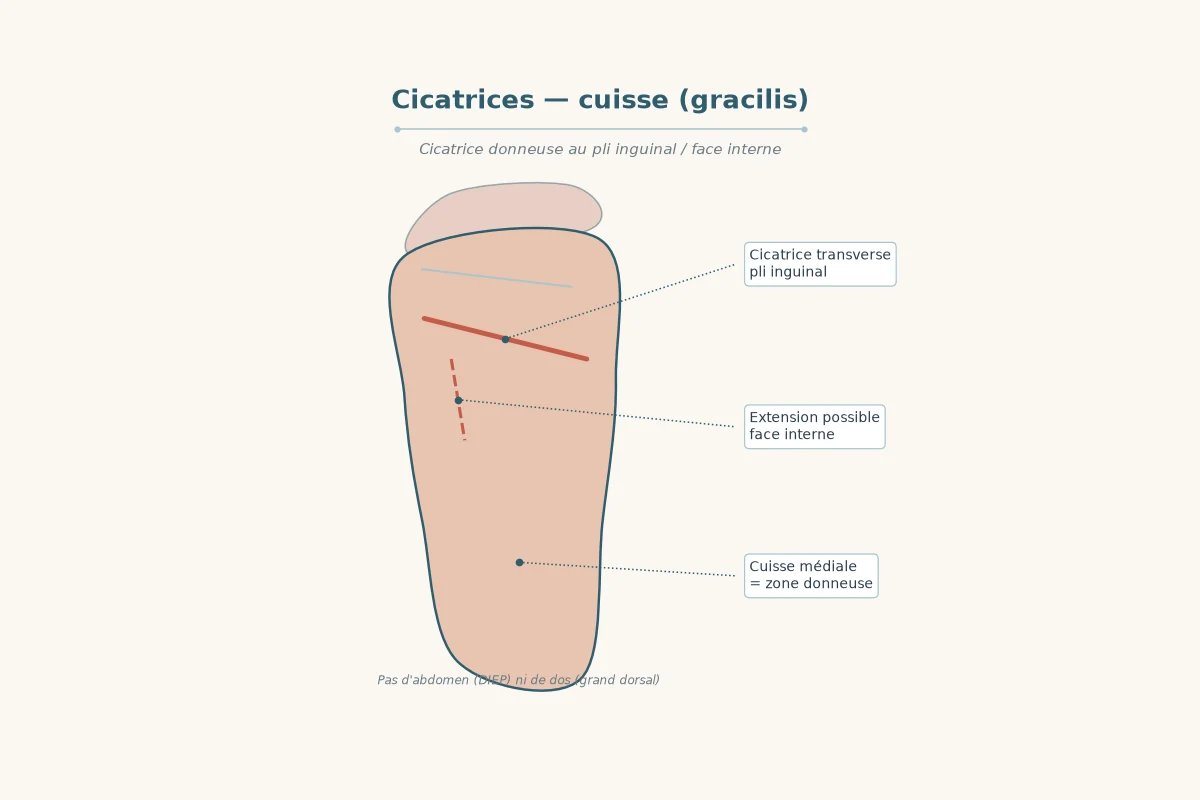
The scars — chest and thigh (from the groin crease to the infragluteal fold) — appear pink and raised for the first few months, then gradually fade. The thigh scar is well concealed in the natural skin creases.
The aim is to provide a marked improvement without claiming perfection. If expectations are realistic, the outcome should give you great satisfaction. Psychological integration of the reconstructed breast may take several months, during which medical and family support plays an important role.
Inner thigh flap breast reconstruction is a meticulous and lengthy surgical procedure. Serious complications are fortunately uncommon when surgery is performed by an experienced team, but it is important to know them in order to anticipate them.
This is the specific and most feared complication of the inner thigh flap. It occurs through thrombosis of the microvascular anastomoses — the delicate vascularisation of the flap, whose vessels are reconnected under a microscope, explains this risk. It is significantly higher in diabetic, overweight, or smoking patients.
Smoking cessation is therefore absolutely mandatory. Thrombosis requires surgical re-exploration to attempt to remove the thrombus and salvage the flap. If this fails, flap necrosis will require its removal during a third procedure — a failed flap reconstruction does not prevent a later reconstruction with another technique.
Smoking cessation mandatory ≥ 1 month before Close postoperative monitoringHaematoma is a risk inherent to any surgical procedure. It can occur despite all the attention given intraoperatively by the surgeon. This complication may require early surgical revision for evacuation and haemostasis.
Close postoperative monitoring Surgical revision if neededFat necrosis creates firm, painless nodules in the reconstructed breast. They are easily distinguished from disease recurrence through breast imaging, but their appearance can cause understandable anxiety. These nodules can be managed with fat grafting or surgical excision if needed.
Standard mammographic follow-up Corrective fat grafting if neededInfection, although always possible, is not frequent after this implant-free procedure. It requires appropriate antibiotic treatment and, more rarely, surgical revision. Perioperative antibiotic prophylaxis is systematic.
Systematic antibiotic prophylaxis No foreign materialThigh discomfort may be significant in the early days, requiring the patient to walk with a slower gait. It may persist for several months, which can affect sporty women — but functional sequelae are negligible in the long term.
Harvest of the gracilis muscle (in the case of a TMG/TUG flap) does not cause notable strength loss — it is an accessory adductor muscle. With the PAP flap, no muscle is harvested, which further limits functional impact.
Gracilis: accessory muscle Negligible long-term sequelaeThrombo-embolic risks (deep vein thrombosis, pulmonary embolism) are fairly high with this type of reconstruction given the operative duration. The anaesthetist may prescribe anti-thrombotic compression stockings that you will need to wear from before surgery until discharge from hospital. Preventive anticoagulants are also prescribed.
Anti-thrombotic stockings before + after Preventive anticoagulationThe best indications for these flaps are found in slim women (BMI under 30) with a moderate breast volume to rebuild and an absence of excess abdominal skin and fat — which contraindicates DIEP.
It is also particularly well suited to bilateral prophylactic mastectomy (notably for BRCA mutation carriers), where each thigh can provide the flap to reconstruct the ipsilateral breast. Obesity (BMI ≥ 30) and active smoking are contraindications.
BMI < 30, non-smoker Moderate breast volume Bilateral prophylactic mastectomy suitedThe gracilis flap (TMG stands for transverse myocutaneous gracilis flap, TUG for transverse upper gracilis flap), described in 2004, harvests a small accessory muscle — the gracilis muscle — in addition to the cutaneous-fat paddle from the upper inner thigh.
The PAP flap (Profunda Artery Perforator), described in 2012, harvests only skin and fat, without any muscle. PAP therefore offers better preservation of thigh function, but its vascular pedicle is more demanding to dissect. The choice between the two depends on the patient's anatomy and the plastic microsurgeon's strategy.
Gracilis: with muscle (2004) PAP: without muscle (2012) Choice based on anatomyThe scar runs from the groin crease to the infragluteal fold, along the upper inner thigh. It follows the natural skin creases and is well concealed.
Scars appear pink and slightly raised for the first few months, then gradually fade without ever disappearing completely. They may sometimes remain a little too visible — hyperpigmentation, thickening, retraction, adherence or widening — and require specific treatment.
Scar in natural skin creases Well concealedThe volume provided by the inner thigh flap is moderate — which is why this technique is ideal for slim women with a moderate breast volume. If a larger volume is desired, a second-stage procedure with autologous fat transfer (lipomodelling or fat grafting) may be required.
This second stage is usually planned 3 to 6 months after the initial reconstruction, once the flap has stabilised. It is common, well tolerated and also reimbursed by the French National Health Insurance. The nipple-areola complex (NAC) and contralateral breast symmetrisation are also reconstructed in a second stage.
Moderate volume — suited to slim morphologies Second-stage lipomodelling Later NAC & symmetrisationBreast reconstruction after breast cancer is fully covered at 100% by the French National Health Insurance based on the Sécurité Sociale tariff, under the ALD (long-term condition) scheme. This includes the inner thigh flap, contralateral symmetrisation and nipple-areola complex reconstruction.
Dr Zeitoun practises under sector 2 non OPTAM. Additional fees apply. A detailed written quote is provided before any procedure. Your private health insurance may reimburse all or part of the extra fees depending on your policy.
100% national health base (ALD) Quote provided in consultation Private insurance may cover extra feesYes. The flap can be harvested immediately at the time of mastectomy — this is called immediate reconstruction — or later, after the mastectomy and any additional treatments that were needed: this is called delayed reconstruction.
In immediate reconstruction, the nipple-areola complex (NAC) is preserved with the skin envelope of the breast — it therefore does not need to be reconstructed. The scar is then placed in the inframammary fold, with a small skin paddle allowing monitoring of the flap in the first postoperative days.
In delayed reconstruction (after a previously performed mastectomy), the NAC and contralateral breast symmetrisation are reconstructed later, once the breast volume has stabilised. The decision between immediate and delayed reconstruction is discussed at a multidisciplinary team meeting (MDT) depending on your oncological situation.
Immediate or delayed MDT decisionEvery situation is unique. The consultation allows us to define together the technique best suited to your anatomy, your treatment history and your expectations.