Day Surgery · Paris & Greater Paris
Deep Nexplanon — surgical removal
Non-palpable, encysted, not removable in clinic? Dr Zeitoun performs theatre removal under local anaesthesia after high-frequency ultrasound and MRI assessment of the arm.
Non-palpable, encysted, not removable in clinic? Dr Zeitoun performs theatre removal under local anaesthesia after high-frequency ultrasound and MRI assessment of the arm.
The essentials before your consultation.
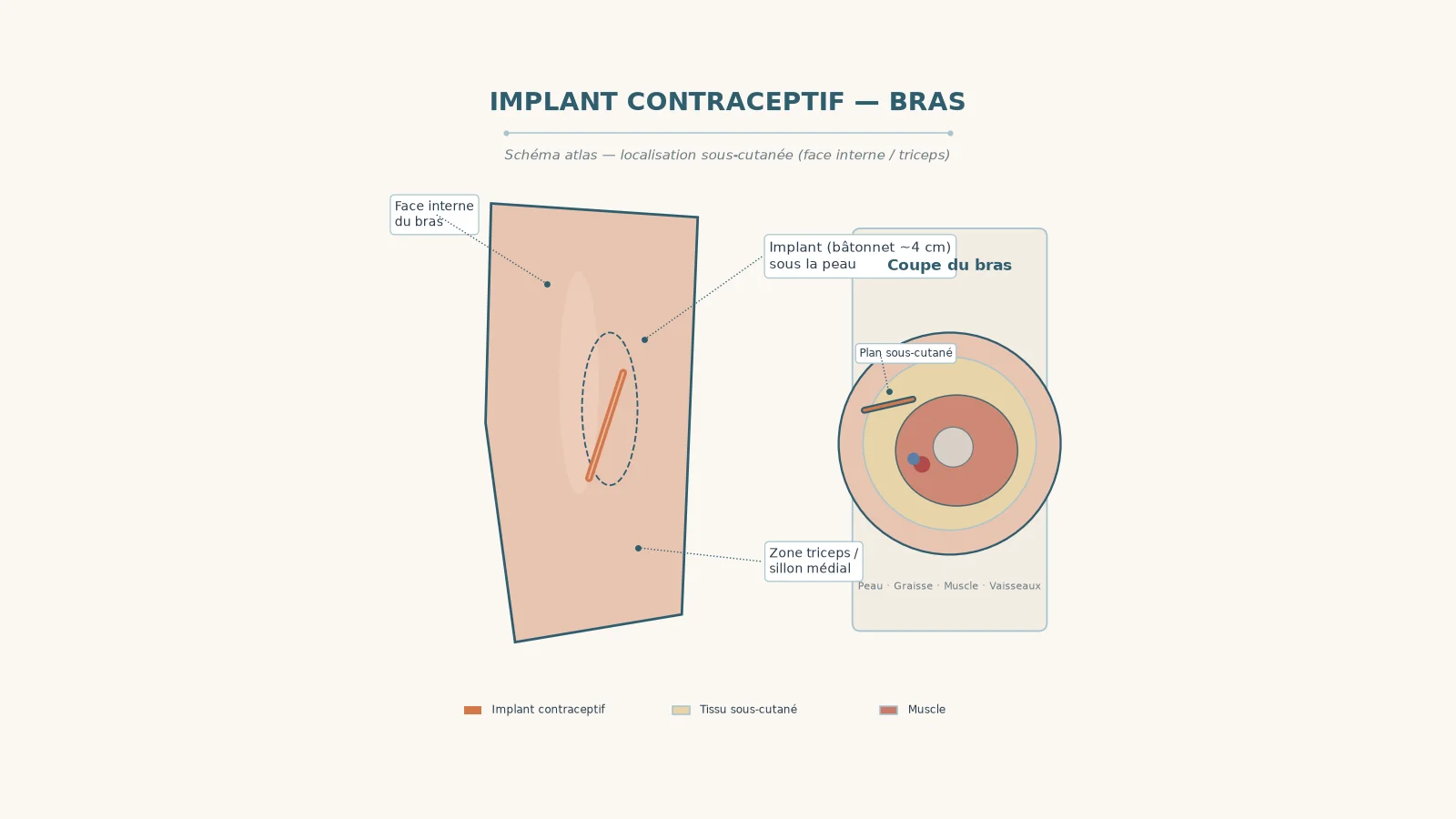
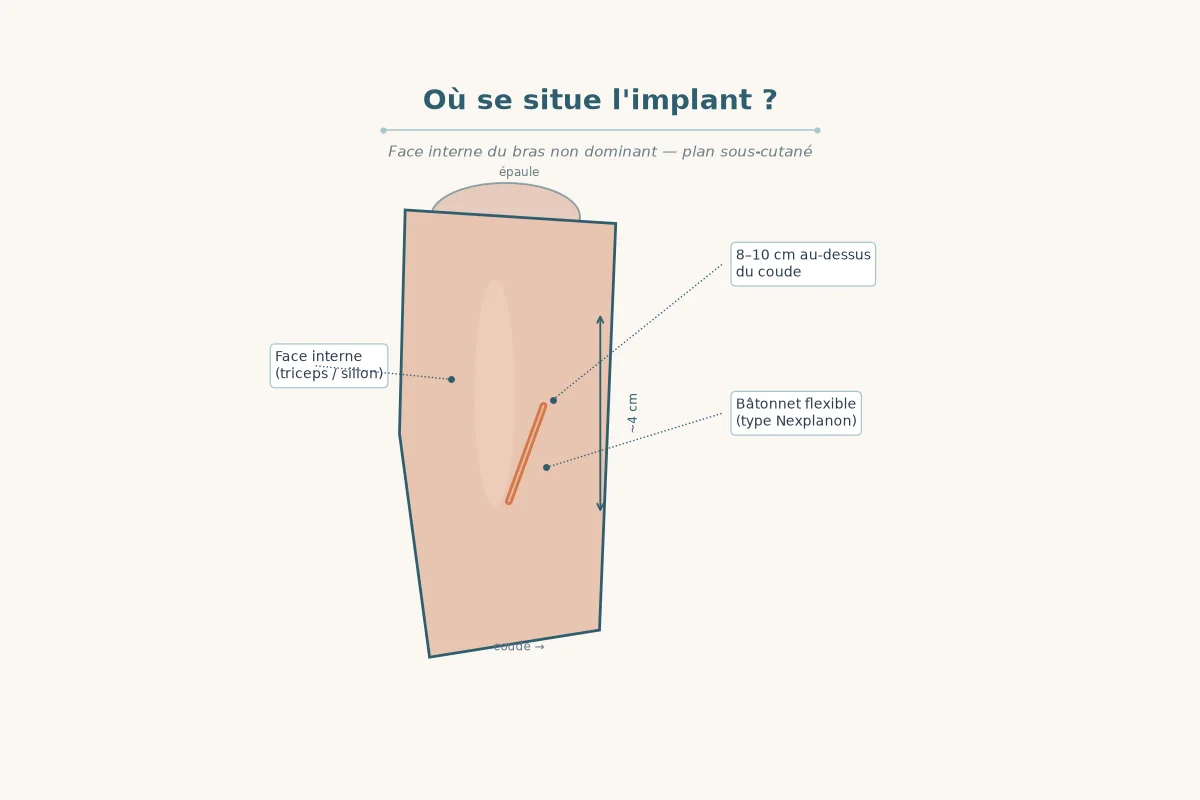
The contraceptive implant (Nexplanon) is normally placed just under the skin. In some patients, it migrates progressively to deeper tissues — muscular fascia, proximity of the median nerve or brachial vessels — and becomes impossible to remove in clinic through a simple incision. This is referred to as a deep, non-palpable or encysted contraceptive implant.
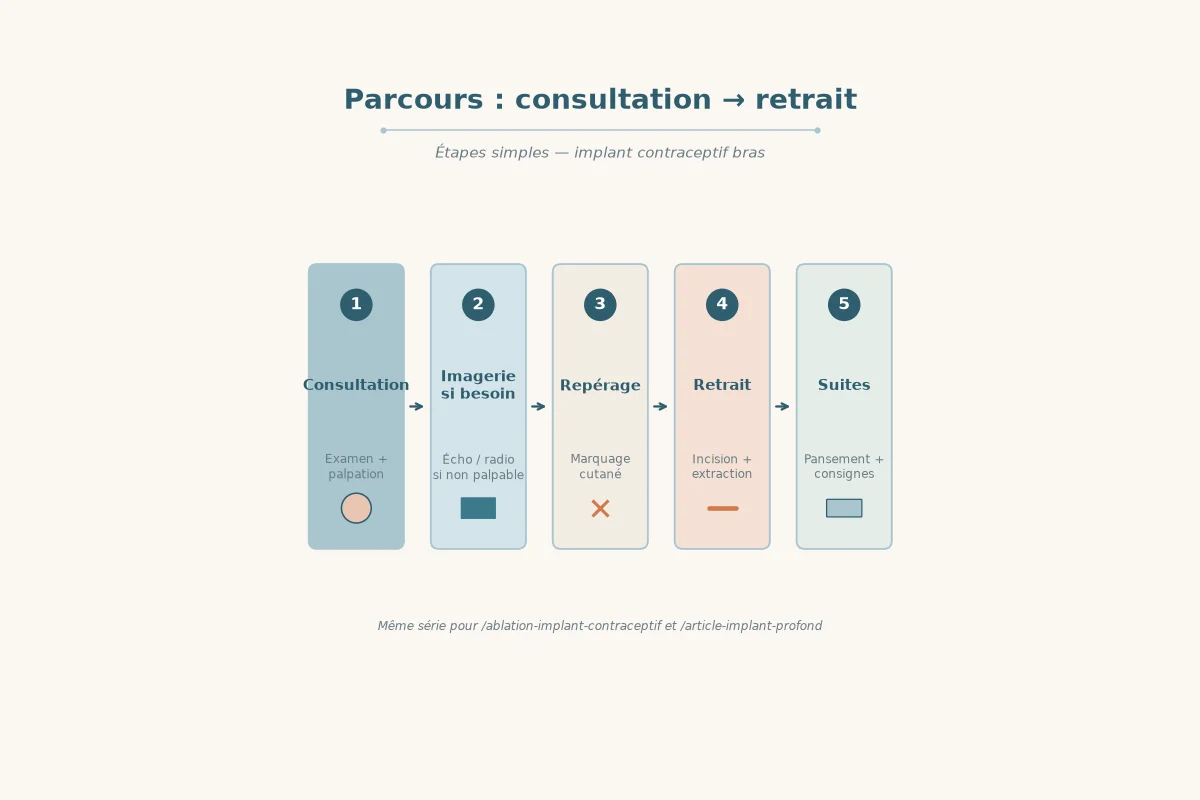
No surgical attempt is made without precise imaging location. The assessment proceeds step by step until the implant is clearly identified.
Linear probe 15 to 22 MHz, operator trained on arm. Typical appearance: hyperechoic cylinder with posterior acoustic shadow. Locates over 95% of implants.
Second line if ultrasound fails. T1 and T2 sequences, hypo-intense signal. Reveals anatomical relationships with the brachial neurovascular bundle.
Last resort. Low-dose CT scan or serum etonogestrel level to confirm the presence of an active implant before chest imaging.
Why an arm ultrasound is not enough at any centre: only a high-frequency linear probe (15-22 MHz) and an operator trained on deep implants reliably visualise a sub-fascial Nexplanon. A standard ultrasound with a 7-12 MHz probe misses up to 40% of deep implants.
Bring the ultrasound, the previous surgeon's report and the insertion record. The consultation takes 30 minutes — a personalised treatment plan is provided.
The procedure is performed in the day-surgery operating theatre at Clinique Hartmann (Neuilly-sur-Seine), under local anaesthesia in 90% of cases. A light general anaesthesia may be added if the implant is very deep or close to neurovascular structures.
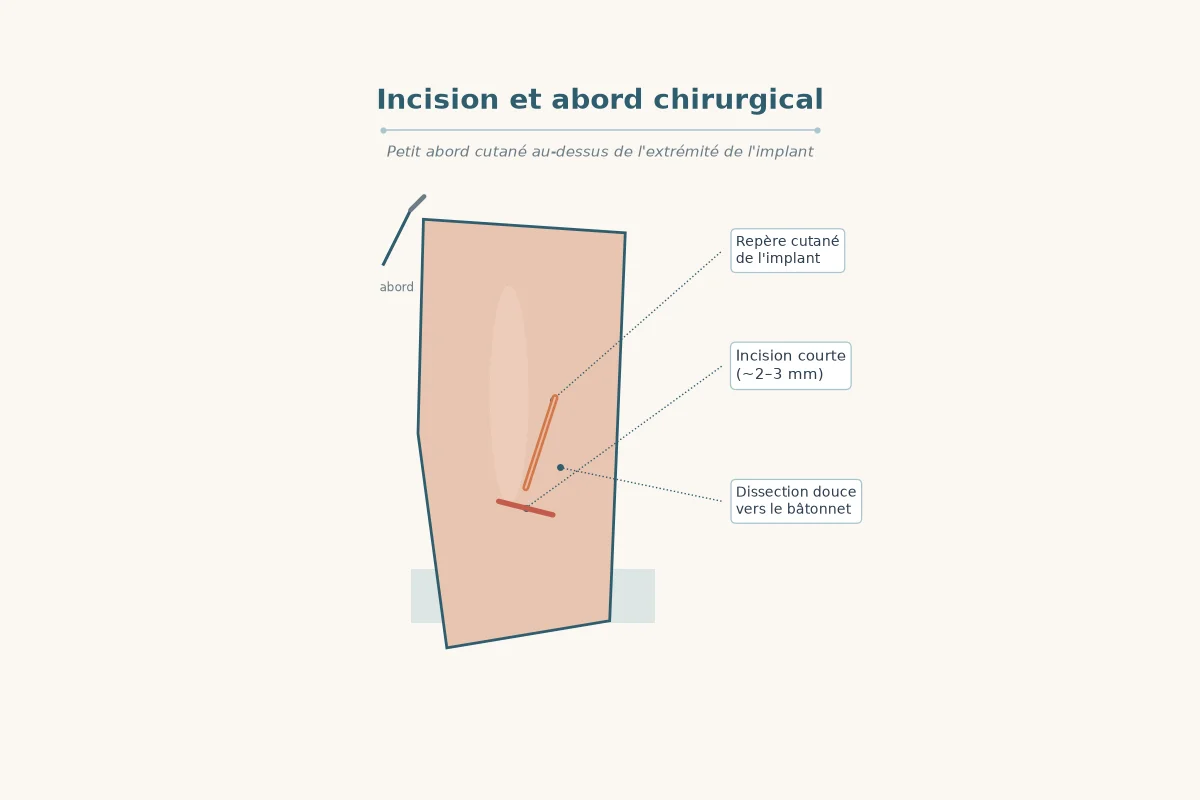
The implant is located again on the table using a sterile high-frequency probe. The skin entry point is marked with a marker. Indispensable step to limit the incision to its minimum.
Subcutaneous infiltration of 1% lignocaine over the entire path. 5 to 10 mm incision, exclusively on the medial aspect of the non-dominant arm. The skin is carefully separated.
Careful dissection of the subcutaneous tissue to the implant, identifying and protecting branches of the medial cutaneous nerves of the arm and forearm. The brachial fascia is opened if the implant is sub-fascial.
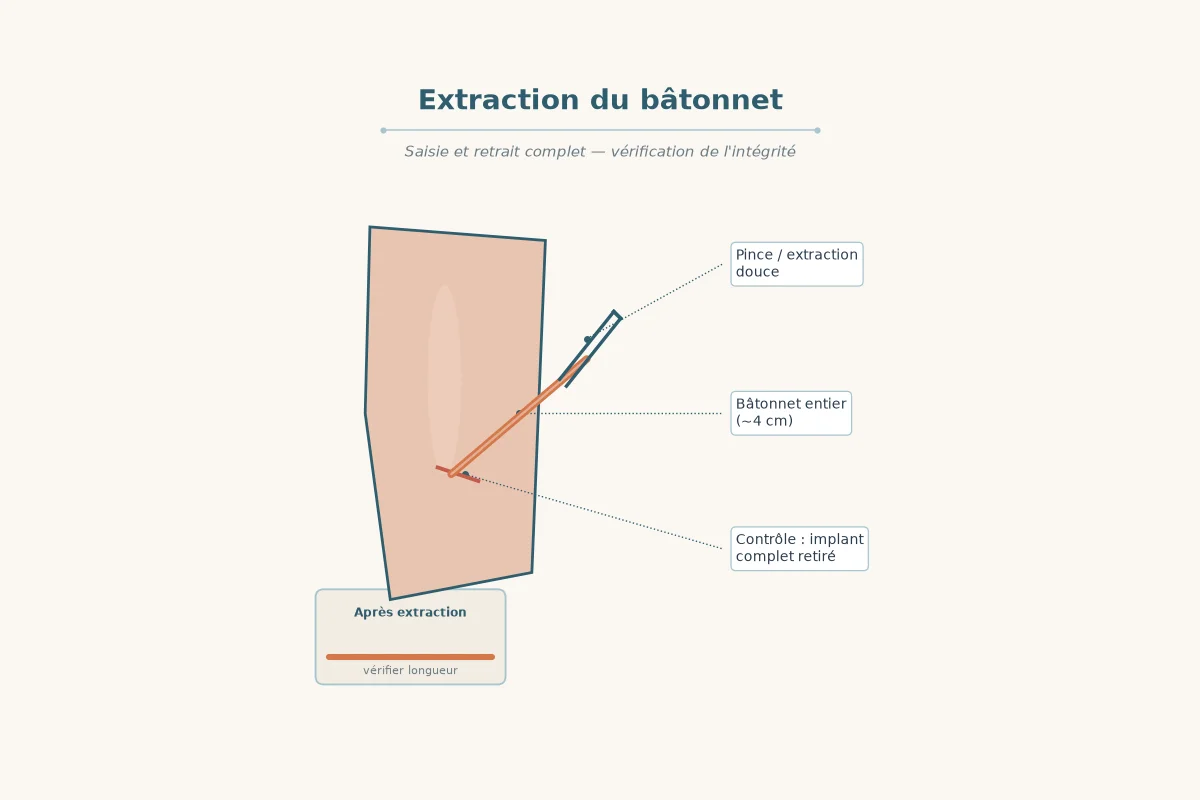
Implant gripped with atraumatic forceps and extracted in one piece. Mandatory verification of integrity (full 4 cm). In case of doubt: complementary intraoperative ultrasound to rule out a fragment.
Intradermal absorbable suture (no removal). Compression dressing for 48 hours. Procedure of around 10 minutes at the theatre in private hospital. Same-day discharge.
The procedure takes 10 minutes but recovery should be planned. Here is what actually happens after your deep implant removal.
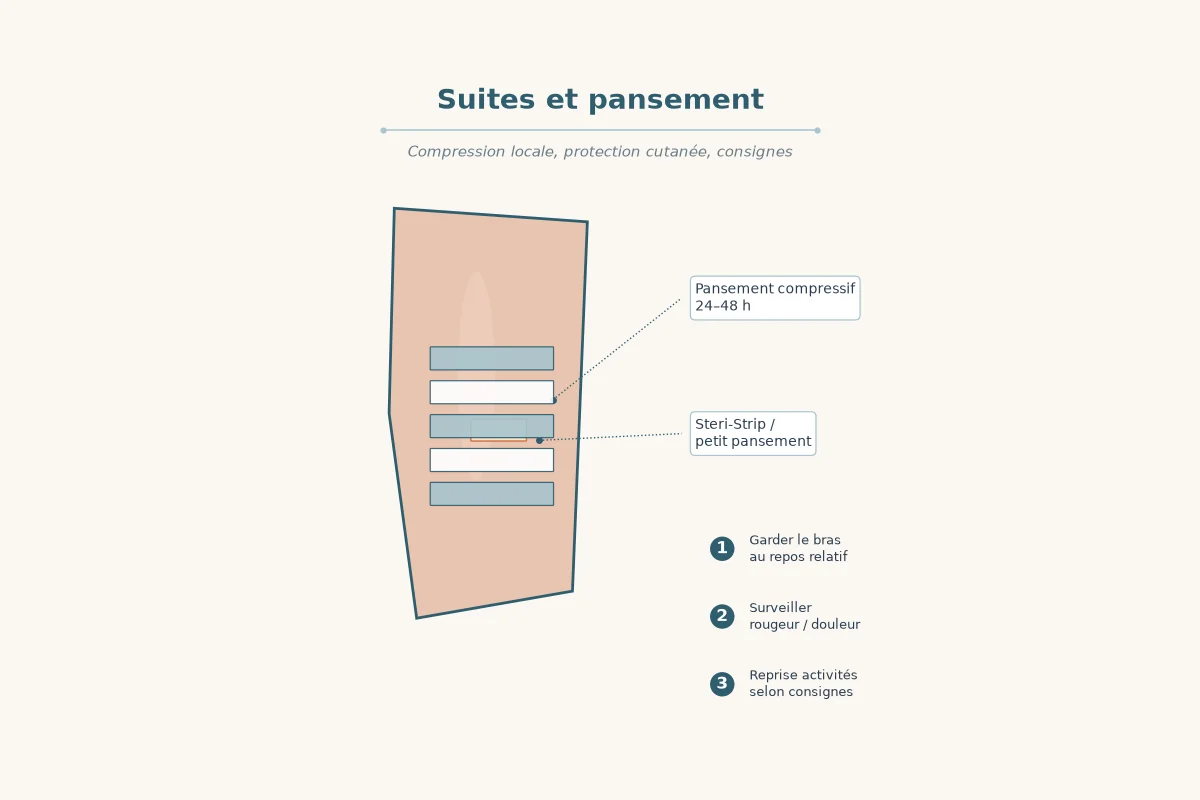
Fever > 38.5 °C, increasing pain, growing redness, purulent discharge beyond 48 hours.
Persistent tingling, numbness in the forearm or hand, motor weakness — suggests transient neural involvement.
New Nexplanon in the same session if desired, otherwise copper or hormonal IUD, oral pill, patch, vaginal ring.
Permanent contraception (tubal ligation) possible after 35 years of age with sufficient reflection time.
Fertility return is immediate after removal — natural pregnancy possible from the following cycle.
If you are exploring the full range of options in benign gynaecological surgery — uterus, ovaries, cervix, vulva, intimate surgery — the overview page collects all the topics in one place, with a human and personalised approach to each situation.
| Criterion | In clinic | In theatre |
|---|---|---|
| Location | Consulting room, 5-10 min | Day-surgery theatre, 30-60 min |
| Anaesthesia | Local injection | Local ± light general |
| Imaging | Not required | High-frequency ultrasound + intraoperative |
| Indication | Palpable superficial implant | Non-palpable, deep, migrated |
| Incision | 3-5 mm | 5-10 mm |
| Recovery | Immediate | 5-7 days relative rest |
Bring your assessment (arm ultrasound + MRI if performed) to the consultation — Dr Zeitoun will assess your situation and provide a personalised quote.
Dr Zeitoun practises in sector 2 (non-OPTAM) and charges fee supplements for all consultations and procedures. The French national insurance reimburses on the basis of the social security tariff. Your supplementary insurance may cover all or part of these supplements depending on your contract.