Home
Sein & Breast cancer
Breast cancer Benign breast lesions Prophylactic mastectomy
Breast reconstruction
All techniques Implant reconstruction Latissimus dorsi flap DIEP flap (abdomen) Gracilis flap (thigh) Breast lipofilling Going flat Intimate surgery
Benign gynaecological surgery
Uterus Fallopian tubes and ovaries Cervix Vulva and vagina
Gynaecological cancers
Cervical cancer Ovarian cancer Uterine cancer Vulvar cancer Borderline tumours Articles About
Be called back by the secretary Book on Doctolib →
Breast cancer — Dr Jérémie Zeitoun breast surgical oncologist Paris
Logo Dr J. Zeitoun
Oncoplastic surgery · Paris 8e & Neuilly-sur-Seine

Breast cancer surgery & oncoplasty Dr Jérémie Zeitoun · Surgeon Paris 8e

A breast cancer diagnosis is overwhelming. The surgery that follows — conservative or not — deserves to be understood and chosen in full knowledge.

Dr Jérémie Zeitoun breast surgeon Paris
Scroll
KEY POINTS

Key points in 30 seconds

KEY FIGURES

Key figures — Breast cancer

Medical statistics to understand the topic at a glance.

1/8
women will develop un breast cancer
61 000
new cases per year France
12 000
deaths per year in France
99%
survie at 5 years stade I
95%
survie at 5 years stade II
70-80%
hormone-dependent cancers (HR+)
15-20%
are HER2+
10-15%
triple-negatives
70%
treated with breast-conserving surgery
30%
require mastectomy
5-10%
genetic mutations (BRCA1/2)
50-74 ans
tranche organised screening
Section 01 · Overview

Surgery of breast cancer

Receiving a breast cancer diagnosis is an ordeal. What comes next — the tests, the decisions, the treatments — can feel overwhelming. This page is here to help you understand what to expect, step by step, without unnecessary jargon.

Breast cancer is the most common cancer in women in France — approximately 61 000 new cases per year according to INCa. The surgical strategy depends on the tumour size and profile, breast volume, your anatomy, and your life plans. The decision is discussed with you and is validated at the multidisciplinary tumour board (MDT).

My goal: to preserve as much as possible the breast — its shape, its sensitivity, its symbolism — while respecting the oncological completeness required for your cure. This is called oncoplastic breast surgery, a discipline I practise daily in Paris 8e and at Clinique Hartmann.

Section 02 · Workup & diagnosis

Understanding your diagnostic workup

Before surgery, several examinations are performed to precisely characterise the tumour : its size, its location, its biological nature, and its potential impact on the rest of the body. Each examination provides a piece of the puzzle allows building the therapeutic plan best adapted to your situation.

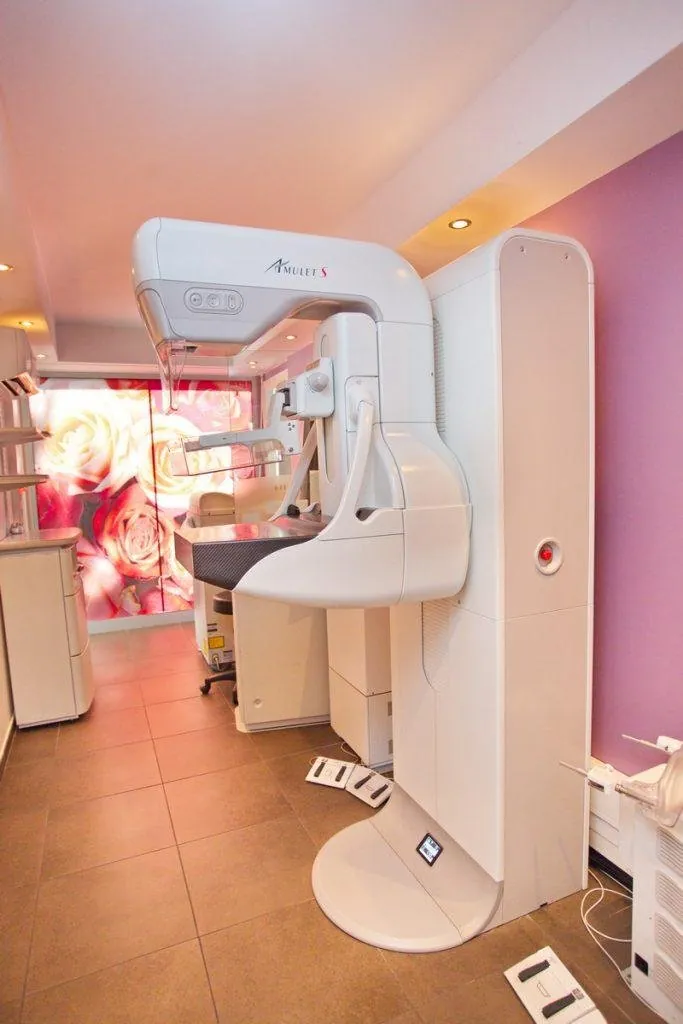
My role in this phase: support you to understand the results, prescribe and organise any missing examinations if needed, and perform the biopsy myself in consultation at the practice when indicated. If your report mentions dense breasts (density C or D), be aware that this makes the mammogram harder to read and may warrant a complementary ultrasound. Here are the five key steps of the diagnostic workup for breast cancer.

Section 03 · Surgery

A bespoke surgery

Il does not exist une breast cancer surgery, but several.

The choice of surgical technique is a personalised decision that depends on several factors analysed together en consultation : the size and location of the tumour in your breast, son profil biologique revealed by biopsy (hormone receptors, HER2, grade), your breast anatomy (volume, ptosis, natural symmetry), and your personal and family history — particularly the presence of a BRCA mutation.

Adding to this, and this is essential, your life plans : your age, your pregnancy plans, your professional activity, your relationship with your body. Surgery is never a purely technical decision — it is also a choice that fits within your life.

The decision is made always together, after several consultations if needed, with time for reflection. It is then validated at the Multidisciplinary Tumour Board (MDT) where medical oncologists, radiation oncologists, pathologists and surgeons jointly analyse your file — a quality guarantee I uphold for every patient.

Here are the six surgical techniques that I perform. Click on the one that concerns you to read the detailed page.

Section 04 · Other treatments

The complementary treatments

Surgery is rarely the only treatment.

Breast cancer management is almost always multimodal: surgery is combined, depending on your case, with one or more complementary treatments. Their indication depends on the biological characteristics of your tumour (hormone receptors, HER2, grade, Ki67), the stage (size, lymph node involvement), and sometimes genomic tests (Oncotype DX, MammaPrint) which help refine the benefit of chemotherapy.

Each indication is discussed at a Multidisciplinary Team meeting (MDT). The decision is then explained and shared with you during a dedicated consultation — with the medical oncologist, radiation oncologist or myself depending on the treatment concerned.

Below are the five main families of treatments that may be offered to you, in addition to or in place of surgery. Click on the one that concerns you to discover the detailed page.

Section 04 · Your pathway

Your pathway, step by step

From diagnosis to the return to your active life, here are the key steps of the care pathway that I offer to each patient. Every step is an opportunity for a meeting, a question, a shared decision.

  1. 01

    First consultation

    Diagnosis disclosure, active listening, clinical examination, review of your file. Surgical options presented using an anatomical model. Time for reflection guaranteed.

  2. 02

    MDT — Multidisciplinary Tumour Board

    Your file is analysed collectively by medical oncologists, radiation oncologists, pathologists and surgeons — weekly. Quality guarantee.

  3. 03

    Anaesthesia consultation

    At least 48 hours before the procedure. Preoperative workup, management of treatments, anticipation of post-op pain.

  4. 04

    Hospital stay & surgery

    Clinique Hartmann (Neuilly) or Hôpital Américain (Paris 8e). Depending on the technique, day surgery or 1-3 nights hospital stay. Dedicated nursing support.

  5. 05

    Recovery & follow-up

    Follow-up consultation at day 15. Review of the definitive pathology report. Presentation of the adjuvant treatment plan (radiotherapy, chemotherapy, endocrine therapy depending on profile).

Section 05 · Documents & resources

Useful resources

To prepare for your consultation, understand your treatment, or follow your postoperative course, here are the resources I make available to you.

Hereditary risk
Do you have a family history
of breast cancer?

A 6-question informative questionnaire explores your family history using the Eisinger Score — a tool recommended by the French National Cancer Institute. Confidential, anonymous, no data stored.

Take the questionnaire → Learn more about these tools
Your questions

Frequently asked questions about breast cancer

The questions patients most often ask — before surgery, after, or simply to understand what is happening. If yours isn't listed, it will be addressed during consultation.

What is the prognosis for early-detected breast cancer?
Excellent when the diagnosis is made early: 5-year survival exceeds 99% for stage I and reaches around 95% for stage II. Organised screening (ages 50–74, mammography every 2 years with double reading) plays a major role — it detects small, often subclinical tumours at a stage where conservative surgery and adjuvant treatments yield the best outcomes. Before age 50, individual imaging decisions are discussed based on family history and breast density.
What is the difference between lumpectomy and mastectomy?
Lumpectomy removes only the tumour while preserving the breast (breast-conserving surgery) — this is the operation proposed in about 70% of cases. Mastectomy removes the entire mammary gland (about 30% of cases) for specific indications: extensive multifocal tumour, unfavourable tumour-to-breast volume ratio, contraindication to radiotherapy, extensive DCIS, or the patient's informed choice. With equivalent indications and provided adjuvant radiotherapy is performed after lumpectomy, overall survival is identical between the two approaches — a solid result demonstrated by 20 years of follow-up in the NSABP B-06 and Milan I trials.
Which breast reconstruction is possible after mastectomy?
Several techniques exist and the choice depends on your anatomy, the planned radiotherapy, your medical history and your preferences. Main options: implant-based reconstruction (~70% of reconstructions, the simplest technique), autologous DIEP flap (abdominal fatty tissue, no muscle sacrifice — performed by partner microsurgery plastic surgeons), latissimus dorsi flap (often combined with an implant), or iterative lipofilling. Reconstruction can be immediate (~40%, at the time of mastectomy) or delayed (later on, particularly after radiotherapy). All this is discussed at the preoperative consultation. Learn more about breast reconstruction →
What is oncoplastic breast surgery?
When a breast tumour is removed, the volume removed may leave a deformity or asymmetry. Oncoplastic surgery consists in correcting this at the same time as the operation, using techniques borrowed from plastic surgery — so that the breast keeps a harmonious shape despite what has been removed. The breast is preserved, not reconstructed.
Which oncoplastic technique will be used in my case ?
The choice depends on the tumour location in the breast, the breast volume, the ratio between the volume removed and the total volume, and the presence of ptosis. A peri-areolar tumour will favour a Round Block; a tumour in the inner quadrants will favour an internal radial incision; a large ptotic breast will favour a Thorek or an inverted T. For extensive excisions leaving a difficult defect, a local perforator flap (LICAP, AICAP) may be used. All of this is discussed at the preoperative consultation.
What do SBR grade, Ki67, ER, PR mean in my report?
SBR grade (I to III) assesses cellular aggressiveness — grade III means a poorly differentiated tumour. Ki67 measures tumour proliferation as a percentage — above 20%, the tumour is considered proliferative and chemotherapy is more often indicated. ER and PR are the hormone receptors: when positive, they make the tumour sensitive to endocrine therapy. HER2-positive disease leads to anti-HER2 targeted therapies such as trastuzumab.
Une radiotherapy needed after breast-conserving surgery ?
In the vast majority of cases, yes — radiotherapy is offered after breast-conserving surgery to reduce the risk of local recurrence. Indications and modalities are discussed at MDT according to each tumour's profile.
What is the sentinel lymph node?
The sentinel lymph node is the first lymphatic relay draining the breast. It is identified using a radioactive tracer injected the day before, or by fluorescence (fluorescent dye detected by infrared camera at the start of surgery) — or both combined. During surgery, this node is removed and analysed. If it is free of tumour cells, axillary dissection is avoided — significantly reducing the risk of lymphoedema and sequelae. Learn more about axillary surgery →
La chemotherapy always done after surgery ?
Not always, and not necessarily afterwards. For certain large or aggressive tumours, chemotherapy is given before surgery — to shrink the tumour, sometimes to the point of preserving the breast. It is also a way to see how the tumour responds to treatment, which guides the next steps.
Can the nipple be preserved during mastectomy?
Yes, under certain conditions. Mastectomy with nipple preservation (subcutaneous) is possible depending on the tumour location, histological type, breast size and the absence of skin or nipple invasion. It facilitates potential reconstruction if desired and technically possible. Elle se discute en preoperative consultation.
How long is the hospital stay?
Lumpectomy is performed most often as day surgery — you go home the same day. Mastectomy alone requires 1 to 2 nights. With reconstruction, expect 2 to 4 nights depending on the technique. In the case of mastectomy with associated reconstruction, the duration varies depending on the reconstruction technique chosen.
What is lymphoedema and how to avoid it?
Lymphoedema is persistent swelling of the arm linked to lymphatic disturbance after axillary surgery. It is rare after sentinel lymph node biopsy alone (5-7%), more frequent after axillary dissection (20-30%). After a dissection, a compression sleeve is systematically prescribed for 2 months as prevention. Specialised physiotherapy, started 7 to 10 days after surgery, is the reference treatment. Book an appointment with a specialised physiotherapist now — waiting times are often long. Learn more about lymphoedema prevention →
What happens if the surgical margins are not clear?
If the final histological analysis shows an insufficient margin, a surgical revision is necessary. A new wider removal is often feasible. If complete resection with preservation is no longer possible, a mastectomy is offered. This result is communicated during the consultation at day 15.
Is breast cancer fully covered at 100%?
Breast cancer is a long-term illness (ALD 30 status in France). Care is fully covered at 100% by French national health insurance on the basis of the social security tariff. Additional fees may apply — your complementary health insurance may coverdre une partie en charge depending on your contract.
Can I request a second opinion before surgery?
Yes, and it is encouraged. Requesting a second opinion before breast cancer surgery is legitimate and common. It does not significantly delay management. You only need to bring your biopsy report and imaging results.
Do I need genetic counselling for breast cancer?
Not in every case. An oncogenetic consultation is offered when there are family histories of breast or ovarian cancer, or when the tumour profile suggests it — particularly triple-negative cancer before age 60. It enables the search for a BRCA mutation or other predisposition genes, which can guide surgery and impact the management of relatives.
What happens if I want to have children after breast cancer?
If chemotherapy is planned and you wish to have children, a fertility preservation consultation should be organised before treatment starts — ideally at the time of the MDT. It allows you to discuss fertility preservation options (oocyte or embryo freezing). Timings can be short: do not wait.
How long does breast cancer follow-up last?
Follow-up after breast cancer is prolonged — generally 5 to 10 years depending on the tumour profile and treatments received. It includes regular consultations and annual mammography. This follow-up allows early detection of any recurrencerrence and to support the long-term effects of treatment.
Fees & Remboursements

Pricing transparency

Dr Zeitoun practises in sector 2 non-OPTAM and applies additional fees for all consultations and procedures. French national health insurance reimburses on the basis of the social security tariff — this reimbursement is enhanced in case of cancer (ALD 30), but does not cover additional fees. Your complementary insurance may cover all or part of these additional fees depending on your contract.

Additional fees
Dr Zeitoun applies additional fees — including for patients with long-term illness status (ALD). A detailed quote is always provided before any procedure. No quote is issued without a prior consultation in person or via telemedicine.
Complementary insurance
Your complementary health insurance may cover all or part of the additional fees depending on your contract. Don't hesitate to enquire.
Related reading
Imaging · Extension workup
Understanding your Breast MRI
The most sensitive examination — indications, procedure, BIRADS MRI classification, management based on score.
Lire →
Patient article · Breast specialty
Breast biopsy positive: what to do next?
Worrying biopsy result? Understand what it means, when to consult, which tests to undergo, and what the surgical options are.
Lire →
Patient article · Breast specialty
Breast biopsy result timeline: how long to wait?
7 to 14 days — why timings vary, how the diagnosis is shared and how to get through this waiting period.
Lire →
Related pages
Prophylactic mastectomy (BRCA) → Breast reconstruction → Assess my genetic risk → Genomic test (Oncotype / MammaPrint) → Benign breast lesions →
Sources & references

Scientific references

This article is based on guidelines from learned societies (HAS, CNGOF, ESGO, NCCN, NICE) and on recent international literature.

  1. Veronesi U, Cascinelli N, Mariani L, et al. Twenty-year follow-up of a randomized study comparing breast-conserving surgery with radical mastectomy. N Engl J Med. 2002;347(16):1227-1232. PubMed 12393819.
  2. Fisher B, Anderson S, Bryant J, et al. Twenty-year follow-up of a randomized trial comparing total mastectomy with lumpectomy and irradiation. N Engl J Med. 2002;347(16):1233-1241. PubMed 12393820.
  3. EBCTCG. Effect of radiotherapy after breast-conserving surgery on 10-year recurrence and 15-year breast cancer death. Lancet. 2011;378(9804):1707-1716. PubMed 22019144.
  4. Houssami N, Macaskill P, Marinovich ML, et al. Meta-analysis of the impact of surgical margins. Eur J Cancer. 2010;46(18):3219-3232. PubMed 20817513.
  5. Hartmann LC, Sellers TA, Frost MH, et al. Benign breast disease and the risk of breast cancer. N Engl J Med. 2005;353(3):229-237. PubMed 16034008.
  6. Tan BY, et al. Phyllodes tumours of the breast: a consensus review. Histopathology. 2016;68(1):5-21. PubMed 26768026.
  7. Wolff AC, et al. HER2 testing in breast cancer. J Clin Oncol. 2018;36(20):2105-2122. PubMed 29846122.
  8. Esserman LJ, et al. I-SPY 2 Trial. Clin Pharmacol Ther. 2021;109(3):646-654. PubMed 33049068.
Article written and medically reviewed by Dr Jérémie Zeitoun, gynaecological surgeon in Paris, former specialist practitioner at Institut Gustave Roussy. Last reviewed : 8 mai 2026.

This article is for informational purposes and does not replace an individual medical consultation.

FREN