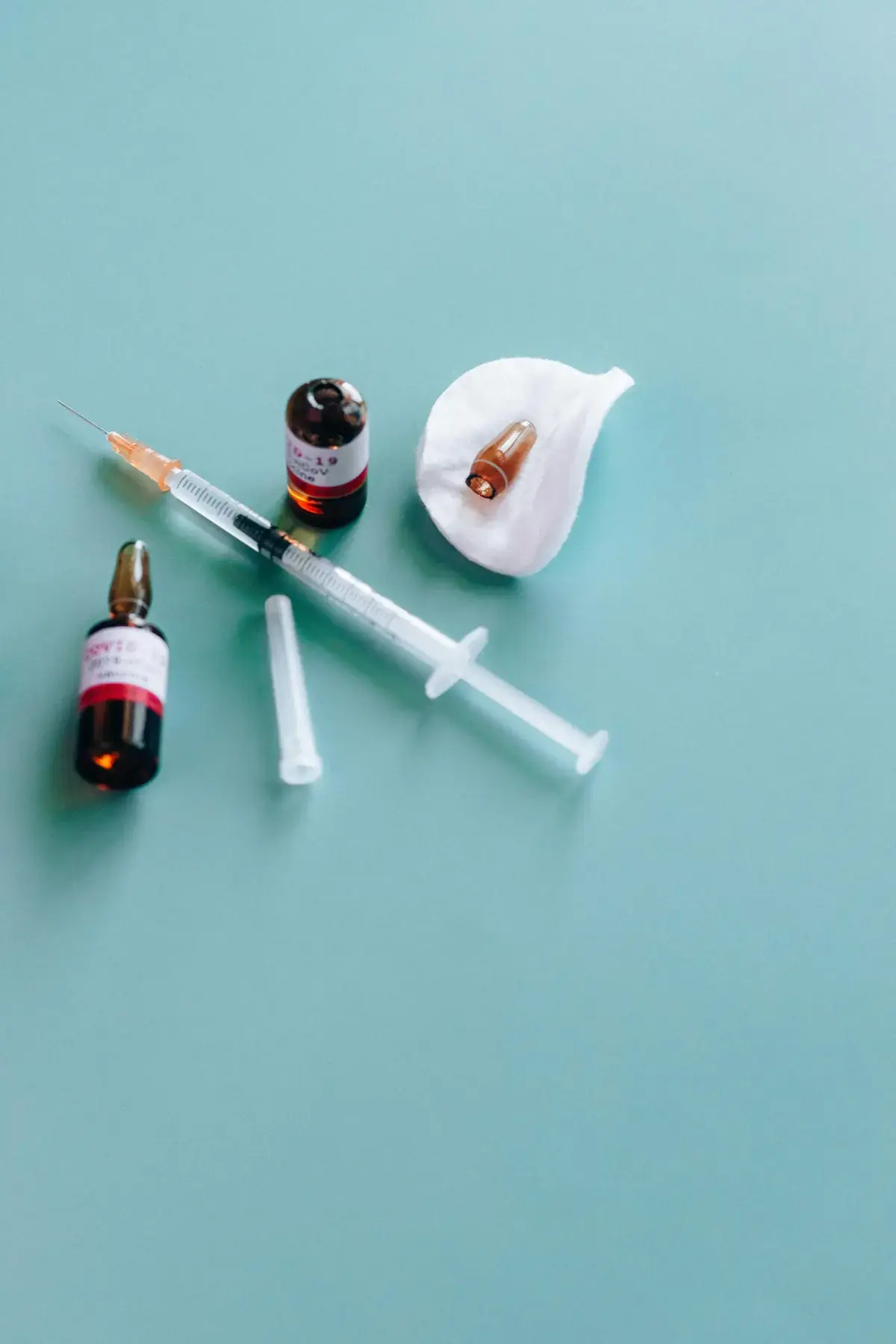
Immunotherapy for breast cancer
pembrolizumab
Breast cancer immunotherapy for triple negative tumours: pembrolizumab (Keytruda) and KEYNOTE-522 protocol. Patient guide — Dr Zeitoun, Paris.
A few useful reference points
The orders of magnitude worth knowing.
Immunotherapy is a framework treatment, closely monitored, and particularly effective for early triple negative breast cancers — and the decision is always made collegially.
Immunotherapy, helping your body defend itself
Your immune system normally knows how to recognise what is wrong. But some cancer cells, cleverly, manage to hide from this surveillance. Immunotherapy lifts that disguise: it gives your defences back the ability to see the tumour — and to eliminate it.
The medication used in breast cancer is called pembrolizumab (brand name: Keytruda). How does it work, simply? When one of your T lymphocytes (the soldiers of the immune system) approaches a tumour cell, the cell can send a "don't shoot" signal — like a fake white flag. Pembrolizumab blocks that fake signal. The T lymphocyte then sees the tumour for what it is, and does its job.
In breast cancer, this approach has transformed the care of a particular subtype: triple negative breast cancer. These are tumours that do not respond to hormones (HR-) and do not carry HER2. For a long time the most challenging to treat — because they escape hormone therapy and anti-HER2 therapies — they now benefit from a protocol called KEYNOTE-522, which combines chemotherapy and immunotherapy. To understand how this profile is identified, see the pathology report.
Am I a candidate for immunotherapy?
Immunotherapy is not offered to every patient. It addresses one specific subtype: so-called triple negative cancers. The decision always goes through a multidisciplinary team meeting (MDT), which brings together surgeon, oncologist, radiation oncologist and pathologist to look at your case together. Here, simply, are the situations concerned.
Stages II and III
This is the most common indication today: triple negative breast cancer with a tumour a few centimetres in size or involved nodes. The treatment, called KEYNOTE-522, combines chemotherapy and immunotherapy before surgery, then immunotherapy alone after. The decision is based on the workup already performed: mammogram, ultrasound, MRI if needed, biopsy of the tumour and lymph node.
Small tumour, case by case
When the triple negative cancer is very small and without involved nodes, the team may choose between several options: the full protocol, or chemotherapy without immunotherapy. It is discussed case by case, depending on your tumour profile.
According to a test on the tumour
When the cancer has spread beyond the breast, immunotherapy is offered if a test on the tumour shows it can benefit. This test, called PD-L1, measures whether the tumour cells carry a particular signal that immunotherapy can target. It is performed by your pathologist. If the result is favourable, immunotherapy is combined with chemotherapy.
Under study
For hormone-sensitive (HR+) breast cancers — the majority of breast cancers — when they show an aggressive profile (large size, involved nodes, or highly dividing cells under the microscope), recent studies (KEYNOTE-756) open a path. But this is not yet a routine indication in France. To watch in the coming years.
In practice, it is the biopsy report (which says whether the tumour is triple negative, hormone-sensitive or HER2+), together with imaging and clinical stage, that guides the decision. Everything is discussed in MDT. If immunotherapy is chosen, your oncologist will present the protocol to you in detail during a dedicated consultation.
The treatment, step by step
The protocol called KEYNOTE-522 lasts about one year. It unfolds in three phases: a first treatment phase before surgery (about 6 months), then the surgery, then a second phase of immunotherapy after surgery (about 6 months).
Here are the main steps — exact dates will be given by your oncologist based on your personal calendar.

It prepares and complements it."
Before reading on, let's talk
A second opinion before starting, a question about the surgery to come, a doubt to clarify — feel free to get in touch.
The effects to know, and to report
The effects of immunotherapy don't look like those of chemotherapy. Because we boost your defences, they can sometimes — rarely — get a bit too active and affect healthy organs too. Good news: the vast majority of these effects are well managed when picked up early, most often with simple corticosteroid treatment.
One thing to keep in mind: these effects can appear at any time — during treatment, or sometimes weeks later. Never hesitate to report any unusual symptom to your team: it's the best way to act fast.
To remember: most effects are reversible with prompt management. A few (mostly on the hormonal side) can leave a permanent trace — but easily corrected by simple daily treatment. The benefit of treatment remains far greater than these risks in the indications retained.
In practice: a short message or call to your team, and everything is assessed quickly. In case of emergency (shortness of breath, chest pain, fainting), go to the emergency department, mentioning that you are on immunotherapy.
Immunotherapy and your surgery
Immunotherapy does not replace surgery — it prepares it. Surgery remains an essential step, between the two treatment phases.
My role as a breast surgeon, at several moments:
— Before starting, in a second opinion consultation if you want to think through the strategy, or simply to anticipate the surgery to come. We look at your biopsy report, imaging, and the proposed plan together.
— During treatment, we can meet again if you feel the need — to take stock of the response, talk about effects, set dates. A response imaging is done mid-course to see how the tumour has responded.
— For the surgery itself, which takes place 2 to 4 weeks after the last infusion. Most often a lumpectomy with sentinel lymph node — sometimes with a touch of plastic surgery to preserve the shape of the breast. A mastectomy remains possible depending on the situation; we then discuss reconstruction.
— Analysis of the removed tissue tells whether the tumour has fully disappeared (called pCR, or complete response). If yes, we continue immunotherapy alone. If not, additional treatments are discussed in MDT.
— After surgery, I remain your contact for local follow-up — wound healing, monitoring — during radiotherapy then the remaining immunotherapy phase.
Your questions, the answers
The questions patients most often ask about immunotherapy — before treatment, during, or simply to understand. If yours isn't here, it will find its answer in consultation.
Immunotherapy uses a molecule (pembrolizumab, or Keytruda) that helps your immune system recognise and destroy tumour cells. Cancer cells can hide from the immune system by activating a brake called PD-1/PD-L1. Pembrolizumab releases this brake.
In breast cancer, the main indication is for triple negative tumours at early stages (II and III) — this is the KEYNOTE-522 protocol. Immunotherapy is combined with chemotherapy before surgery (neoadjuvant setting), then continued alone after the operation (adjuvant setting).
Immunotherapy is not offered to every patient. The main indications in early breast cancer are:
— triple negative tumours at stage II or III (with or without lymph node involvement): this is the KEYNOTE-522 protocol;
— for very early triple negative cancers (T1c N0), the indication is discussed case by case in MDT;
— for metastatic triple negative cancers, the indication depends on PD-L1 status (KEYNOTE-355).
Hormone receptor positive (HR+) or HER2 positive cancers do not, in routine French practice in 2026, benefit from immunotherapy — although some recent studies (KEYNOTE-756) open perspectives for high-risk luminal tumours.
The protocol unfolds in two phases.
— Before surgery (neoadjuvant phase, about 24 weeks): 4 cycles of weekly paclitaxel + carboplatin combined with pembrolizumab every 3 weeks, then 4 cycles of EC (or AC) every 3 weeks with pembrolizumab.
— Surgery (lumpectomy or mastectomy depending on context).
— After surgery (adjuvant phase, about 27 weeks): 9 additional cycles of pembrolizumab alone, every 3 weeks — or option every 6 weeks at 400 mg.
In total, approximately one year of treatment.
Side effects of immunotherapy are distinct from those of classical chemotherapy. They relate to excessive immune system activation (so-called "IRAE", immune-related adverse events).
The most common: fatigue, pruritus, skin rash, thyroid dysfunction (mostly hypothyroidism, sometimes hyperthyroidism).
Rarer but important to know: colitis, hepatitis, pneumonitis, hypophysitis, adrenal insufficiency, acute type 1 diabetes, and more rarely myocarditis.
The vast majority are manageable with careful monitoring and, if needed, corticosteroids. It is essential to report any unusual symptom promptly to the oncology team.
It depends on the context.
— For early triple negative breast cancer (KEYNOTE-522 protocol, neoadjuvant + adjuvant setting), no PD-L1 status is required: all stage II and III patients can benefit.
— However, for metastatic triple negative breast cancer in first line (KEYNOTE-355), pembrolizumab is indicated only if the CPS (Combined Positive Score) is 10 or greater, measured on the tumour with the 22C3 clone.
Your pathologist then performs a specific immunohistochemistry test.
Data from the KEYNOTE-522 trial (Schmid et al., New England Journal of Medicine 2020 and 2022, then OS 2024) show a clear benefit.
In triple negative cancers at stage II-III, adding pembrolizumab to chemotherapy:
— increases the rate of pathologic complete response (pCR) after surgery;
— improves event-free survival (EFS) at 5 years by approximately 8 to 10 percentage points;
— and the overall survival (OS) analysis published in 2024 confirms a mortality benefit.
This is a major advance for this subtype, the most aggressive of breast cancers, which does not benefit from hormonal therapy or anti-HER2 therapies.
Before the first cycle, a specific additional workup is performed: TSH, free T4, troponin I, NT-proBNP, CPK, morning cortisol, fasting blood glucose, lipase, HbA1c. A cardiac ultrasound and ECG are also required.
Viral serologies are checked. Vaccinations are updated according to HAS recommendations — please note, live vaccines are contraindicated under immunotherapy.
An oncogenetic consultation is offered to look for a BRCA mutation. If you plan a pregnancy, an oncofertility consultation must be organised before starting.
A pembrolizumab infusion lasts about 30 minutes. It is given in a day hospital, most often through a central venous catheter (port-a-cath, or PAC) placed at the start of care.
Pembrolizumab is given as monotherapy or combined with chemotherapy depending on the protocol sequence. Before each infusion, an oncology consultation checks your tolerance, blood results and the absence of any immune-related side effect.
The first infusions are monitored more closely (rare risk of allergic reaction).
Yes. Pembrolizumab has a European marketing authorisation for early high-risk triple negative breast cancer (KEYNOTE-522) and metastatic triple negative breast cancer with PD-L1 ≥10 (KEYNOTE-355).
It is covered 100% by the French health insurance under ALD 30 (long-term illness — breast cancer). No fee is charged to the patient at the social security tariff.
In the KEYNOTE-522 protocol, pembrolizumab is started approximately 6 months before surgery (combined with chemotherapy).
Surgery — lumpectomy with sentinel lymph node, or mastectomy — is performed 2 to 4 weeks after the last pembrolizumab + chemotherapy infusion. This interruption is needed to limit operative risks (wound healing, infection).
Pembrolizumab alone is then resumed approximately 2 to 4 weeks after surgery, and continued for 9 cycles. Radiotherapy, if indicated, can be performed during the adjuvant phase of pembrolizumab.
Immunotherapy is contraindicated during pregnancy. If you are under 40 with a future pregnancy plan, an oncofertility consultation must be organised BEFORE starting treatment — ideally as soon as the diagnostic MDT takes place.
It enables discussion of fertility preservation options (egg or embryo freezing). Effective non-hormonal contraception is recommended throughout the duration of treatment and for 4 months after the last infusion.
Some recent data suggest a possible impact on AMH (ovarian reserve) — specific follow-up is useful.
Immune-related side effects can occur at any time — during treatment, but also weeks or even months after the last infusion. That is their particular feature.
Any unusual symptom should be reported without delay to your oncology team: significant diarrhoea (colitis?), new shortness of breath (pneumonitis?), abrupt fatigue or impaired consciousness (hypophysitis, adrenal?), jaundice (hepatitis?), palpitations or chest pain (myocarditis?).
In case of emergency, contact the oncologist or present at the emergency department, mentioning the immunotherapy. Early diagnosis allows simple management — often with corticosteroids — and prevents complications.
Yes, and it is encouraged. Asking for a second opinion before an immunotherapy treatment is legitimate, and does not significantly delay care.
Simply bring your pathology report, your imaging results and the MDT summary. I see patients in Paris 8th and at Clinique Hartmann (Neuilly-sur-Seine), where I operate.
Explore related pages
Let's discuss your situation
A consultation to discuss your immunotherapy treatment, understand the options available to you, or request a second opinion — feel free to book an appointment.