

Cervical cancer Cervix surgery & treatment Dr Jérémie Zeitoun · Surgeon in the 8th arrondissement of Paris
Detected early, cervical cancer is very treatable. Surgery is the cornerstone — and in some cases, it is possible to preserve fertility.

Cervical cancer develops from the cells lining the cervix, the lower part of the uterus. In 99% of cases it is linked to human papillomavirus (HPV). A smear can find a lesion before it is a cancer. At early stages, surgery is the main treatment; preserving fertility can be discussed in some cases. Dr Jérémie Zeitoun sees patients in the 8th arrondissement of Paris and operates at Clinique Hartmann (Neuilly-sur-Seine).
A cancer that can be prevented and treated
Being told you have cancer is a shock. But cervical cancer, especially when discovered early, is one of the most treatable cancers — with more than 9 out of 10 cases cured at early stages.

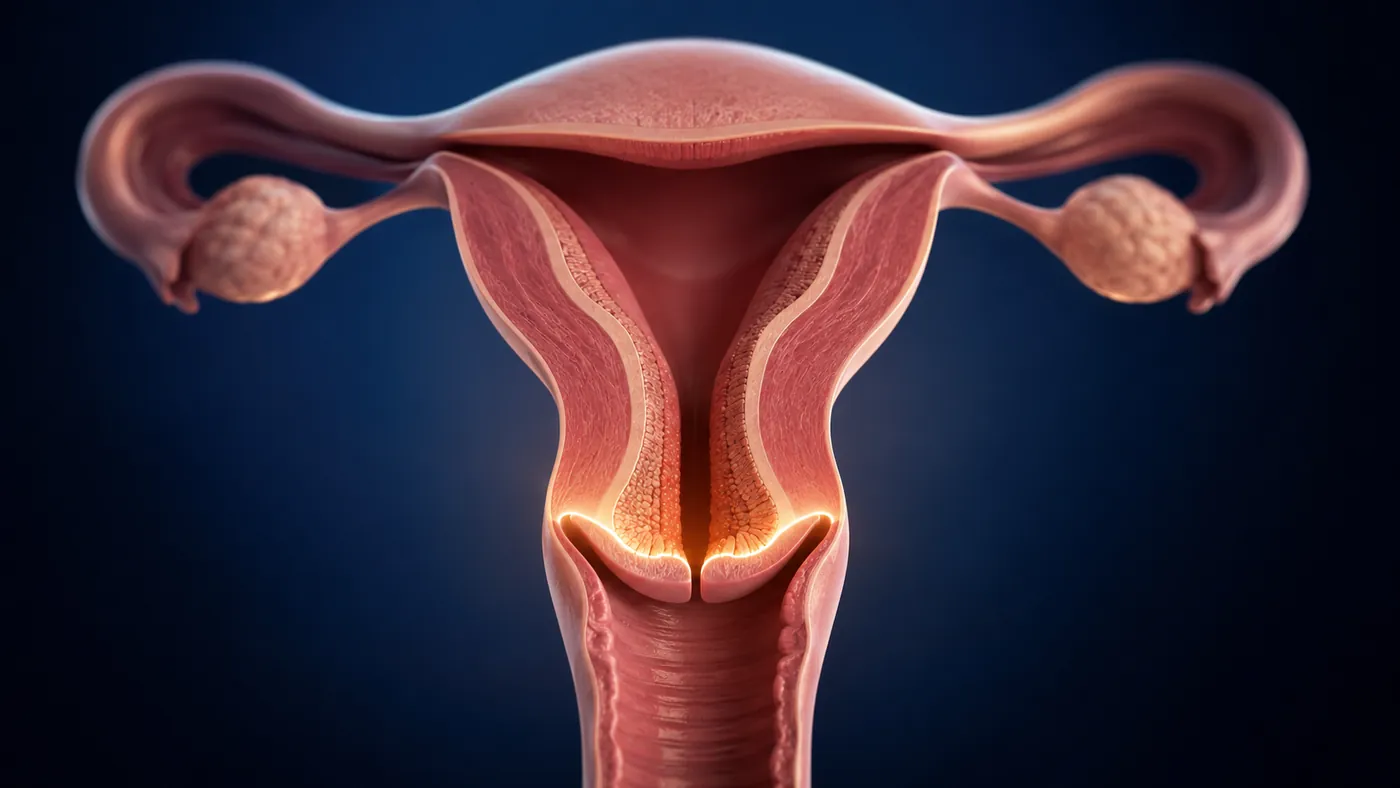
Cervical cancer develops from the cells lining the cervix — the lower part of the uterus that connects to the vagina. In 99% of cases, it is caused by a very common virus: human papillomavirus (HPV). The good news is that there is a vaccine against this virus, and a smear test that can detect it before it even becomes a true cancer.
Reference source: NHS — Cervical cancer
You have received an abnormal smear result, a positive HPV test, or have been told about dysplasia or a precancerous lesion? This is not yet cancer — and it is treated differently. See the dedicated page on benign cervix surgery.
Cervix — benign lesions →Excellent chances of cure
Caused by HPV in 99% of cases
Fertility can be preserved
Signs that should alert you
Cervical cancer is often silent at very early stages — which is why screening exists. But certain signs should prompt you to consult without delay.

- Bleeding after intercourse
- Bleeding between periods
- Bleeding after the menopause
- Unusual vaginal discharge (smell, colour)
- Persistent pelvic pain
- Pain during intercourse
- Unexplained persistent fatigue
Your pathway, step by step
From the moment you consult to recovery, here is what happens in practice. You are never alone in making decisions.

-
The initial consultation
You come with your results (smear test, biopsy, pathology report). We take time to read everything together, answer your questions, and explain what was found — without jargon. No decision is made at this stage. The aim is to understand the situation calmly, then build a personalised care plan. -
Imaging assessment
A pelvic MRI is requested. It shows exactly the size of the tumour and its extent. This examination guides the choice of treatment. A body CT scan or PET-CT is sometimes added to assess potential lymph node spread, especially for tumours larger than 2 cm. -
Multidisciplinary team meeting (MDT)
Your case is presented anonymously to a team of specialists: surgeons, oncologists, radiotherapists, pathologists, radiologists. The treatment plan is decided collegially, in line with the latest guidelines (ESGO, NCCN, French Saint-Paul de Vence). You receive a written summary. -
Pre-operative consultation
We discuss the proposed surgery in detail: technique, benefits, risks, expected recovery, fertility preservation if possible, sexual life after surgery. You can ask any question, take time to think, request a second opinion. Anaesthetic consultation is scheduled separately. -
The operation and immediate recovery
The operation takes place at Clinique Hartmann (Neuilly-sur-Seine). Hospital stay varies: 1 day for conisation, 2 to 5 days for hysterectomy. Pain is well managed with modern protocols. You are mobilised quickly. A nurse and the team support you throughout. -
Follow-up
After surgery, follow-up is regular for 5 years (every 3-6 months for the first 2 years, then annually). It includes clinical examination, smear test, sometimes imaging. Adjuvant treatment (radiotherapy, chemotherapy) is discussed at MDT depending on the surgical pathology results.
A cervical mass or a cervical cancer diagnosis?
Bring your colposcopy, biopsy, pathology or pelvic MRI reports. The consultation lasts 30 minutes — a personalised treatment plan is provided.
The possible operations
The type of operation depends on tumour size, your wish for pregnancy, and the multidisciplinary team's decision. Here is what each procedure involves in practice.
Conisation
For precancerous lesions and very localised early cancersWhat it is. Conisation removes a small cone-shaped portion of the cervix — where the lesion is located. The uterus, ovaries and everything else are preserved.
When it is proposed. For high-grade precancerous lesions (CIN 2-3) and the very earliest stages of cancer (when the tumour is very small and superficial, stage IA1 without lymphovascular invasion).
How it works. The procedure takes 20 to 30 minutes under general anaesthesia. It is day surgery: you come in the morning and go home the same evening. No abdominal incision.
Recovery. A few days of light bleeding are normal. You are asked to avoid baths and tampons for 3 to 4 weeks. Return to usual activities within about a week.
What about fertility? After conisation, pregnancies are entirely possible. Enhanced monitoring during pregnancy is recommended.
Fertility-sparing cervical surgery (multiple high conisations / trachelectomy)
For early-stage cancers — preserves the uterus and the possibility of pregnancyWhat it is. Multiple high conisations remove the suspicious areas of the cervix while preserving the uterine body. This operation treats the cancer while keeping the possibility of pregnancy.
When it is proposed. For small tumours in patients wishing to preserve fertility. Saint-Paul de Vence 2025 guidelines specify that this fertility-sparing cervical surgery, when extended to the parametria, must be performed in an expert centre. Pre-therapeutic conisation helps better define the situation: tumour size, depth of stromal invasion, presence of lymphovascular emboli.
Sentinel lymph node biopsy is associated. The pelvic sentinel lymph node is sampled in the same operative session to verify there is no spread to the lymph nodes. If the sentinel node is healthy, fertility-sparing surgery can continue.
Recent evolution: SHAPE 2024 trial. This major international trial (published in the New England Journal of Medicine) showed that for tumours with favourable prognosis — less than 2 cm, low cervical wall infiltration on MRI (less than 50%), depth of stromal invasion below 10 mm — simple hysterectomy without parametrial removal gives equivalent results to radical surgery, with fewer urinary and sexual complications. This simplification is now a validated option for eligible patients according to Saint-Paul de Vence 2025 guidelines.
And pregnancies after? Pregnancies are possible after this type of conservative surgery. The risk of preterm delivery is higher: enhanced obstetric follow-up and planned caesarean section are organised.
Total colpo-hysterectomy
For more advanced cancers — removes the uterus and cervix entirelyWhat it is. Total colpo-hysterectomy removes the entire uterus (body + cervix) and a vaginal cuff. Depending on cancer stage and MRI findings, it may be extended to the parametria — the ligaments that hold the uterus in the pelvis. The pelvic lymph nodes are also sampled for analysis.
When it is proposed. When the tumour is larger, when fertility-sparing surgery is not possible or not desired. The exact extent of the operation (with or without parametrial extension) is decided at the multidisciplinary team meeting based on MRI findings.
How it works. The operation lasts 2 to 3 hours under general anaesthesia, through a lower abdominal incision (discreet horizontal scar, similar to caesarean). Precision surgery preserving pelvic nerves as much as possible to avoid urinary disturbances afterwards. Sentinel lymph node sampling is usually associated with the main operation.
Will I keep my ovaries? In the vast majority of cases, especially before age 50, yes — the ovaries can be preserved. Cervical cancer does not spread to the ovaries at operable stages. Keeping the ovaries avoids surgical menopause. According to Saint-Paul de Vence 2025 guidelines, ovarian preservation is discussed for women of childbearing age, with a tumour less than 4 cm, of squamous cell carcinoma type or HPV-related adenocarcinoma. Ovarian transposition (moving the ovaries out of the radiation field) may be offered if radiotherapy is planned.
Hospital stay. 4 to 6 days. Return to normal activity within 4 to 6 weeks. Bladder rehabilitation is sometimes necessary.
After the operation. Depending on pathology results, complementary radiotherapy may be recommended. This is not systematic — it depends on what the results show.
Sentinel lymph node
A technique that avoids removing many lymph nodes unnecessarilyWhat it is for. When cancer spreads, it first travels through the pelvic lymph nodes. The sentinel node is the first lymph node the cancer would reach if it were spreading. We analyse it during the operation: if it is healthy, the others are very probably also healthy — and we don't remove them. This avoids extensive lymphadenectomy and its complications.
Why it matters. Removing many lymph nodes can cause lymphoedema (swollen legs due to disrupted lymphatic circulation). The sentinel lymph node technique greatly reduces this risk.
How it is done. A small amount of fluorescent dye (indocyanine green) is injected into the cervix at the start of the operation. This dye travels to the sentinel node, which becomes visible under a special light. We remove and analyse it immediately during the operation.
Saint-Paul de Vence 2025 guidelines. Sentinel lymph node biopsy is now the reference technique for small cervical tumours. It must be performed by a trained team (at least 15 procedures per year), with ICG detection. In case of identification failure, a new injection or a limited ipsilateral lymphadenectomy is performed.
What happens depending on the result. If the node is healthy, we don't remove the others. If the node contains cancer cells, lymphadenectomy (removal of more nodes) is performed in the same operative session — or sometimes surgery is interrupted in favour of radio-chemotherapy, depending on context.
→ See the full page on pelvic sentinel lymph node — detailed procedure, indications, recovery, comparison with classic lymphadenectomy.
A question about which type of operation concerns you? I'll explain everything during a consultation — or call the office directly for a first discussion.
Cervical cancer does not necessarily mean
the end of your plans for a family
If you wish to have children, say so from the very first consultation. This is the first point to address, not the last — because it changes the surgical strategy.
At early stages, fertility-sparing cervical surgery (multiple high conisations or trachelectomy) treats the cancer while preserving the uterine body. Pregnancies have been documented after this operation — with enhanced obstetric monitoring and planned caesarean section.
According to Saint-Paul de Vence 2025 and the SHAPE 2024 trial (NEJM), eligibility for fertility-sparing surgery is now well defined: tumour less than 2 cm, low cervical wall infiltration on MRI (less than 50%), depth of stromal invasion below 10 mm, no lymphovascular invasion.
If fertility-sparing surgery is not possible (tumour too large, or your choice), other options may be discussed depending on your situation: ovarian preservation, ovarian transposition before radiotherapy, oocyte cryopreservation.
Would you like to know if you are a candidate for conservative surgery? Don't wait — say so at the first consultation, or contact us.
Life after treatment
Surgery is not the end of the journey — it is the beginning of recovery. Here is what you can concretely expect in the weeks and months that follow.
Hospitalisation
1 to 5 days depending on the operation
Return to work
1 to 6 weeks
Physical activity
Gradual resumption
Intimate life
Possible after 6 weeks
Follow-up appointments
Every 4 months for the first 2 years
And my ovaries?
Generally preserved before age 50
Do you have questions about recovery after an operation? I answer practical questions during the consultation — not just medical ones.
Would you like a second opinion on your diagnosis or treatment plan?
Send me your MRI and your report. I respond within 48 hours.
Frequently asked questions about cervical cancer
The most common questions asked in consultation. Ask yours at your appointment.
Will I lose my hair?
▾Will I keep my ovaries?
▾Can I have children after treatment?
▾How long will I be in hospital?
▾When can I return to work?
▾Will the operation leave scars?
▾Does an abnormal smear necessarily mean cancer?
▾Can I request a second opinion?
▾Can I have sex after a hysterectomy?
▾What is the difference between trachelectomy and hysterectomy?
▾Is cervical cancer visible on ultrasound?
▾Does the HPV vaccine protect me if I have already been infected?
▾Is radiotherapy always needed after the operation?
▾What is the sentinel lymph node?
▾How long does follow-up last after treatment?
▾Which cervical symptoms should prompt a visit?
▾Is surgery the treatment for advanced cervical cancer?
▾Where, and by whom, is cervical cancer operated on when surgery is chosen?
▾How do I book an appointment?
▾Cervical cancer requires expert surgical management in a centre with specific experience in gynaecological oncology. In Paris, Dr Jérémie Zeitoun manages cervical cancers at Clinique Hartmann (Neuilly-sur-Seine) He sees patients in Paris 8th and at Clinique Hartmann (Neuilly-sur-Seine), where he operates. Every case is presented at a multidisciplinary meeting before any surgical decision.
Radical hysterectomy: what's different?
In cervical cancer, hysterectomy takes a specific form: radical hysterectomy (Wertheim type). It removes the uterus, a vaginal cuff and parametrium, with pelvic lymphadenectomy. It's not always indicated — it depends on stage and workup.
- → Wertheim radical hysterectomy (selected cases)
- → Systematic pelvic lymphadenectomy
- → Laparoscopy or laparotomy depending on the case
- → Surgical principles, complications, full pathway
Learn more
Book an appointment
Come with your questions, your results, your concerns. We take the time to discuss everything together.
Transparent pricing
Dr Zeitoun practises as a private specialist (Sector 2) and charges fees above the standard national rate. French national health insurance reimburses on the basis of the standard rate — this is improved for cancer patients (ALD 30). Your complementary health insurance may cover additional fees depending on your policy.
Scientific references
- Plante M et al. Simple versus Radical Hysterectomy in Women with Low-Risk Cervical Cancer. NEJM. 2024;390:819-829. PubMed
- Monk BJ et al. Pembrolizumab plus chemoradiotherapy for cervical cancer (KEYNOTE-A18). Lancet. 2024;403:1341-1350. PubMed
- Cibula D et al. ESGO/ESTRO/ESP Guidelines for the Management of Patients with Cervical Cancer — Update 2023. Int J Gynecol Cancer. 2023;33:649-666. PubMed
- Ramirez PT et al. Minimally Invasive versus Abdominal Radical Hysterectomy for Cervical Cancer (LACC). NEJM. 2018;379:1895-1904. PubMed
- Mathevet P et al. Sentinel Lymph Node Biopsy and Morbidity Outcomes in Early Cervical Cancer (SENTICOL-2). J Clin Oncol. 2021;39:1247-1254. PubMed
- Frumovitz M et al. Quality of life in radical trachelectomy versus radical hysterectomy. Gynecol Oncol. 2020;156:e1-e10. PubMed
- Bhatla N et al. Revised FIGO staging for cervical cancer. Int J Gynaecol Obstet. 2019;145:129-135. PubMed
- NCCN Guidelines. Cervical Cancer Version 1.2025. National Comprehensive Cancer Network. 2025. PubMed