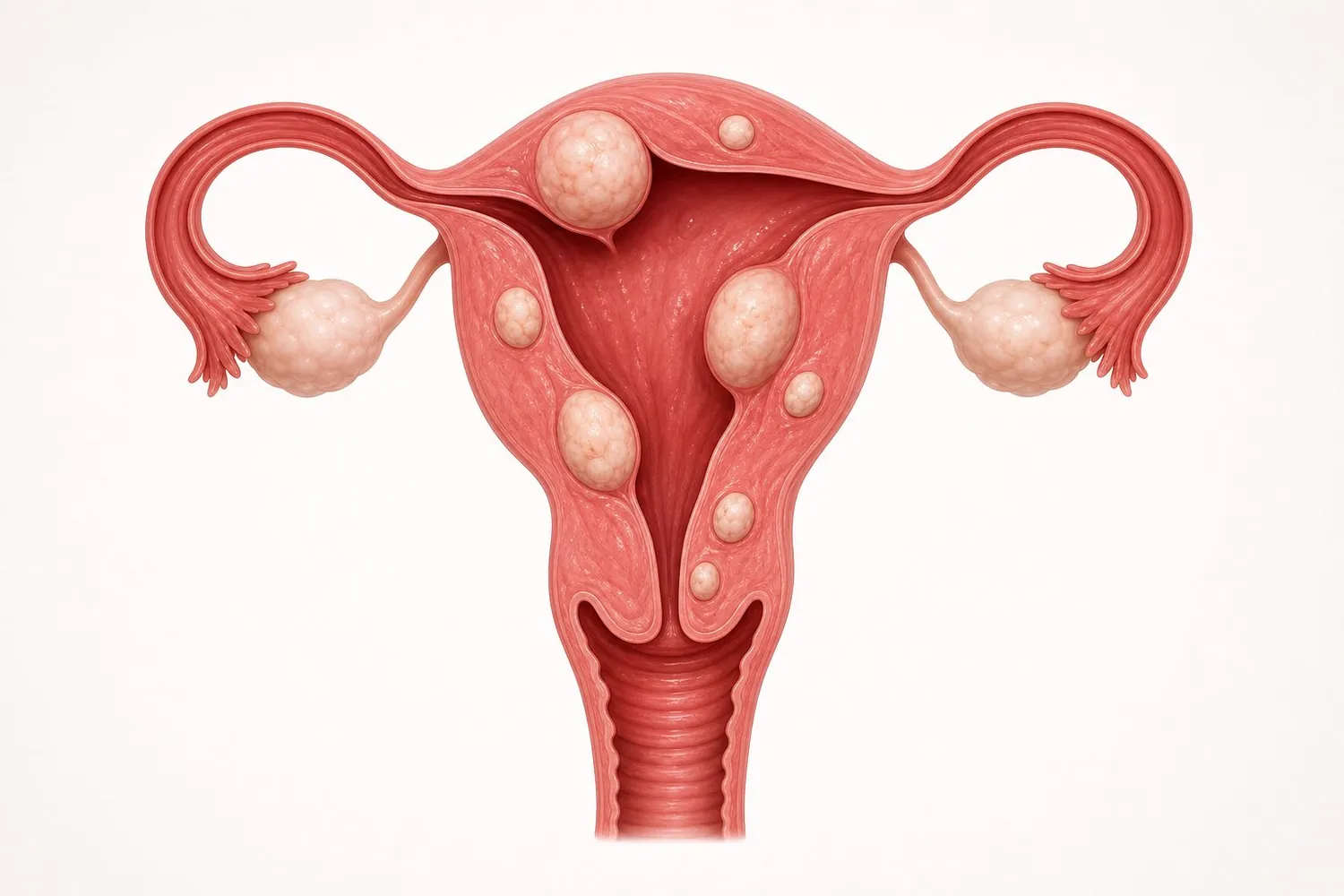
Removal of the uterus via vaginal, laparoscopic or abdominal approach: the choice depends on your condition, your anatomy and your surgical history. The goal: the least invasive intervention possible, tailored to your situation.
Hysterectomy is the surgical removal of the uterus. It is indicated for certain benign conditions (uterine fibroids, adenomyosis, refractory menorrhagia) or for gynecologic cancers (endometrial, cervical, ovarian). Three surgical approaches are possible: vaginal, laparoscopic, or via laparotomy. Dr Jérémie Zeitoun, gynecologic surgeon in Paris 8 and at Clinique Hartmann in Neuilly, offers a personalized choice after clinical examination and thorough workup.
Hysterectomy is one of the most frequently performed and best-standardized gynecologic procedures. Minimally invasive approaches are preferred whenever possible.
Vaginal, laparoscopy or laparotomy: the choice depends on uterine size, pathology, surgical history and anatomy.
From 2 to 6 weeks depending on approach. Minimally invasive approaches allow a faster return to daily and professional activities.
Symptomatic uterine fibroids, adenomyosis, menorrhagia refractory to medical treatment.
Learn more →Total hysterectomy with bilateral salpingo-oophorectomy is the standard of care.
Learn more →Radical hysterectomy (Wertheim) depending on stage and preoperative workup.
Learn more →Hysterectomy is part of complete cytoreductive surgery.
Learn more →Before discussing the surgical approach (vaginal, laparoscopy or laparotomy), two anatomical decisions must be made in consultation: which part of the uterus to remove, and what to do with the tubes and ovaries. These choices depend on your age, the pathology, and your personal context.
Removal of the uterus and cervix. The most common and widely performed procedure.
Removal of the uterine body only, cervix preserved. Reserved for selected benign indications.
Tubes and ovaries are left in place. Preferred in pre-menopausal women with benign disease.
Removal of both fallopian tubes with ovary preservation. Increasingly offered, including for benign disease.
Removal of both tubes AND both ovaries. Indicated in oncologic settings, high-risk patients or post-menopausal women.
Three surgical approaches are used to perform a hysterectomy. This table gives the broad outlines; techniques are detailed in the next section.
| Vaginal | Laparoscopy | Laparotomy | |
|---|---|---|---|
| Abdominal scar | None | 4 small incisions | 1 incision of 10–15 cm |
| Hospital stay | 1–2 days | 2–3 days | 4–5 days |
| Return to activity | 2 weeks | 2–3 weeks | 4–6 weeks |
| Post-op pain | Moderate | Moderate | More significant |
| Max uterine size | Small to medium | Small to large | Any size |
The uterus is removed through natural orifices, without any abdominal incision. The procedure is performed under general anesthesia in lithotomy position. The surgeon accesses the uterus directly through the vagina.
This is the oldest and least invasive approach. It is preferred when the uterus is small to medium in size, in the absence of major prior abdominal surgery, and when uterine mobility allows it.
Ovaries can be removed via this approach in selected cases, although this is technically more demanding than in laparoscopy.
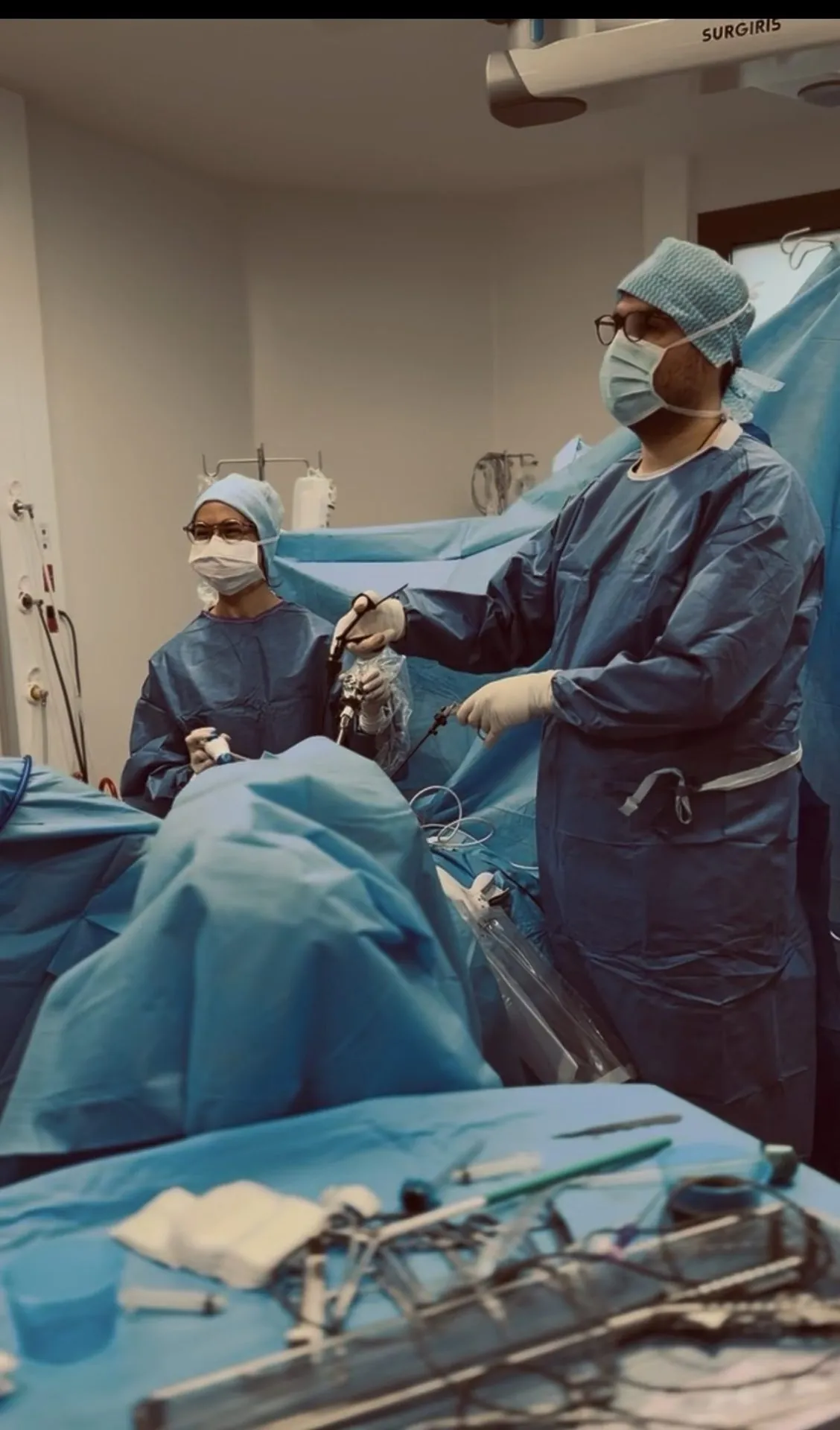
Four small abdominal incisions of 5 to 10 mm are made: one at the umbilicus (optics) and three others on the abdomen (instruments). The surgeon operates while visualizing the interior of the abdomen on a screen.
This is the most versatile minimally invasive approach. It handles uteri from small to large size and offers excellent visualization of adnexa (ovaries, tubes) and the pelvis — particularly useful in oncologic settings or when an associated procedure is needed (lymphadenectomy, endometriosis).
The uterus is extracted through the vagina. Recovery is fast, pain is moderate and scars are very discreet.
The procedure is performed through an abdominal incision of 10 to 15 cm, usually horizontal above the pubis (Pfannenstiel) or vertical depending on context. This approach is now less frequent than minimally invasive ones.
It remains indicated in certain situations: very large uterus (massive polymyomatous fibroids), significant adhesions, some advanced cancers requiring extensive pelvic exposure, or when minimally invasive approaches have been ruled out.
Recovery is longer and postoperative pain more marked, but the approach offers maximum exposure and safety when anatomy demands it.
Beyond the chosen approach, any hysterectomy relies on the same fundamental surgical principles. Knowing them helps understanding the course of the procedure.
The uterus is held by several ligaments (round, utero-ovarian, broad, uterosacral, cardinal). They are sectioned in an orderly fashion, from top to bottom, with rigorous hemostasis at each step.
The ureters run immediately adjacent to the uterine vessels. Systematic visual identification is a key step — the absolute guarantee to avoid any ureteric injury.
The bladder is gently separated from the anterior face of the uterus and cervix. This step is essential to safely approach the cervix without risking bladder injury.
The uterine arteries and infundibulopelvic pedicles (if annexectomy) are identified, ligated or sealed in a secure manner. The most demanding hemostatic step.
The cervix is detached from the vagina via circular incision. The uterus is then extracted according to the chosen approach (through the vagina for vaginal or laparoscopic, through the parietal incision for laparotomy).
The vaginal cuff is sutured. Systematic verification of hemostasis, bladder and ureteric integrity is performed before closure. A drain may be left depending on context.
Hysterectomy is an overall safe procedure, but every surgery carries risks. Complications specific to each approach are presented in the technique tabs above. Below are the general complications, common to all approaches, with indicative frequencies.
The choice of approach is never trivial. It results from precise evaluation of several parameters, in consultation:
The goal is always to offer the least invasive approach possible while guaranteeing safety and oncologic quality when required.
The preoperative pathway is structured around several steps:
You are admitted to Clinique Hartmann on the morning of surgery, fasting. After preparation and meeting with the anesthesia team, you are taken to the operating room.
Anesthesia is always general for hysterectomy. Depending on the chosen approach, surgery lasts between 1 and 3 hours. You are then monitored in recovery and returned to your room.
A urinary catheter is placed during surgery and removed, depending on approach, within hours or the day after.
First days. Pain is controlled with appropriate analgesics. Progressive refeeding and early mobilization are encouraged from day one.
At home. Moderate vaginal bleeding may persist 2 to 4 weeks. Fatigue is normal in the first weeks. Walking is recommended; heavy exertion and lifting are discouraged for 4 to 6 weeks.
Resuming activity. Intercourse resumed after 4 to 6 weeks, after clinical check. Sport gradually reintroduced.
Postoperative consultation: 4 to 6 weeks after surgery, to verify healing and discuss pathology results.
Complication prevention is embedded at every stage:
Sexuality. Hysterectomy does not alter sexual quality once healing is complete. Many patients even report improvement when the indication was painful or bleeding pathology. Intercourse is resumed after 4 to 6 weeks.
Menopause. If your ovaries are preserved (the most common situation before menopause), you will not be in surgical menopause. You will no longer have periods, but ovaries continue hormone production until natural menopause. However, if ovaries are removed before menopause, surgical menopause occurs immediately; hormone replacement therapy may be discussed.
Fertility. Hysterectomy definitively eliminates the possibility of pregnancy. This decision must be carefully considered. Fertility-preserving alternatives (myomectomy, embolization, medical therapy) are systematically discussed.
For benign conditions, several alternatives exist and must be discussed:
For oncologic settings, hysterectomy is often the standard of care; alternatives depend on stage and tumor type.
Requesting a second opinion before hysterectomy is strongly recommended, especially when:
Dr Zeitoun offers second-opinion consultations with all your documents (imaging reports, pathology, letters). The goal is an independent, argued opinion, without any obligation to change physicians.
A hysterectomy is a decision that must be carefully prepared. Dr Zeitoun welcomes you in consultation in Paris 8 or at Clinique Hartmann in Neuilly to review your case and guide you toward the most suitable approach — or, if needed, toward a colleague experienced in a specific technique.