
Dr Jérémie Zeitoun · Paris
Prepare your first consultation
First consultation checklist: documents, imaging, personal and family history, practical tips. Prepare your appointment — Dr Zeitoun, Paris.
First consultation checklist: documents, imaging, personal and family history, practical tips. Prepare your appointment — Dr Zeitoun, Paris.
A first consultation with a breast surgeon lasts between 20 and 50 minutes, depending on the situation. A second, or even a third consultation is sometimes considered — to finalize a decision, present an MDT recommendation, or simply allow time to reflect.
This page is here to help you avoid that. It gathers, in one place, everything that makes a first consultation truly productive: the right documents, the right history, and the right practical reflexes. A few minutes of home preparation save weeks in your care pathway.
Three categories to anticipate:
— Medical documents, first and foremost your breast imaging with the CDs or USB drives (not just the written reports), and, if performed, your biopsy with its full pathology report.
— Personal and family history, which place your situation in context and may justify, when relevant, a genetic counseling consultation.
— Practical aspects (insurance card, mutual insurance, family doctor, accompanying person), simple but essential.
This is the most important part. Without a complete file, evaluation remains partial and the consultation loses much of its value. All medical documents you have should be brought — even those that may seem old or marginal.
Three categories to prepare:
Mammogram, breast ultrasound, and MRI if performed. Ideally less than 6 months old, usable up to 12 months depending on context. Always bring the CDs or USB drives handed out by the radiologist, not just the written reports — the native images are essential to review the file and discuss it at MDT if needed.
If a biopsy was performed, bring the full pathology report: histological type, SBR grade, ER, PR, HER2, Ki67. This is the tumour identity card. Also bring the pathology reports of any benign lesion already removed (fibroadenoma, papilloma, atypical ductal hyperplasia).
If you are already in oncology care or have had previous breast surgery, add the following:
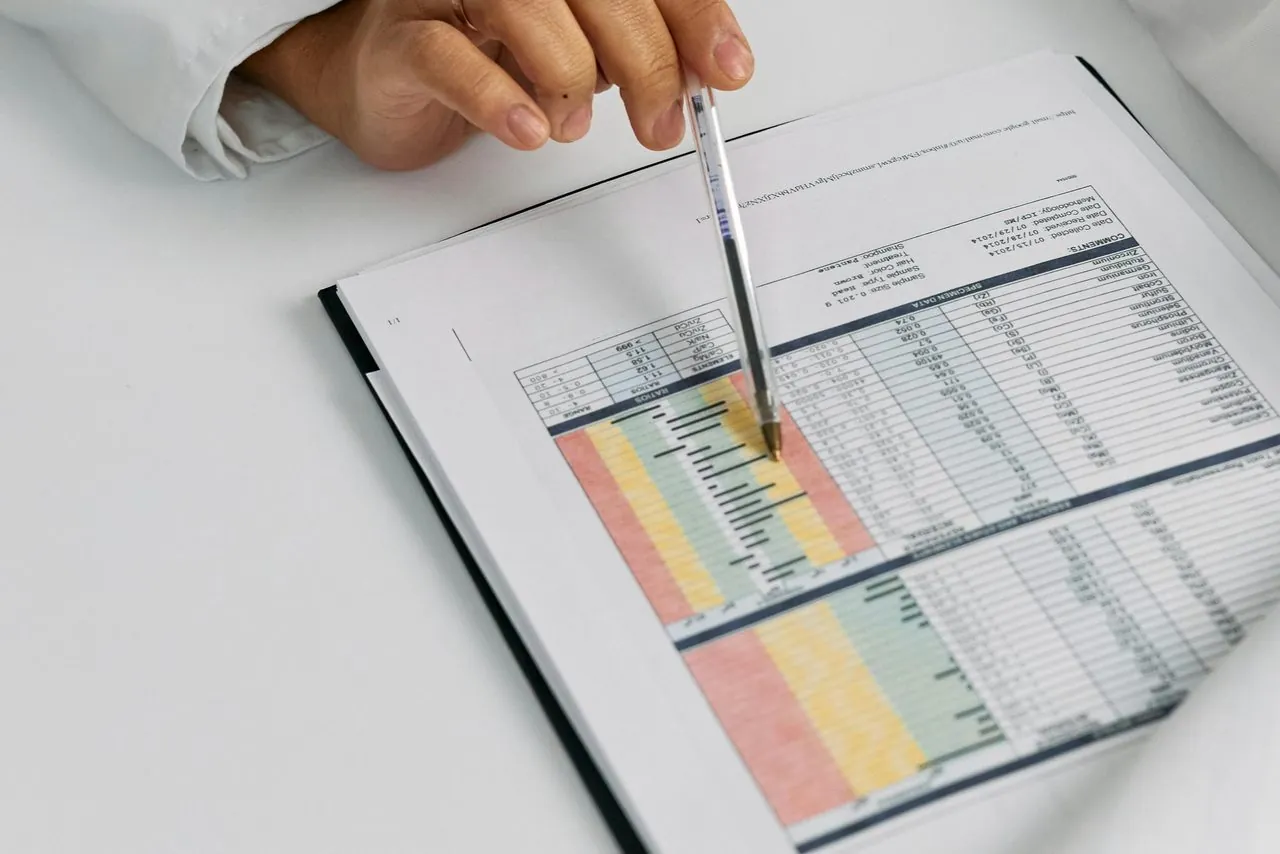
Tip: create a digital folder (on your phone or by email) with photos or scans of all these documents. It is a useful safety net in case you forget the paper version — and a great convenience for the rest of your care pathway.
No need to recall exact dates or bring an exhaustive file — a simple and accurate summary is enough. Preparing these elements at home, calmly, will save you from searching under pressure during the consultation. Here are the useful points to gather.

Again: no need to be exhaustive. A note in your phone or a sheet of paper with the main points is more than enough. The goal is to answer questions without hesitation rather than searching memory in consultation.
Family history of cancer is one of the most often forgotten elements in consultation, yet one of the most important. It may indicate a genetic predisposition that changes the surveillance strategy, or even the management — including preventive options.
Before the consultation, take time to look back through your close and extended family (parents, grandparents, uncles and aunts, cousins), both maternal and paternal sides — BRCA and other mutations are transmitted equally on both sides.
To help you assess whether your family history justifies a genetic counseling consultation, several tools are available. The Eisinger score, simple and validated, is integrated in the interactive questionnaire on the hereditary breast and ovarian risk page. For a broader view of the available tools (calculators, scores, indications for enhanced surveillance), see the risk tools page.
In case of confirmed genetic predisposition (mutation identified), risk-reduction strategies can be discussed: enhanced surveillance and, depending on the case, prophylactic mastectomy with immediate breast reconstruction. These options are not systematic — they are discussed case by case, after a genetic counseling consultation and ideally with a multidisciplinary team.
Beyond medical documents, a few practical reflexes make the difference between a smooth consultation and a derailed appointment. Nothing complex — just to anticipate.

Up-to-date health insurance card, mutual insurance card (or third-party payment), and ID. If you are in long-term care status (ALD), mention it. The administrative basis of the appointment — without these, some procedures cannot be initiated on the day.
Contact details of your family doctor, your referring gynecologist, and where applicable your oncologist or radiation oncologist. Useful for sending letters, coordinating care, and quickly transmitting consultation reports.
Write your questions in the days before, on your phone or on paper. Diagnosis, options, timeline, daily life impact, reconstruction, second opinion — all are legitimate. Emotion often makes you forget what you wanted to ask: a written list is a precious support.

One last point: you can come accompanied. Partner, relative, friend — having someone with you helps to listen, remember, and ask questions you may not dare to ask alone. If you prefer to come alone, that is equally legitimate — it is your choice. The consultation adapts.
Here are the three situations that make a first consultation less effective. None is a deal-breaker — but anticipating them will save you an appointment, sometimes two.
Bringing only the written reports of the mammogram or MRI, thinking it is enough. It is not enough. To evaluate your situation and discuss it at MDT if needed, the native images are required. The radiologist hands them out routinely — on CD or USB. Check before leaving.
Imaging over 12 months old is almost always updated before any surgical decision. If you know your imaging is old, anticipate by scheduling a new mammogram or ultrasound before the consultation — you will avoid an extra appointment.
« The radiologist has everything, the gynecologist has everything, it is in my file… » — in practice, files do not circulate between practitioners and institutions. Retrieving documents on the day is rarely possible. Bring everything yourself, paper or digital: the only safe way.
If despite this you arrive with an incomplete file, it is not a disaster. The consultation still takes place, the clinical exam is done, and missing items can be sent later by email to the secretariat — or brought to the next appointment. An incomplete consultation is better than postponing for several weeks.
The rule: everything you have related to your breast. Even a document that may seem marginal can be useful.
— All your recent imaging (mammogram, ultrasound, MRI) with the CDs or USB drives, not just the written reports.
— If a biopsy was done: the full pathology report.
— If you have already had breast surgery: operative report and pathology report of the specimen.
— If you are in oncology care: MDT letters, reports of chemotherapy, radiotherapy, hormone therapy.
— Health insurance card, mutual insurance, ID.
The written report is the radiologist\'s interpretation at a given moment. But to discuss your file in consultation and present it at MDT if needed, the actual images must be reviewable.
A CD or USB drive contains the native images of your mammogram, ultrasound or MRI, which can be opened in medical viewing software.
The radiologist hands out these media routinely at the end of the exam — remember to bring them on the day of the consultation.
For an initial evaluation consultation:
— Less than 6 months: ideal, directly usable.
— Between 6 and 12 months: still usable depending on clinical context.
— Beyond 12 months: new imaging is almost always required. Best to anticipate before the consultation to avoid an extra appointment.
If you have a doubt, you can call the secretariat before the consultation to check.
Reconstruct cancers both maternal AND paternal sides (mutations are transmitted equally on both sides):
— Breast cancer in a relative, with age at diagnosis if possible.
— Ovarian cancer (very suggestive signal).
— Pancreatic cancer and prostate cancer in the family.
— Male breast cancer in the family.
Breast cancer before age 50, bilateral cancer, or several cases in the same family branch are signals that may justify a genetic counseling consultation.
If a mutation has already been identified in your family (BRCA1, BRCA2, PALB2…), bring the report — an essential document.
Yes, and it is encouraged. Partner, relative, friend — having someone with you helps to listen, remember, and ask questions you may not dare to ask alone.
Emotion can make you forget important points: with two people, retention is better and decisions are shared more easily.
If you prefer to come alone, that is also entirely fine — it is your choice, and the consultation adapts.
Generally between 20 and 50 minutes, depending on the situation. A second, or even a third consultation is sometimes considered — to finalize a decision, present an MDT recommendation, or allow time to reflect. The time is used to:
— Review your full file and imaging.
— Perform the clinical exam of the breast and axilla.
— Explain the diagnosis and treatment options.
— Answer your questions without rushing.
Plan your day accordingly — do not schedule another appointment right after. A slightly extended consultation is always better than a rushed exchange.
Yes, strongly encouraged. Write your questions in the days before the consultation — on smartphone or paper.
A few examples of themes to explore:
— Diagnosis: what exactly does my file say? Are there any uncertainties?
— Treatment options: what are the alternatives? What are the arguments for each?
— Timeline: what is the next step? In how long?
— Daily life: impact on work, family, possible time off.
— Reconstruction if relevant (immediate or delayed).
— Second opinion: is it relevant in my situation?
A written list is a simple and effective support — emotion often makes you forget what you wanted to ask.
Come anyway. An incomplete consultation is far better than postponing for several weeks.
During the consultation, we identify together the missing items. You can then retrieve them quickly (radiologist, family doctor, gynecologist) and email them to the secretariat or bring them at the next appointment.
The point is not to delay a situation that may need attention.
Of course. A second opinion is a right and an entirely legitimate step — it is never seen as questioning your previous physician.
For a second opinion to be useful, bring the full file you have: imaging with the CDs, biopsy and pathology reports, MDT letter if any, reports of treatments in progress.
The second opinion is built on that file — without documents, it is a new pathway, not a second opinion.
No, no special preparation. You can eat normally and take your usual medications.
The first consultation is essentially a discussion and a clinical exam. There is no invasive procedure, no sampling, no anaesthesia on the day.
Just plan a bra easy to remove to facilitate the clinical exam.
No — except if a mammogram or ultrasound is scheduled for the same day: in that case, no deodorant, no cream, no talc on the breast or armpit area, as they can create artifacts on imaging.
Several signals point toward a genetic counseling consultation:
— Breast cancer before age 50, in you or in the family.
— Multiple cases of breast cancer in the same family branch.
— Personal or family ovarian cancer.
— Male breast cancer in the family.
— Bilateral cancer (both breasts).
— A mutation already identified in the family.
The Eisinger score (simple questionnaire) is integrated on the hereditary breast and ovarian risk page and lets you assess this in a few minutes. For an overview of available tools, see risk tools. This discussion can also take place directly in consultation.
A first consultation to evaluate your file, discuss the options available to you, or a second opinion — feel free to book an appointment.