Key figures — Breast lump
Medical statistics for quick understanding.
You felt something while touching your breast — a lump, a hard area, a slight irregularity. The first question is always the same: could this be cancer? The short answer is: probably not. The vast majority of lumps found in the breast are benign. But "probably" is not "certainly" — and understanding what is happening will help you consult at the right time, with the right documents, and make the right decisions.
Key point: Dr Jérémie Zeitoun is a breast and gynaecological oncology surgeon, trained at Institut Gustave Roussy. He consults at his Paris 8th practice and at Clinique Hartmann (Neuilly-sur-Seine). Teleconsultation available.
The most common causes of a breast lump
Fibroadenoma
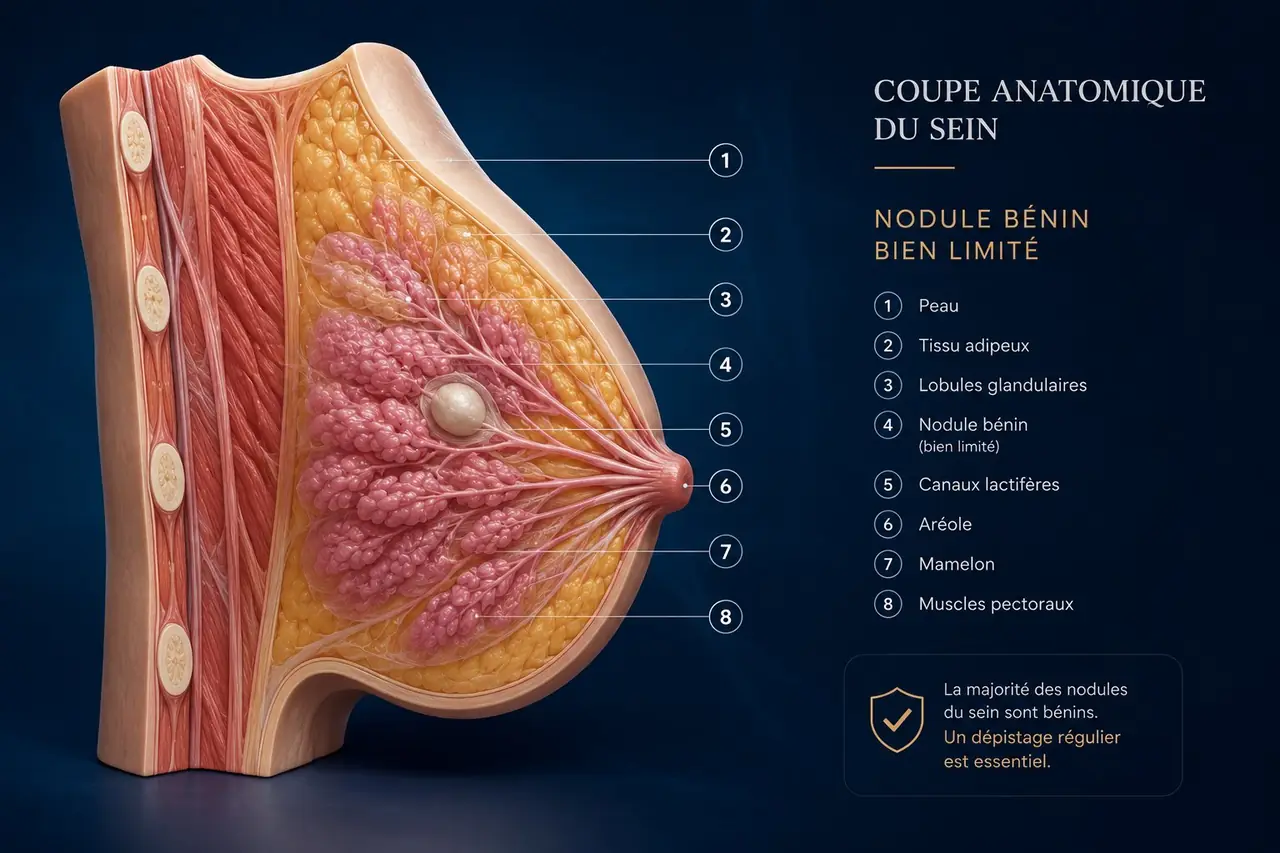
The most common benign breast tumour, particularly in young women (aged 15–35). A fibroadenoma is a solid tumour made up of glandular and fibrous tissue — typically well-defined, mobile ("rubbery"), painless or slightly tender. Fibroadenomas do not become cancerous in the vast majority of cases. Monitoring is usually sufficient below 3 cm. Surgery is recommended if the fibroadenoma is larger than 3 cm, growing rapidly, painful, or if the diagnosis remains uncertain.
Breast cyst
A cyst is a fluid-filled cavity, more common between 35 and 50. It is often rounded, well-defined, sometimes tender, and may fluctuate with the menstrual cycle. A simple cyst is entirely benign and can be monitored or drained if painful. A complex cyst (thick walls, internal septations) warrants further investigation.
Fibrocystic change
Fibrocystic change is a common benign alteration causing painful, lumpy breasts — particularly in the second half of the cycle. It does not require surgical treatment, but can make self-examination harder to interpret.
Lipoma
A lipoma is a benign fatty tumour — soft, mobile, painless, and well-defined. Removal is only considered if it is large or causes discomfort.
When to be concerned?
A lump that is hard, irregular, fixed to deeper tissue, or associated with nipple retraction, bloody discharge, or skin changes (orange peel appearance, redness) requires prompt consultation. Examining your breasts in front of a mirror with arms raised helps detect such asymmetries.
When could a lump be cancer?
Some signs make a lump more suspicious and should prompt prompt consultation:
- Hard, irregular, poorly defined lump — unlike benign tumours, which are usually well-circumscribed
- Fixed lump — does not move under the fingers; attached to skin or deep tissue
- Painless lump — early breast cancers are often asymptomatic
- Skin changes — peau d'orange (dimpling), redness, thickening, or retraction
- Nipple changes — retraction, deviation, or persistent nipple eczema (Paget's disease)
- Nipple discharge — especially if bloody, unilateral, and spontaneous
- Axillary lymph node — a palpable node under the arm on the same side
- Recent and rapid change — a lump that grows noticeably over a few weeks
Remember: the absence of pain is not reassuring. Early breast cancers are most often painless. A hard, painless, fixed lump should be assessed as a priority.
What happens during a consultation?
The first-line tool
Breast ultrasound is the first-line investigation to characterise a lump, particularly in younger women. It is fast, painless and radiation-free, and immediately points towards a benign or suspicious lesion.
Clinical examination
The consultation begins with a detailed history: how long have you noticed this lump? Has it changed? Do you have a personal or family history of breast or ovarian cancer? This is followed by clinical examination of both breasts — sitting and lying — including the axillary and supraclavicular lymph nodes.
Imaging
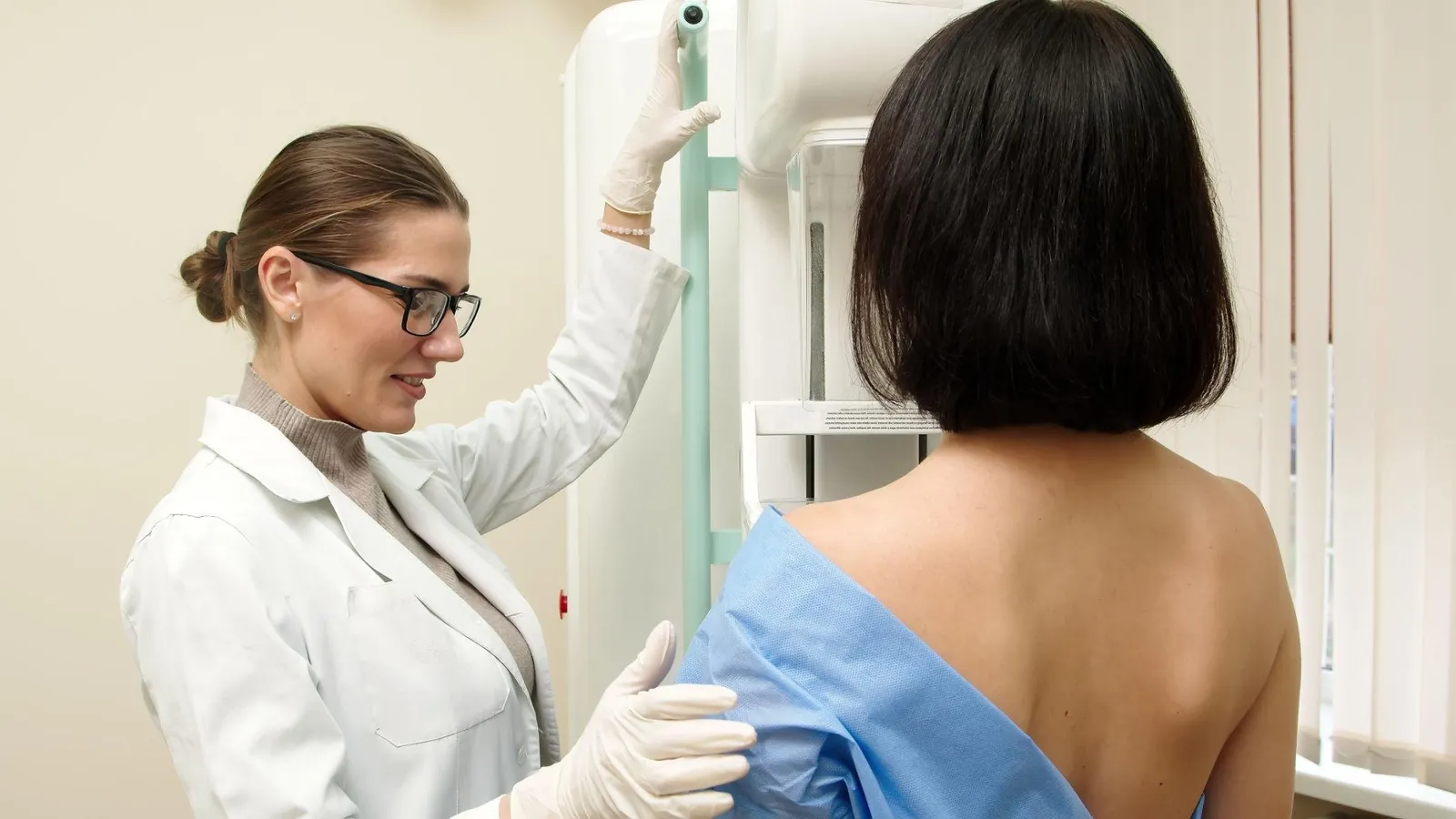
Imaging is essential to characterise a palpable lump. It typically includes ultrasound (first-line in young women with dense breasts) and mammography (reference investigation over 40). Lesions are classified using the ACR BI-RADS scale: ACR 1–2 (benign, monitoring), ACR 3 (probably benign, 6-month follow-up), ACR 4 (suspicious, biopsy required), ACR 5 (highly suspicious). This classification — not palpation alone — guides the decision to biopsy. See our benign breast surgery page for more detail.
Biopsy
If imaging identifies a suspicious lesion (ACR 4 or 5), a biopsy is required for a definitive histological diagnosis. It is performed under local anaesthesia under ultrasound or stereotactic guidance, as an outpatient procedure. It is the only test that can confirm with certainty whether a lesion is benign or malignant.
Have you found a lump in your breast?
Dr Zeitoun offers rapid consultations to investigate any nodule or palpable abnormality. In person in Paris 8th or at Clinique Hartmann (Neuilly-sur-Seine), and by teleconsultation.
Book an appointment →Surveillance or surgery?
Most benign lumps only require ultrasound surveillance. Surgery is proposed in case of persistent diagnostic uncertainty, functional discomfort, rapid growth, or imaging classification BI-RADS 4 or higher.
Does every lump need an operation?
No. Most benign lesions do not require surgery. Surgery is recommended when:
- Biopsy confirms cancer (in situ or invasive carcinoma)
- Biopsy reveals a risk lesion — atypical ductal hyperplasia (ADH), atypical lobular hyperplasia (ALH), lobular carcinoma in situ (LCIS), atypical papilloma, radial scar — surgical excision is usually recommended for complete analysis
- The lesion is growing on follow-up, even if apparently benign
- The lesion is large, painful, or causes persistent discomfort
- The patient requests removal after full information
Breast self-examination: how to check your breasts
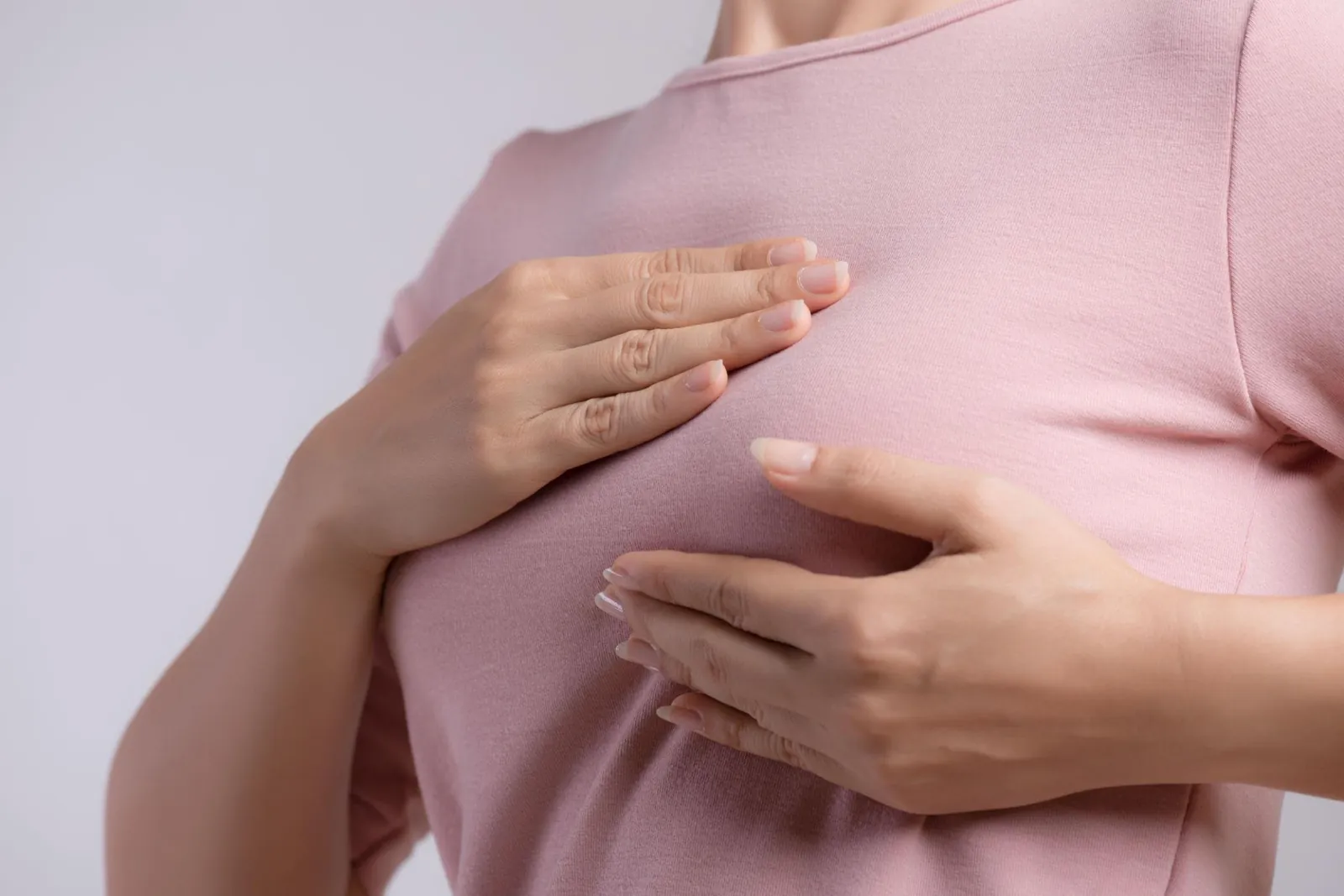
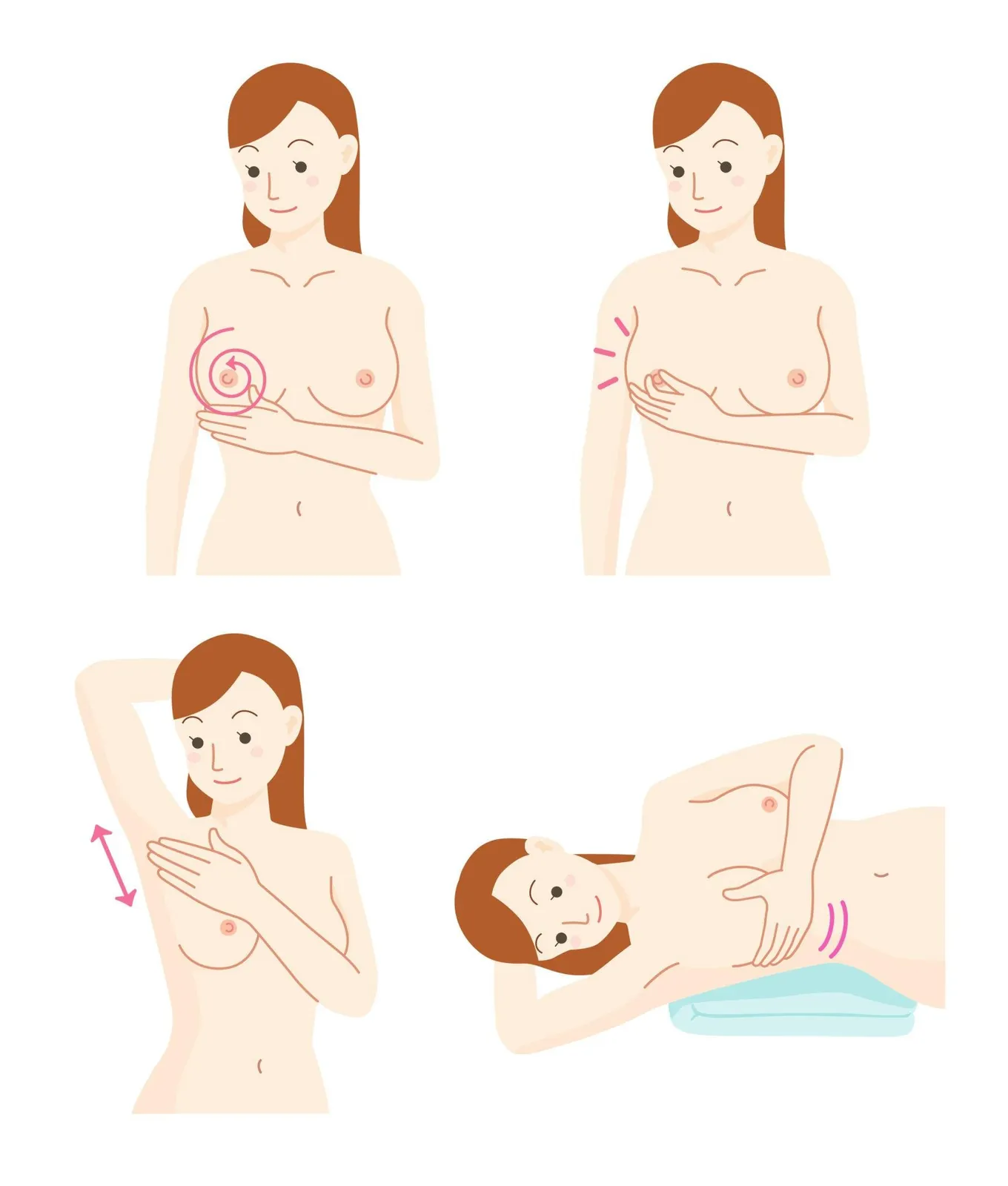
Self-examination is a useful habit — it does not replace screening, but it helps you know your normal breast texture and detect changes quickly. Perform it once a month, after your period (when breasts are less tender). Examine in front of a mirror (arms down, then raised), then lying down with one arm above your head, using flat fingers in circular motions from the nipple outwards. Any new finding should prompt a consultation.

Dr Jérémie Zeitoun
Surgical oncologist, breast and gynaecological surgeon. Former specialist practitioner at Institut Gustave Roussy. Practices at Paris 8th (241 rue du Faubourg Saint-Honoré) and Clinique Hartmann, Neuilly-sur-Seine..
Let's discuss your situation
A consultation allows precise assessment of your options. Dr Zeitoun offers prompt appointments in Paris or Neuilly-sur-Seine.
Worrying vs reassuring features
Clinical characteristics guiding management.
| Feature | Likely benign | Likely suspicious |
|---|---|---|
| Mobility | Mobile under fingers | Fixed to deep planes |
| Consistency | Soft or elastic | Hard, stony |
| Margins | Well-defined, regular | Ill-defined, irregular |
| Pain | Tender, often cyclical | Usually painless |
| Overlying skin | Normal | Retraction, peau d'orange |
| Axillary nodes | Absent | Palpable |
Source: HAS, CNGOF, ACOG, ESMO, NICE guidelines.
Scientific bibliography
This article is based on HAS, CNGOF, NICE guidelines and international literature (NEJM, JAMA, Lancet, Cochrane).
This article draws on guidelines from learned societies (HAS, CNGOF, ACOG, NICE, ESMO) and on recent peer-reviewed literature.
- Sklair-Levy M, Sella T, Alweiss T, et al. Incidence and management of complex fibroadenomas. AJR Am J Roentgenol. 2008;190(1):214-218. PubMed 18094314.
- Hartmann LC, Sellers TA, Frost MH, et al. Benign breast disease and the risk of breast cancer. N Engl J Med. 2005;353(3):229-237. PubMed 16034008.
- Krieger N, Hiatt RA. Risk of breast cancer after benign breast diseases. Am J Epidemiol. 1992;135(6):619-631. PubMed 1580238.
- NICE. Familial breast cancer (CG164). nice.org.uk.
- ACOG. Practice Bulletin No. 122: Breast cancer screening. Obstet Gynecol. 2017;130(4):e162-e174. PubMed 28832487.
- Haute Autorité de Santé (HAS). Cancer du sein - bilan d'extension. has-sante.fr.
- CNGOF. Pathologies bénignes du sein - RPC. cngof.fr.
- Houssami N, Ciatto S, Macaskill P, et al. Accuracy and surgical impact of magnetic resonance imaging in breast cancer staging. J Clin Oncol. 2008;26(19):3248-3258. PMID: 18474876.
- Houssami N, Macaskill P, Marinovich ML, et al. Meta-analysis of the impact of surgical margins on local recurrence in women with early-stage invasive breast cancer treated with breast-conserving therapy. Eur J Cancer. 2010;46(18):3219-3232. PMID: 20817513.
- Esserman LJ, Hylton NM, Asare SM, et al. I-SPY 2: Unlocking the Potential of the Platform Trial. Clin Pharmacol Ther. 2021;109(3):646-654. PMID: 33049068.
This article is for information only and does not replace an individual medical consultation.