


In brief
- For permanent contraception in a woman, there are two procedures: tubal ligation and removal of both fallopian tubes (bilateral salpingectomy). Both are done in the operating theatre, under general anaesthesia, most often by laparoscopy.
- Dr Jérémie Zeitoun prefers to perform bilateral salpingectomy.
- Periods, hormones, desire and the menopause do not change.
- The law requires a 4-month reflection period, with a consent form signed at each consultation.
- Before the operation, Dr Zeitoun always asks for a pelvic ultrasound and an hCG blood test to confirm that there is no pregnancy.
- In men, vasectomy is another form of permanent contraception.
- Effectiveness: 0.5 pregnancies per 100 women in the first year after female sterilisation.
- Irreversible: after the tubes have been removed, a pregnancy is possible only by in vitro fertilisation (IVF).
- Essure: these implants have not been placed in France since 2017.
You no longer wish to become pregnant, and you are thinking about permanent contraception. Two terms come up often: “tubal ligation” and “salpingectomy”, that is, removal of the fallopian tubes. What is the difference? Which should you choose? Does it change your periods, your hormones or your weight? Here are straightforward answers to help you prepare your decision.
What are the fallopian tubes for?
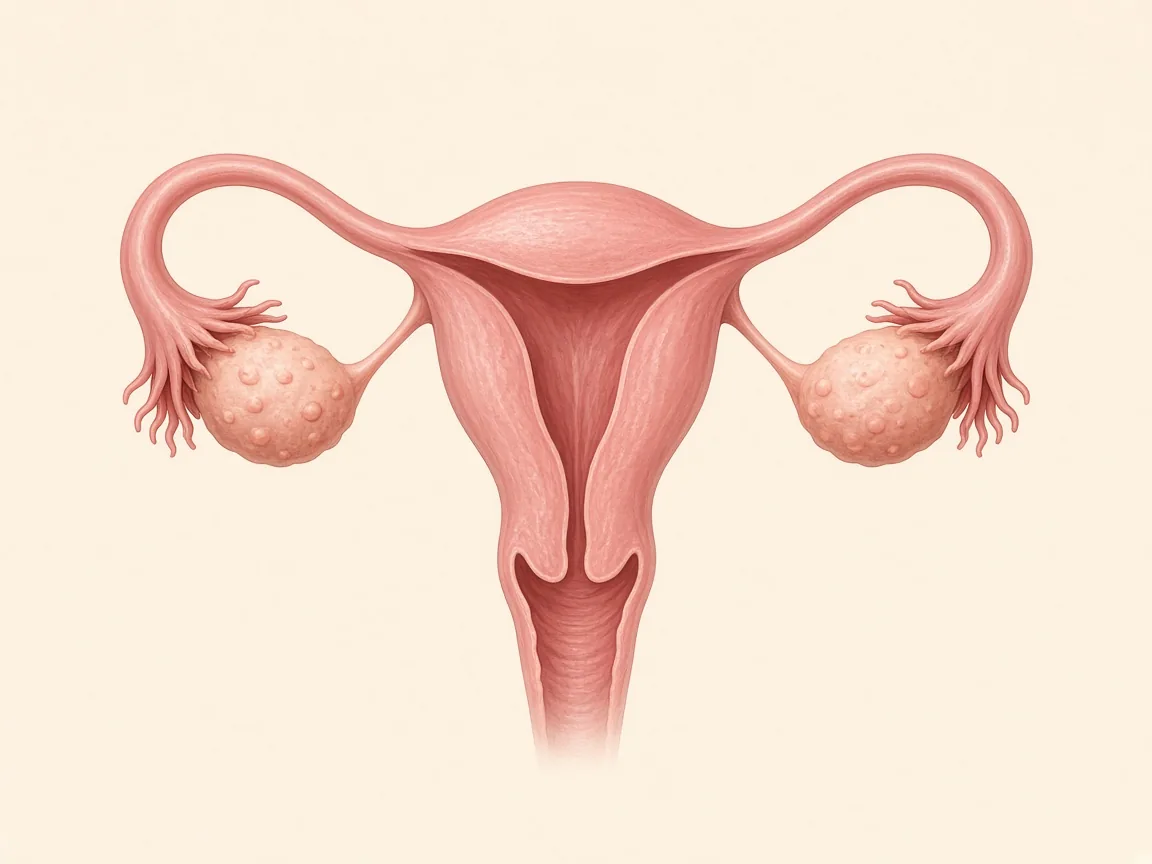
The fallopian tubes are two small ducts that connect the ovaries to the uterus. This is where the egg meets the sperm. If the tubes are closed or removed, that meeting can no longer take place: a natural pregnancy becomes impossible.
The ovaries stay in place. They continue to produce your hormones, as before.
The two possible procedures
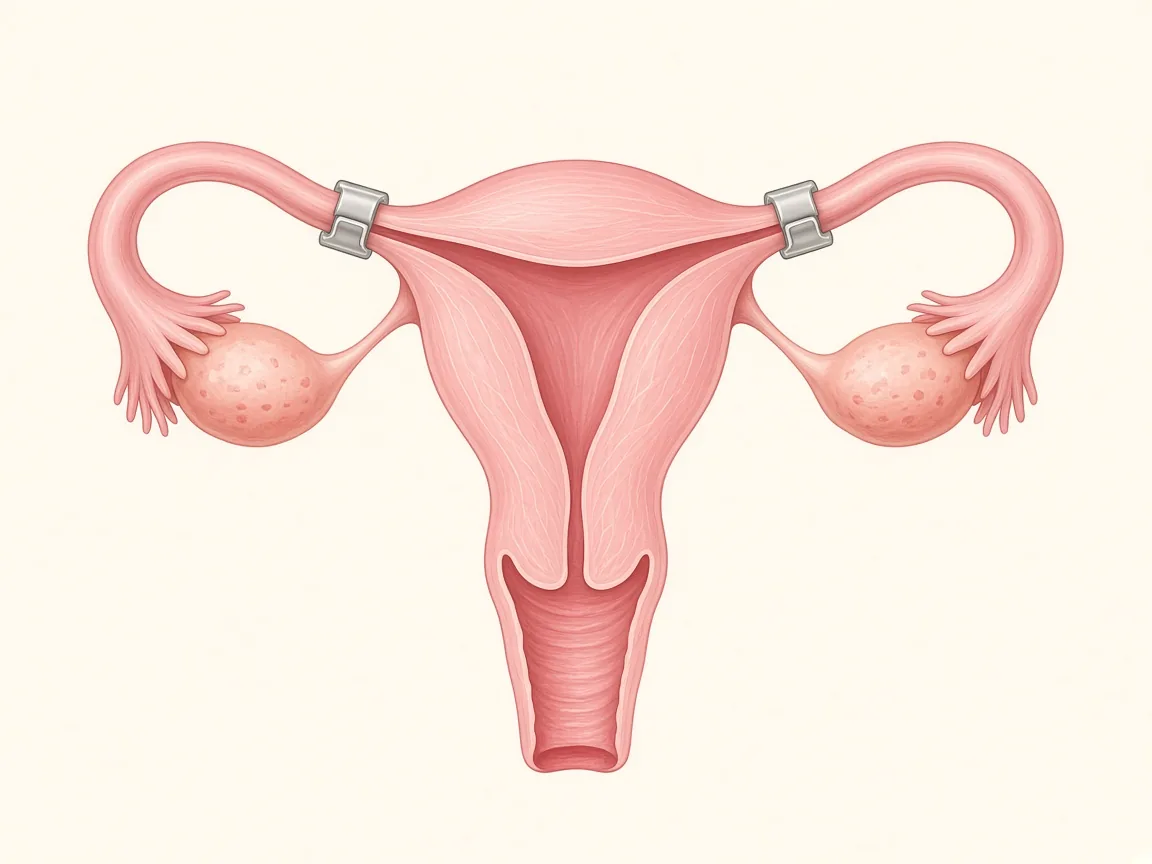
Tubal ligation. The surgeon closes each tube: he seals it with heat and cuts it, or he places a clip. The tubes remain in the abdomen.
Bilateral salpingectomy. The surgeon removes both tubes, completely or in part. This is also permanent contraception, with the same effectiveness, whether the removal is partial or total.
In both cases, the operation is done in the operating theatre, under general anaesthesia, most often by laparoscopy: a few small incisions on the abdomen and a camera. Some teams operate through the vagina.
Implants placed inside the tubes through the natural passages (Essure) are no longer used in France.
Ligation or removal: what actually changes for you
With ligation, the surgeon closes the tubes (heat-sealing, cutting or a clip): they stay in place, closed. With removal, he takes them out: they are no longer there.
In both cases, the contraceptive effect is immediate, and the ovaries, periods and hormones do not change.
The difference concerns reversal and prevention. After ligation, a surgical repair of the tubes is sometimes attempted, with very uncertain results. After removal, no repair is possible: a pregnancy can only be considered through IVF. Removal could also reduce the risk of ovarian cancer, which ligation does not.
In both cases, the decision must be taken as permanent.
And Essure: what happened to it?
Essure was a small metal coil placed in each tube through the vagina and the cervix, without an incision. It has not been available in France since August 2017: its CE mark was not renewed and the manufacturer stopped selling it.
If you already have Essure implants and you have no symptoms, removal is not recommended, because the removal operation itself carries risks. If you have symptoms, your doctor first looks for another cause. Removal is then discussed case by case; it is usually done by laparoscopy, and it is a delicate procedure. Always mention your Essure implants at a medical consultation.
Dr Zeitoun’s choice: bilateral salpingectomy
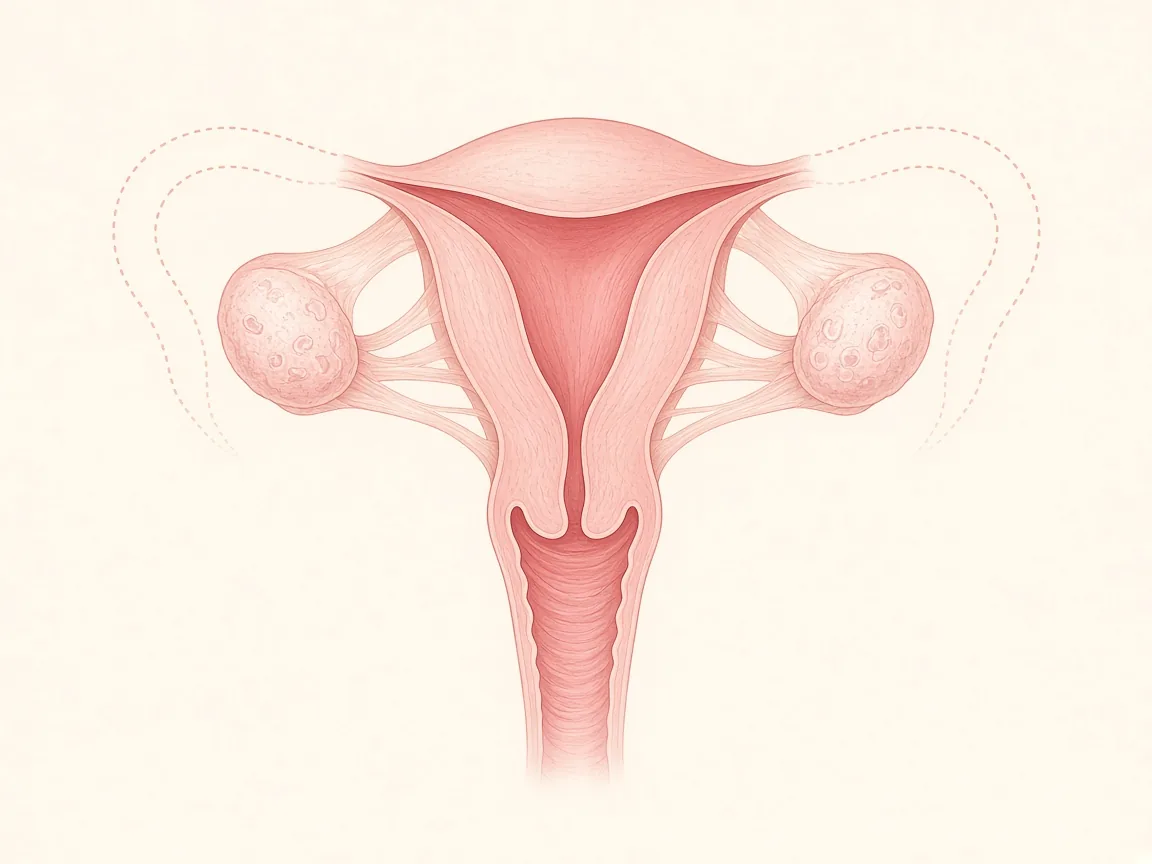
Dr Jérémie Zeitoun prefers to perform bilateral salpingectomy, that is, removal of both fallopian tubes, by laparoscopy.
This choice is also about prevention. Some cancers called “ovarian” actually begin in the tube. Removing the tubes at the time of sterilisation could therefore reduce the risk of this cancer, without touching the ovaries.
American learned societies suggest considering removal of the tubes rather than simple ligation in a woman who asks for sterilisation, explaining this possible benefit to her. This prevention does not replace usual gynaecological follow-up. For women who carry a high-risk genetic mutation, such as BRCA, the question is different: removal of the ovaries and tubes is discussed separately, see our page on risk-reducing salpingo-oophorectomy.
You are thinking about permanent contraception and you want to know whether bilateral salpingectomy is suitable for you?
Dr Jérémie Zeitoun, gynaecological surgeon and surgical oncologist, sees patients at the practice at 241 rue du Faubourg Saint-Honoré (Paris 8th) and at Clinique Hartmann (Neuilly-sur-Seine). The operation takes place at Clinique Hartmann. Consultations can be held in English.
What does not change after the operation

- Your periods continue.
- Your hormonal balance does not change.
- Your desire and your sexual pleasure do not change.
- The menopause will arrive at its natural time.
This contraception does not protect against sexually transmitted infections: a condom remains useful when needed.
Will my periods be different?
The operation touches neither the uterus nor the ovaries, so it does not stop periods and it does not cause the menopause. It does not treat heavy or painful periods either: that is a different question, to be discussed in consultation.
Some women nevertheless find their periods heavier or more painful after the operation. Most often, this comes from stopping a hormonal contraceptive (the pill, a hormonal IUD or an implant), which had made the periods lighter, and from age, and not from the operation itself. If you use a hormonal IUD for heavy periods, talk about it before having it removed.
A considered decision, framed by the law

- You must be an adult. You do not need to have had children.
- The decision is yours: the person who shares your life may take part in the reflection, but only your consent is obtained.
- The first consultation is the time to talk about your reasons, the other methods of contraception, the techniques and their risks. You are given an official information booklet.
- The law requires a 4-month reflection period between the first request and the written confirmation of your choice. At the practice, a signed consent form is asked for at each consultation.
You can read the official information booklet before your consultation.
Sterilisation must be considered irreversible.
At what age, and without children?
The law sets only one minimum age, 18, and sets no condition on the number of children or on being in a couple. But sterilisation is permanent, and the risk of regretting this choice is higher when the operation is done at a young age, before having had children.
For a young woman who has not had children, the request is discussed case by case, in consultation. Your reasons are your own, and they are legitimate, including if you want neither hormones nor an IUD. Dr Jérémie Zeitoun is not there to judge anyone. But because this operation engages his medical responsibility, he reserves the right to accept it or not, weighing for you the balance between the benefits and the risks. In every case, the decision is taken only after full information, spoken and written, and the 4-month reflection period set by the law.
A doctor is never obliged to perform this operation. If he does not perform it, he must tell you at the first consultation, so that you can see another practitioner.
What if I change my mind later? Reversal and IVF
After ligation, an operation to reopen the tubes is sometimes attempted, but its results are very uncertain. Dr Zeitoun does not perform this operation. After the tubes have been removed, this repair is in any case no longer possible, since the tubes have been taken out.
A pregnancy remains possible by in vitro fertilisation (IVF): the eggs are collected from the ovaries, fertilised in the laboratory, then the embryo is placed directly in the uterus, without passing through the tubes. The success of IVF is never guaranteed. This is why the decision must be taken as permanent.
Before the operation: pelvic ultrasound and an hCG blood test

Before any salpingectomy, Dr Zeitoun always asks for a pelvic ultrasound. It checks the uterus and the ovaries, and looks for any abnormality to take into account during the operation.
He also asks for an hCG blood test (plasma beta-hCG), to confirm that there is no pregnancy before the operation.
How does the operation go?
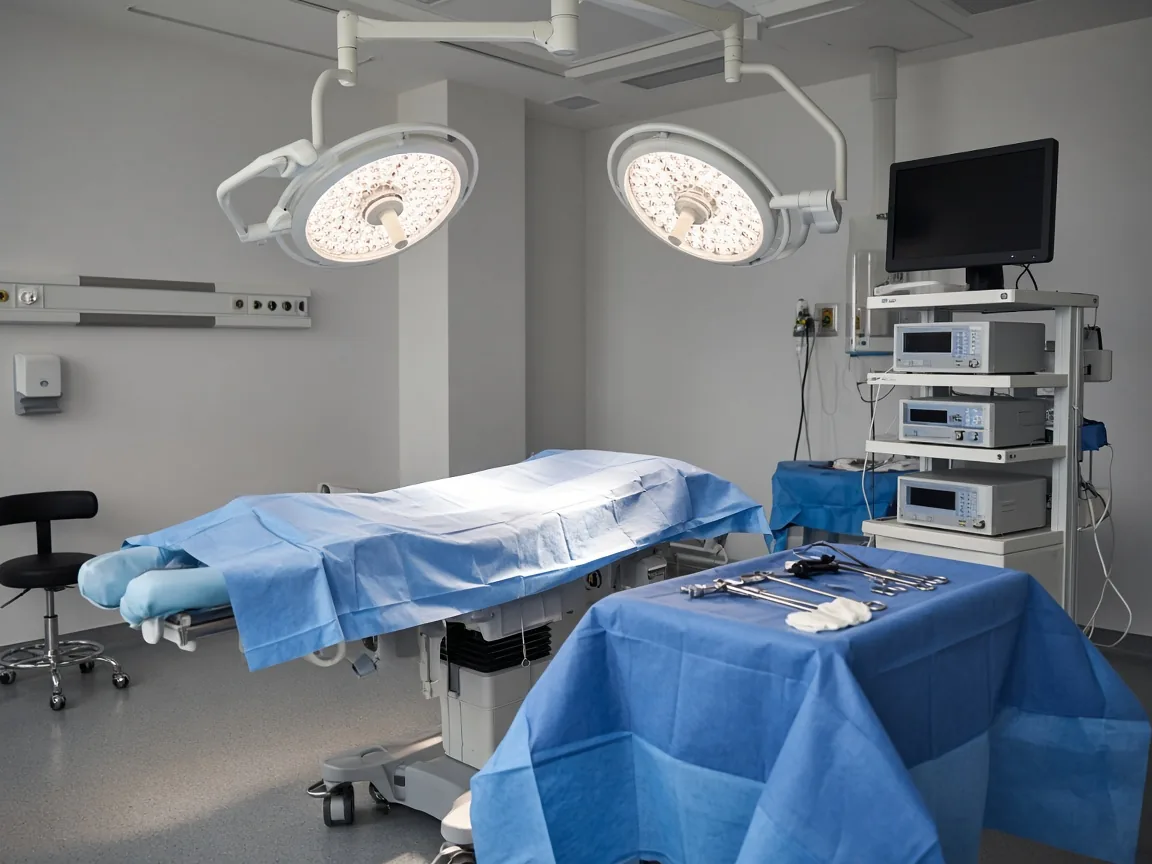
- A consultation with the anaesthetist takes place before the operation.
- On the day of the operation: general anaesthesia, then laparoscopy.
- The contraceptive effect is immediate after removal or ligation of the tubes.
- Recovery is usually straightforward: moderate pain in the abdomen or the shoulders (because of the gas used for laparoscopy), small dressings.
- As with any laparoscopy, the operation carries risks: bleeding, infection, injury to an organ. They are explained to you at the consultation.
To learn about the technique, read our page on gynaecological laparoscopy.
Pain, hospital stay and return to work
The operation is done as a day case: you come in the morning and go home the same day. Pain in the abdomen and the shoulders is temporary and is treated with the painkillers prescribed when you leave.
Return to work, sport and sexual intercourse is agreed with Dr Zeitoun according to your job and how you recover. Time off work is on average 5 to 7 days. See a doctor without delay in case of fever, pain that increases instead of easing, a swollen abdomen, or bleeding.
You have already made your first request, or your preoperative assessment is ready?
Dr Zeitoun sees you again in consultation to confirm your choice and prepare the operation, at the practice at 241 rue du Faubourg Saint-Honoré (Paris 8th) and at Clinique Hartmann (Neuilly-sur-Seine). Bring the ultrasound report and the hCG blood test result. Consultations can be held in English.
Fees
Dr Zeitoun practises in sector 2 and has not opted into OPTAM: he charges fees above the standard tariff, and the quote is given at the consultation.
Vasectomy, permanent contraception for men

In men, permanent contraception is called vasectomy. It means cutting and closing the ducts that carry the sperm. It is performed by a urologist, in a healthcare facility, most often as a day case and under local anaesthesia. It is a less major and less risky operation than a salpingectomy by laparoscopy.
- It changes neither erection, nor ejaculation, nor male hormones.
- It is not effective straight away: another method of contraception must be kept until a semen analysis confirms that no sperm are present.
- It follows the same steps as for the woman: being an adult, having received full information, respecting the 4-month reflection period and signing consent.
The request for sterilisation remains personal, however. Any woman may make it for herself, whether she is in a couple or not, with a man or with a woman.
Frequently asked questions
1. Tubal ligation or removal of the tubes: which is more effective?
Both are highly effective forms of permanent contraception. Removal also takes the tubes away, which could reduce the risk of some ovarian cancers. Dr Zeitoun mainly performs bilateral salpingectomy.
2. Will I still have my periods?
Yes. The operation concerns the tubes, not the uterus or the ovaries.
3. Will I gain weight?
The operation does not change your hormones. If you stop a hormonal contraceptive at the same time, your body returns to its natural functioning, and that is what some women attribute a change to.
4. Does it bring the menopause forward?
No. The ovaries are kept and work until the natural menopause.
5. Can it be reversed?
This choice is permanent. After the tubes have been removed, a pregnancy is no longer possible without in vitro fertilisation.
6. Do I need to have had children, or to be a certain age?
No. You must be an adult, be informed, respect the 4-month reflection period and sign your consent.
7. Does the person who shares my life have to agree?
No. You may include that person in the reflection, but only your consent is required.
8. Which tests are done before the operation?
Dr Zeitoun always asks for a pelvic ultrasound, to check the uterus and the ovaries, and an hCG blood test, to confirm that there is no pregnancy.
9. Will I be asleep?
Yes, under general anaesthesia, by laparoscopy.
10. Can I stop my contraception straight away?
After the tubes have been removed, the contraceptive effect is immediate. Dr Zeitoun confirms this when you leave.
11. Is vasectomy an alternative?
For a man, it is a form of permanent contraception that is less major than a salpingectomy, but it is not effective straight away: a check semen analysis is needed. Your request for sterilisation remains personal, whatever your situation.
12. Does it protect against sexually transmitted infections?
No. Only a condom protects against STIs.
13. Can IVF be done after tubal ligation or removal of the tubes?
Yes. IVF does not go through the tubes: the embryo is placed directly in the uterus. Its success is never guaranteed.
14. Can the tubes be repaired?
After ligation, a repair is sometimes attempted, with very uncertain results; Dr Zeitoun does not perform this operation. After removal, it is no longer possible.
15. Will I be in pain after the operation?
Moderate pain in the abdomen and the shoulders is usual in the first days, related to the laparoscopy. It is treated with painkillers.
16. How long is the hospital stay?
The operation is done as a day case: you go home the same day. Time off work is on average 5 to 7 days.
17. Does removing the tubes protect against ovarian cancer?
Some cancers called “ovarian” begin in the tube. Removing the tubes could reduce this risk, without touching the ovaries. It does not replace gynaecological follow-up.
18. I have Essure implants: should they be removed?
Not if you have no symptoms: removal carries its own risks. If you have symptoms, seek advice to look for the cause.
19. Is the operation reimbursed?
Dr Zeitoun practises in sector 2 and has not opted into OPTAM: he charges fees above the standard tariff, and the quote is given at the consultation.
Do you have a question about permanent contraception, about bilateral salpingectomy, or about the assessment to arrange?
Dr Jérémie Zeitoun sees patients in consultation at the practice at 241 rue du Faubourg Saint-Honoré (Paris 8th) and at Clinique Hartmann (Neuilly-sur-Seine), and operates at Clinique Hartmann. Consultations can be held in English.
Sources
- French National Authority for Health (HAS). Stérilisation à visée contraceptive chez l'homme et chez la femme. https://www.has-sante.fr/jcms/c_1752765/fr/sterilisation-a-visee-contraceptive-chez-l-homme-et-chez-la-femme
- French College of Gynaecologists and Obstetricians (CNGOF). Stérilisation volontaire à visée contraceptive (patient information sheet). https://cngof.fr/app/uploads/2025/11/FICHE20INFO20-20Sterilisation20volontaire20avec20annexe20-202024.pdf
- ACOG Committee Opinion No. 774. Opportunistic Salpingectomy as a Strategy for Epithelial Ovarian Cancer Prevention. Obstet Gynecol. 2019;133(4):e279-e284.
- French National Authority for Health (HAS). Efficacité des méthodes contraceptives. https://www.has-sante.fr/jcms/c_1757924/fr/efficacite-des-methodes-contraceptives
- Ameli, the French national health insurance. Stérilisation à visée contraceptive chez l'homme et chez la femme. https://www.ameli.fr/assure/sante/themes/contraception/sterilisation-contraceptive-homme-femme
- French Ministry of Health. Stérilisation à visée contraceptive (information booklet, February 2025). https://sante.gouv.fr/IMG/pdf/guide_sterilisation_fev2025.pdf
- French Ministry of Health (DGS). Vous êtes porteuse du dispositif de stérilisation définitive Essure. https://sante.gouv.fr/IMG/pdf/dgs-implant-essure-2112-impression-interne.pdf
- ANSM. Arrêt de la commercialisation en France du dispositif Essure (press release) and the conclusions of the expert committee of 19 April 2017. https://ansm.sante.fr/actualites/information-suite-a-larret-de-la-commercialisation-en-france-par-la-societe-bayer-pharma-ag-du-dispositif-de-sterilisation-definitive-essure-communique
Internal links: Gynaecological laparoscopy · Ovarian and tubal surgery · Contraceptive implant removal · Risk-reducing salpingo-oophorectomy