Home
Breast & breast cancer
Breast cancer Benign breast lesions Prophylactic mastectomy
Breast reconstruction
All techniques Implant reconstruction Latissimus dorsi flap DIEP flap (abdomen) Gracilis flap (thigh) Fat grafting (lipofilling) Flat closure Intimate surgery
Benign gynaecological surgery
Uterus Ovaries and tubes Cervix Vulva and vagina
Gynaecological cancers
Cervical cancer Ovarian cancer Uterine cancer Vulvar cancer Borderline tumours Articles About
Request a callback Book on Doctolib →
Woman carrying a BRCA mutation in a preventive surgery consultation — Dr Jérémie Zeitoun Paris
Preventive surgery · BRCA mutation

Risk-reducing salpingo-oophorectomy: age, procedure and menopause

A BRCA1 or BRCA2 mutation carries a high lifetime risk of ovarian and tubal cancer. Preventive removal of the ovaries and tubes — bilateral salpingo-oophorectomy — is today the most effective way to reduce that risk. What remains is to decide when to consider it, how it is performed, and how to manage the menopause it causes.

📍 Paris 8e · Neuilly Laparoscopy 📞 +33 1 58 05 11 24
Confirmed BRCA1 or BRCA2 mutation?
A surgical opinion to decide on timing and approach.

If you carry a BRCA mutation and are considering risk-reducing surgery, Dr Zeitoun reviews your oncogenetics file and imaging, and plans the procedure by laparoscopy at Clinique Hartmann in Neuilly.

Book an appointment → Request a callback

The decision rests on a confirmed mutation and genetic counselling; the case is discussed at a multidisciplinary team meeting.

Risk-reducing salpingo-oophorectomy — the preventive removal of the ovaries and fallopian tubes — is the main risk-reducing operation offered to women carrying a BRCA1 or BRCA2 mutation. It is often abbreviated RRSO.

Its goal is clear: by removing the ovaries and tubes before disease appears, the risk of cancer is strongly reduced. It is an important decision, affecting fertility, and — before natural menopause — causing a surgical menopause that must be anticipated.

This article explains at what age surgery is advised depending on the gene, why the tubes are also removed, how the laparoscopy is performed, and how to manage the induced menopause. It is part of the broader BRCA preventive surgery approach, whose breast component is prophylactic mastectomy, and follows NCCN and national guidelines.

A surgical opinion to decide on timing and approach.

If you carry a BRCA mutation and are considering risk-reducing surgery, Dr Zeitoun sees you in consultation, reviews your oncogenetics file and your imaging, and plans the procedure by laparoscopy at Clinique Hartmann in Neuilly.

PRINCIPLE & ANATOMY

Understanding risk-reducing surgery

Before discussing age and timing, a few landmarks: what the operation removes, and why the tubes matter as much as the ovaries.

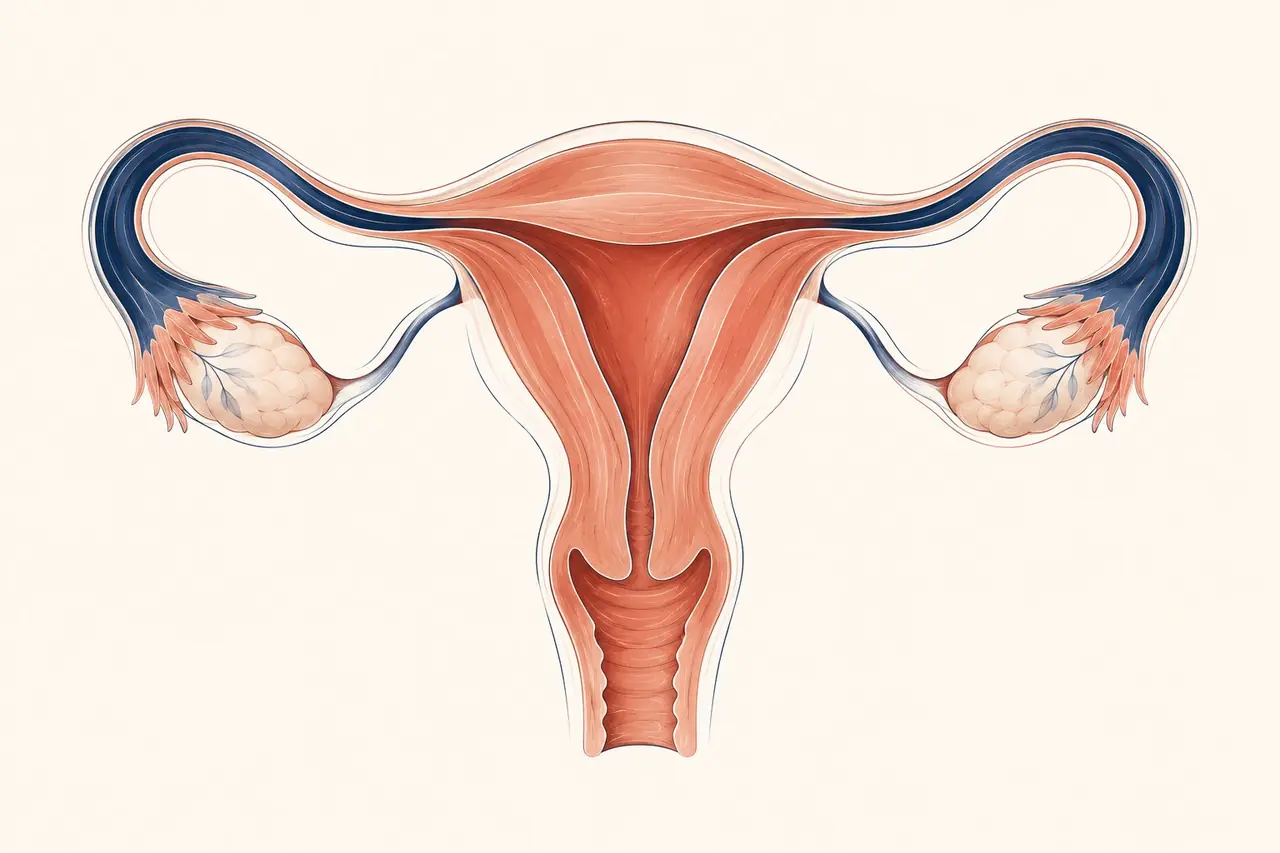
Anatomy of the ovaries and fallopian tubes — risk-reducing salpingo-oophorectomy, Dr Jérémie Zeitoun
A key landmark

Ovary and tube: why remove both

It was long thought that "ovarian" cancers always started in the ovary. We now know that a large share of the most common ovarian cancers in BRCA women — high-grade serous carcinomas — actually begin in the fimbria of the fallopian tube (the fringed end of the tube, right next to the ovary).

That is why preventive surgery systematically removes both ovaries and both tubes: this is bilateral salpingo-oophorectomy. Removing the ovaries alone would leave a possible starting point for the disease in place.

Key point: RRSO concerns the ovaries and tubes. It does not remove the uterus, which is taken out only in specific situations. It is risk-reducing surgery: it strongly lowers the risk without bringing it entirely to zero, because the peritoneum remains in place.

INDICATIONS · OPTIMAL AGE

At what age to consider surgery?

The advised age depends on the mutated gene, because BRCA1-related ovarian cancers occur on average earlier than BRCA2-related ones. It also always takes into account your family history and your life plans.

MutationGenerally advised age
BRCA1From 40 years, once the family plan is complete
BRCA2May be deferred to 45 years (later cancers)

What the decision rests on

Surgery is never an emergency: it is prepared. Four elements frame the decision.

01

Confirmed mutation

A BRCA1 or BRCA2 mutation documented by genetic testing, within an oncogenetic counselling setting.

02

Family history

The family context of breast and ovarian cancers refines the advised age and the relative urgency.

03

Childbearing complete

RRSO causes permanent infertility: it is discussed when you no longer plan a pregnancy.

04

Menopause anticipated

Understanding and planning the surgical menopause is an integral part of the decision.

What if a wish for pregnancy persists? Surgery can be deferred, combining surveillance and, sometimes, fertility preservation. Dr Zeitoun does not perform assisted reproduction: this is organised with a reproductive medicine team. To understand the whole hereditary strategy, see also hereditary breast-ovary risk.

WHAT THE SURGERY PROVIDES

The expected benefits

Bilateral salpingo-oophorectomy is, to date, the most effective measure to reduce the risk of ovarian and tubal cancer in BRCA women. Here is what it provides — and its limits, stated honestly.

Ovary & tube risk

Reduction of about 80% in the risk of ovarian and tubal cancer — up to about 90% in some series. This is the central benefit, and it comes with a reduction in overall mortality.

≈ −80%Mortality reduced

Breast risk

A reduction of about 50% in breast cancer risk was long described before menopause, but recent studies question it. Breast prevention relies mainly on surveillance and, sometimes, prophylactic mastectomy.

Debated effectSeparate component

Residual risk

Because the peritoneum — the thin membrane lining the inside of the abdomen — is not removed, a very small risk of cancer there remains. Surgery therefore strongly lowers the risk without removing it entirely.

Peritoneum in placeLow risk

Systematic analysis

The removed ovaries and tubes are fully examined in pathology, following a dedicated protocol, so as not to miss an early lesion.

SEE-FIM protocolComplete analysis

Sources for the figures cited: ovarian/tubal risk reduction — Rebbeck, JNCI 2009; Domchek, JAMA 2010; Finch, JCO 2014. Breast risk — Eisen, JCO 2005; Kauff, JCO 2008; recent nuance: Kotsopoulos, JNCI 2017.

Why not surveillance alone? Today no test reliably detects ovarian cancer early — neither pelvic ultrasound nor CA-125 (a marker measured in the blood). Surveillance can accompany a waiting period, but it does not replace the benefit of risk-reducing surgery. By contrast, for an isolated benign ovarian mass, the logic is different.

A decision made, or still in doubt?
Gynaecological surgical oncologist, in Paris and Neuilly.

Whether you have already chosen preventive surgery or would like a second opinion before deciding, Dr Zeitoun reviews your oncogenetics file, explains the procedure and the management of menopause, and operates by laparoscopy at Clinique Hartmann.

Book an appointment → Request a callback

Genetic counselling is provided by an oncogeneticist; hormonal management is coordinated with your gynaecologist, GP or midwife.

THE PROCEDURE, STEP BY STEP

How the surgery is performed

RRSO is a planned operation, performed by laparoscopy under general anaesthesia. It is prepared in advance and usually proceeds simply.

The pre-operative work-up

Before surgery, several steps secure the decision and the management of the menopause to come.

Oncogenetics

Confirmation of the mutation and genetic counselling: this is the foundation of the indication. The case is discussed at a multidisciplinary team meeting.

Confirmed mutationMDT

Imaging & blood tests

Pelvic ultrasound, sometimes MRI, and blood tests. CA-125 (a marker measured in the blood) may be measured, knowing it cannot provide reliable screening on its own.

UltrasoundCA-125 / HE4

Preparing for menopause

Information about surgical menopause, baseline bone assessment (bone density scan) and a management plan decided before surgery.

Bone density scanHRT plan

Anaesthetic consultation

A mandatory anaesthetic consultation, and a detailed written estimate provided before surgery.

General anaesthesiaEstimate provided

The surgical technique

Laparoscopic approach

Minimally invasive surgery

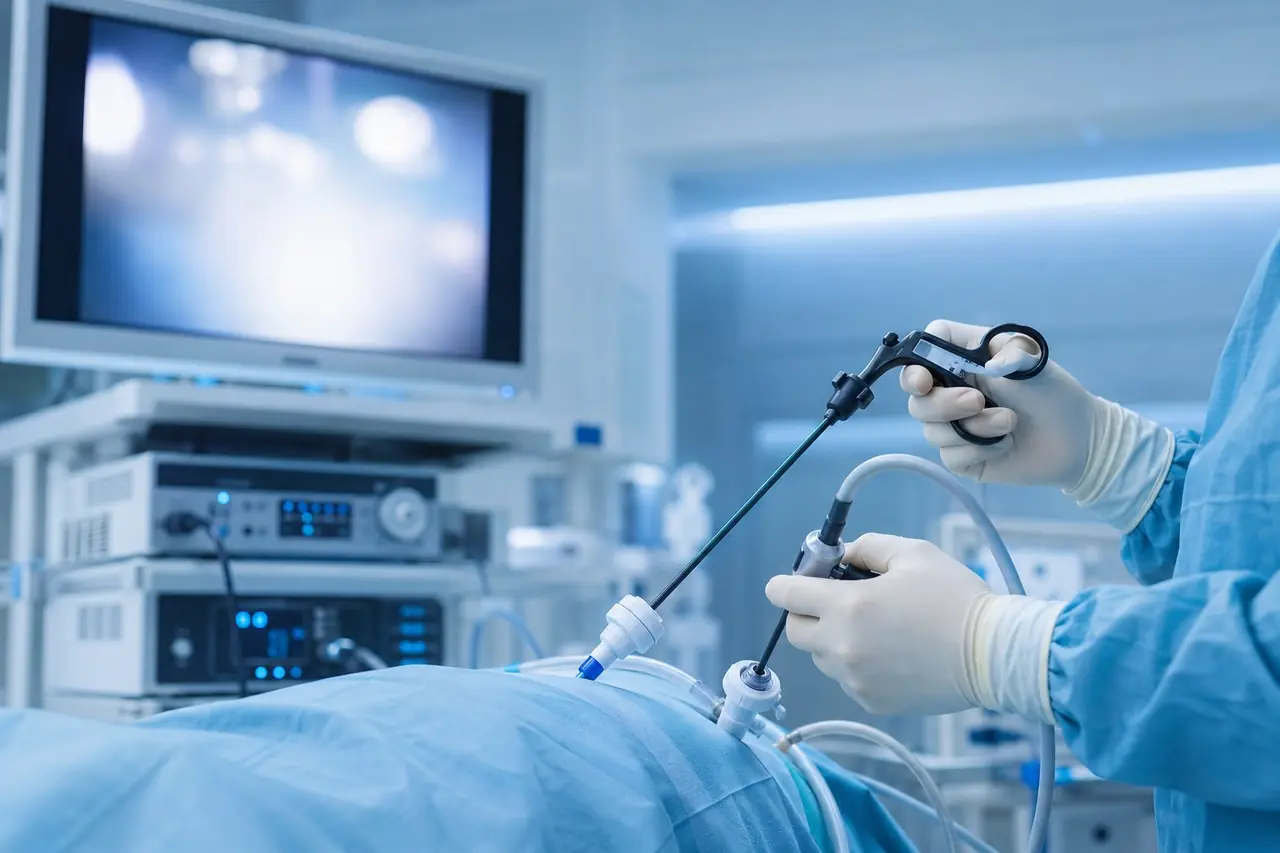
The operation is performed through a few small incisions, under video control. After inspecting the abdominal and pelvic cavity, the ovaries and tubes are freed and removed close to their vascular pedicle.

The specimens are extracted in a sealed retrieval bag, without contact with the wall, then sent for a complete pathological examination. The operation lasts between 30 and 45 minutes.

In some cases it can also be performed by vNOTES: surgery through the natural route (via the vagina), camera-assisted, which avoids any abdominal scar.

Bilateral salpingo-oophorectomy by laparoscopy — BRCA preventive surgery, Dr Jérémie Zeitoun

Hospital stay & recovery: RRSO is performed as a day case only (home the same day) at Clinique Hartmann. Pain is moderate, relieved by simple painkillers, and a return to usual activities is generally within one to two weeks. This surgery is part of the wider range of procedures described in ovary and tube surgery.

What if analysis reveals an early lesion? This is rare but possible. In that case, the file is reviewed at a multidisciplinary team meeting and care follows the recommendations for ovarian cancer. This is precisely the value of systematic analysis: to detect as early as possible.

AFTER SURGERY

Surgical menopause and its management

Performed before natural menopause, removing both ovaries causes immediate menopause, often more marked than spontaneous menopause. It is a central part of the decision — and one that is supported, not simply endured.

Possible symptoms

Symptoms can appear soon after surgery. Their intensity varies greatly from one woman to another.

Common symptoms of induced menopause

Hot flushes and night sweats
Sleep disturbance and night waking
Mood changes, irritability, anxiety
Vaginal dryness and intimate discomfort
Difficulty with concentration
Long-term effects on bone and heart

Hormone replacement therapy (HRT)

A frequent — and important — question

"Can I take hormone therapy when I am BRCA?"

In a BRCA woman without a history of breast cancer, hormone replacement therapy is usually possible up to the age of natural menopause (around 50-51 years), to ease symptoms and protect bone and heart. Transdermal estrogen is often preferred.

The decision is individualised and made with your gynaecologist, GP or midwife, and the oncologist if needed. In case of a history of breast cancer, HRT is generally contraindicated, and alternatives are used instead.

Management of surgical menopause after risk-reducing salpingo-oophorectomy — Dr Jérémie Zeitoun

Non-hormonal options

When HRT is not indicated, options exist for hot flushes (certain non-hormonal treatments), along with local treatments for intimate comfort.

Targeted optionsIntimate comfort

Bone prevention

Follow-up bone density scans, adequate calcium and vitamin D, and regular physical activity to limit the risk of early osteoporosis.

Bone density scanPhysical activity

Cardiovascular prevention

Monitoring of the lipid profile and blood pressure, healthy lifestyle, within an overall follow-up of early menopause.

Lipid profileLifestyle

Support & quality of life

Adapting to early menopause deserves support: sleep, mood, sexuality and body image are part of care.

Sleep & moodSupport

Who does what: Dr Zeitoun sets the surgical indication and performs the operation. Hormonal management and menopause follow-up are coordinated with your gynaecologist, GP and/or midwife, as a team — so that a preventive decision never translates into a menopause endured without support.

SURVEILLANCE

Follow-up after surgery

Follow-up has two aims: to support the induced menopause, and to maintain surveillance of the other risks linked to the mutation — first and foremost the breast.

Getting back to your life

A simple, regular follow-up

After surgery, follow-up supports the menopause and maintains surveillance of the other risks. The goal: to live with peace of mind, with spaced-out appointments and a clear point of contact for your questions.

Follow-up and surveillance after risk-reducing salpingo-oophorectomy (BRCA) — Dr Jérémie Zeitoun, Paris

Review consultation

An appointment checks healing, discusses the pathology result and takes stock of the first menopausal symptoms.

HealingPathology explained

Breast surveillance

The BRCA mutation also carries breast cancer risk: close breast surveillance (examination, mammography, ultrasound and breast MRI as recommended) continues after RRSO.

Breast MRIClose follow-up

Long-term prevention

Follow-up of bone density and the cardiovascular work-up, with adjustment of menopause treatment if needed.

Bone density scanRegular work-up

Coordinated follow-up

Follow-up is shared between the surgeon, the gynaecologist and the oncogeneticist, for consistent management of the whole hereditary risk.

MultidisciplinaryConsistent

The breast component does not stop there. For some BRCA women, the reflection extends to prophylactic mastectomy and, where relevant, breast care. These decisions are separate from RRSO and are made at their own pace.

YOUR PATHWAY

Your pathway, step by step

From the first consultation to follow-up, a clear, shared and unhurried path.

Shared decision-making consultation for BRCA preventive surgery — Dr Jérémie Zeitoun, Paris
A shared decision

At your own pace, never rushed

Every step is built with you: review of your oncogenetics file and imaging, full information, choice of timing and early planning of the menopause. Dr Zeitoun sets the indication and coordinates the whole pathway.

01

Consultation & file

Review of the oncogenetics file and imaging, clinical examination, analysis of the context (age, mutation, life plans).

02

Shared decision

Choice of timing, full information, anticipated planning of the menopause. Discussion at the MDT.

03

Surgery

Laparoscopy planned at Clinique Hartmann, prior anaesthetic consultation, written estimate provided in advance.

04

Follow-up

Review, pathology result explained, management of menopause and continued breast surveillance.

FREQUENTLY ASKED QUESTIONS

Frequently asked questions

What is risk-reducing salpingo-oophorectomy in a BRCA carrier?

It is the preventive removal of both ovaries and both fallopian tubes (bilateral salpingo-oophorectomy), by laparoscopy, in a woman carrying a BRCA1 or BRCA2 mutation. It strongly reduces the risk of ovarian, tubal and peritoneal cancer. The tubes are removed systematically because many so-called ovarian cancers in fact begin in the tube.

At what age should RRSO be performed in BRCA carriers?

As a general rule, from 40 years for a BRCA1 mutation, and it may be deferred to 45 years for a BRCA2 mutation (later cancers), once the family plan is complete. The age is always individualised according to family history and mutation type.

Why are the tubes removed too, and not only the ovaries?

Because a large proportion of the most common ovarian cancers actually start in the fimbria of the fallopian tube — the fringed end of the tube, right next to the ovary. Removing the ovaries and the tubes therefore offers more complete protection than removing the ovaries alone.

How much does RRSO reduce the risk of ovarian cancer?

It reduces the risk of ovarian and tubal cancer by about 80% (up to about 90% in some series) in BRCA carriers and lowers overall mortality. Because the peritoneum (the membrane lining the inside of the abdomen) is not removed, a very small risk of cancer there remains.

Does the operation cause immediate menopause?

Yes, if performed before natural menopause: removing both ovaries causes immediate surgical menopause, often more marked than spontaneous menopause. Its management (hormone therapy, bone and cardiovascular prevention) should be anticipated before surgery.

Can I take hormone replacement therapy after surgery when I am BRCA?

In a BRCA woman without a history of breast cancer, HRT is usually possible up to the age of natural menopause (around 50-51 years), preferably with transdermal estrogen. The decision is individualised, made with the gynaecologist and, if needed, the oncologist. In case of a history of breast cancer, HRT is generally contraindicated.

How is the operation performed and how long is the hospital stay?

RRSO is performed by laparoscopy (or by vNOTES, the vaginal route assisted by a camera), under general anaesthesia, in 30 to 45 minutes. The ovaries and tubes are removed in a retrieval bag and analysed. It is performed as a day case only (home the same day), with a return to usual activities within one to two weeks.

Does the uterus also need to be removed?

No, removal of the uterus is not systematic. Standard risk-reducing surgery concerns only the ovaries and tubes. Removing the uterus is discussed only in specific situations and is a shared decision.

Does RRSO also reduce the risk of breast cancer?

A breast benefit was long described when surgery is performed before menopause, but its magnitude is now debated. Breast cancer risk reduction relies mainly on close surveillance and, in some cases, prophylactic mastectomy, which is a separate approach.

What if I still want to have children?

RRSO causes permanent infertility: it is offered only once childbearing is complete. When a pregnancy plan persists, the strategy combines surveillance and sometimes fertility preservation, and surgery is deferred. Dr Zeitoun does not perform assisted reproduction and refers to specialist teams.

Is an oncogenetic consultation needed before surgery?

Yes. The decision is based on a confirmed BRCA mutation and genetic counselling. The oncogenetic consultation clarifies the risk, the advised age and supports the decision. The case is also discussed at a multidisciplinary team meeting.

Is the operation reimbursed?

Risk-reducing surgery in a BRCA woman is a medically justified procedure, covered by French health insurance. I charge fees above the standard tariff (sector 2, non-OPTAM), explained in consultation and set out in a written estimate provided before surgery.

Read also

To place risk-reducing salpingo-oophorectomy within the whole BRCA prevention approach.

A surgical opinion for your BRCA preventive surgery

Confirmed BRCA1 or BRCA2 mutation, reflection on the right time, or a need for a second opinion before deciding: Dr Jérémie Zeitoun sees patients at his practice in the 8th arrondissement of Paris and operates at Clinique Hartmann in Neuilly-sur-Seine. Please bring your oncogenetics report and your imaging.

Genetic counselling is provided by oncogenetics; hormonal management is coordinated with your gynaecologist, GP or midwife.

FR EN