Home
Breast & Breast cancer
Breast cancer Benign breast lesions Prophylactic mastectomy
Breast reconstruction
All techniques Implant & expander Latissimus dorsi flap DIEP flap (abdomen) Inner thigh flap Lipofilling (fat grafting) Flat closure Intimate surgery
Gynaecological surgery
Uterus Tubes and ovaries Cervix Vulva and vagina
Gynaecological cancers
Cervical cancer Ovarian cancer Uterine cancer Vulvar cancer Borderline tumours Articles About
Request a callback Book on Doctolib →
Male breast cancer: retroareolar lump, diagnosis with mammography and biopsy, surgery by mastectomy — Dr Jérémie Zeitoun, breast surgeon Paris
Breast cancer · Understand

Breast cancer in men: symptoms, diagnosis and surgery

Every man has a little breast tissue behind the nipple — and that tissue can, rarely, develop cancer. Male breast cancer accounts for about 1% of all breast cancers. Often found late, because no one thinks of it, it is nonetheless treated on the same principles as in women: recognise a lump under the nipple, make the diagnosis, operate, then treat.

📍 Paris 8th · Neuilly Diagnosis & surgery 📞 +33 1 58 05 11 24
A lump under the nipple?
A specialist surgical opinion to know what it is and decide what comes next.

A hard lump under the nipple, discharge or retraction: most often benign, sometimes not. Dr Zeitoun examines you, arranges imaging and a biopsy if needed, and takes over your care at the Clinique Hartmann in Neuilly.

Book an appointment → Request a callback

A lump under the nipple is most often benign (gynaecomastia); only an examination can confirm it and, if needed, take things further.

It is easily overlooked: breast cancer is not confined to women. Behind the nipple, every man retains a small amount of breast tissue — a few ducts — and that tissue can, rarely, become the site of a cancer. This cancer accounts for about 1% of all breast cancers, i.e. a few hundred new cases a year in France.

That rarity has a downside: many men do not imagine they could be affected, put a lump down to simple gynaecomastia and consult late. Yet, stage for stage, breast cancer in men is managed on the same principles as in women, and is treated all the better when diagnosed early. So the first message of this article is simple: a persistent lump under the nipple, in a man, deserves an opinion.

We will follow the pathway end to end: recognising the signs, understanding the risk factors (chief among them the BRCA2 mutation), making the diagnosis, then treating — first with surgery, then with associated treatments. This article draws on the recommendations of the INCa and of ASCO, and complements the reference page on breast cancer.


WHAT TO KNOW FIRST

Breast cancer in men: rare, but real

The male breast is not “empty”: it contains a reduced amount of breast tissue, inherited from embryonic development, made mainly of ducts. It is from this tissue that cancer arises — almost always a ductal carcinoma, as in women.

Anatomy of the male breast: reduced breast tissue and milk ducts located behind the nipple, the site of male breast cancer — Dr Jérémie Zeitoun Paris
Essential anatomy

Breast tissue, behind the nipple

In men, breast tissue stays concentrated in a small area, just under and around the nipple (the retroareolar region). That is why most cancers are found there, and why a tumour quickly becomes palpable and close to the skin.

The vast majority of these cancers are hormone-dependent: their cells carry oestrogen receptors. This feature, even more frequent than in women, explains the central role of hormone therapy after surgery.

~1%of breast cancersoccur in a man: rare, but far from exceptional across a whole country.
65-70median age (years)the diagnosis is most often made after 60, slightly later than in women.
Retro-
areolar
usual locationthe tumour most often arises just behind the nipple, which makes it quickly palpable.

What this changes in practice: because the volume of tissue is small and the tumour close to the nipple, surgery most often removes all of this tissue (mastectomy). And because the cancer is almost always hormone-dependent, treatment after the operation relies heavily on hormone therapy.

WHAT SHOULD ALERT YOU

The signs of breast cancer in men

Male breast cancer is often found by the man himself: a lump noticed by chance. Recognising the signs means gaining precious time.

Five signs that warrant a consultation

1A hard, often painless lump under or beside the nipple — the most common sign.
2A retraction or deviation of the nipple, or a nipple that turns inward.
3A discharge from the nipple, especially if bloody or spontaneous.
4A skin change: redness, thickening, an “orange-peel” look, a sore that will not heal.
5A palpable lymph node in the armpit, firm and persistent.

Gynaecomastia or cancer? The question that always comes up

The most common cause of breast enlargement in men is not cancer: it is gynaecomastia, a benign growth of the breast tissue. Telling them apart avoids both needless worry and delayed diagnosis.

Gynaecomastia

A soft, even growth, often on both sides, centred behind the nipple, with no discharge or skin change. It is common in adolescence and after the age of 50, favoured by certain medicines or a hormonal imbalance. It is benign, but deserves an opinion when it is bothersome or of recent onset.

BenignSoft & symmetrical

The signs of cancer

A hard, fixed, off-centre mass, most often on one side, sometimes with nipple retraction, discharge or skin involvement. Faced with these signs, the examination does not stop at a clinical opinion: it leads to imaging and, if needed, to a biopsy.

To investigateHard & fixed
Difference between benign gynaecomastia (soft, symmetrical growth) and male breast cancer (hard, fixed mass, nipple retraction) — Dr Jérémie Zeitoun Paris
Benign gynaecomastia or male breast cancer: the features that point one way or the other
FeatureGynaecomastia (benign)Breast cancer (to investigate)
TextureSoft, elastic, evenHard, irregular, fixed to deeper tissues
SideOften bilateral (both breasts)Usually one side only
PositionCentred on the nippleOften off-centre, under or beside the nipple
PainSometimes tender or tightUsually painless
NippleNormal, no retractionRetraction, deviation, possible discharge
SkinNormalRedness, thickening, “orange-peel” look, a sore that will not heal
ArmpitNo lymph nodeA firm, persistent lymph node is possible
CourseStable or regressingSettles in and grows steadily
What to doClinical examination; opinion if bothersome or of recent onsetExamination + mammogram, ultrasound and biopsy

The right reflex: none of these signs, on its own, means cancer — most correspond to a benign cause. But none should be ignored. Faced with a lump that persists, the safest course is to have the situation clarified rather than to wait.

WHY SOME MEN

The risk factors for male breast cancer

As in women, most male breast cancers occur without an identifiable cause. But certain factors clearly raise the risk — and the first of these is genetic.

Risk factors for male breast cancer: hereditary transmission of the BRCA2 mutation on the family tree and genetic predisposition — Dr Jérémie Zeitoun Paris
01

The BRCA2 mutation

This is the main hereditary factor in men. A man carrying a BRCA2 mutation has a breast-cancer risk far above that of the general population. The BRCA1 mutation plays a more limited role.

02

Klinefelter syndrome

This chromosomal difference (47,XXY) alters the hormonal balance — less testosterone, relatively more oestrogen — and appreciably raises the risk of breast cancer.

03

Age, hormones, family history

The risk rises with age. Added to this are a hormonal imbalance (obesity, certain liver diseases), a family history of breast cancer and previous chest radiotherapy.

A concrete consequence: because the hereditary share is significant, genetic counselling and a genetic test are offered to most men diagnosed with breast cancer. The result guides the man's own surveillance and informs his family — it is also what may lead, in some relatives, to discussing a risk-reduction strategy. To gauge your own family risk, a risk questionnaire is available.

FROM LUMP TO DIAGNOSIS

The diagnosis of breast cancer in men

The approach is the same as in women, and often simpler to carry out: the small volume of tissue makes the examination and imaging clearer. One rule stands: only the sample confirms the diagnosis.

01

The clinical examination

The surgeon palpates the lump, notes its consistency, mobility, its relationship to the nipple and skin, and examines the lymph node areas of the armpit. This is the first step, which guides the choice of imaging.

02

Imaging

The mammogram and the breast ultrasound describe the lesion. In men, they are often easier to interpret. A breast MRI is reserved for particular situations.

03

The biopsy

This is the test that confirms the diagnosis: a biopsy takes a fragment of the lesion, analysed by the laboratory. The pathology report specifies the type of cancer, its grade and its hormone receptors.

Diagnosis of male breast cancer: mammogram and ultrasound of a retroareolar mass, then core biopsy for pathological analysis — Dr Jérémie Zeitoun Paris

Why receptors matter: the analysis looks for oestrogen and progesterone receptors, as well as HER2 status. Male breast cancer nearly always carries hormone receptors — which makes hormone therapy particularly relevant. If a cancer diagnosis is confirmed, a staging work-up completes the file before the treatment decision.

A confirmed breast lesion? A surgical opinion to organise the next steps.

A suspicious lump, imaging or a biopsy pointing to a cancer: Dr Zeitoun reviews your results, explains the operation and arranges care at the Clinique Hartmann in Neuilly.

THE REFERENCE TREATMENT

The surgery for breast cancer in men

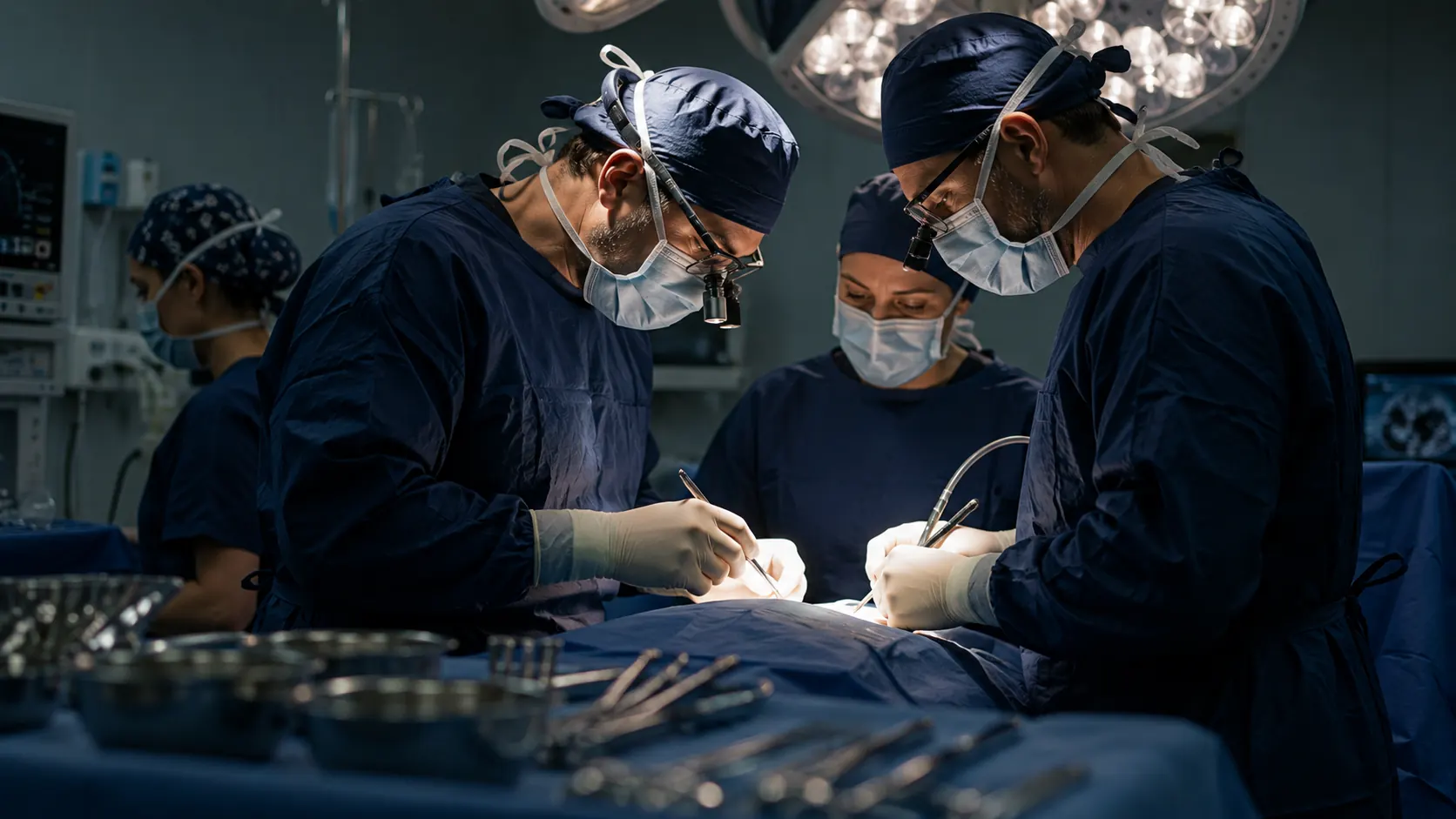
For a localised breast cancer in a man, surgery is almost always the first step of treatment. Two procedures combine: removing the tumour, and checking the lymph nodes.

Surgery for male breast cancer: total mastectomy of the retroareolar tissue and identification of the axillary sentinel node — Dr Jérémie Zeitoun Paris

The mastectomy

Because the volume of breast tissue is small and the tumour close to the nipple, surgery most often removes all of the breast tissue: this is the mastectomy. It leaves a discreet horizontal scar on the chest. In selected situations, more limited surgery (lumpectomy) can be considered.

Reference procedureDiscreet scar

The sentinel node

To find out whether the disease has reached the armpit without operating unnecessarily, the first draining node is removed first: the sentinel node. If it is clear, a full axillary clearance and its risk of lymphoedema are avoided; if it is involved, the strategy is adapted.

Avoid clearanceFewer after-effects

Prepare & localise

When the lesion is barely palpable, a preoperative localisation guides the procedure. The operation is carried out under general anaesthesia, most often as a short hospital stay, after a suitable anaesthetic consultation and work-up.

Short hospital stayGeneral anaesthesia

Recovery & scar

The postoperative recovery is generally straightforward. The removed specimen is analysed in full: this analysis confirms the type of cancer, the state of the margins and nodes, and guides the additional treatments. Nipple reconstruction, rarely requested in men, remains possible and is a shared decision with the surgeon.

Simple recoveryFull analysis
AFTER SURGERY

The treatments after surgery

Surgery is not always the whole treatment. Depending on the tumour's features, other treatments are added to reduce the risk of recurrence. All these decisions are made collectively.

01

Hormone therapy

As male breast cancer is nearly always hormone-dependent, hormone therapy with tamoxifen is the reference treatment after surgery, usually for 5 years (sometimes longer). Aromatase inhibitors are used only in particular cases.

02

Radiotherapy & chemotherapy

A radiotherapy of the chest wall may be offered depending on the stage. Chemotherapy is reserved for situations where the risk justifies it, guided by the tumour analysis.

03

Targeted therapies

When the tumour overexpresses HER2 or shows certain features, targeted therapies complete the management, on the same principles as in women.

Follow-up after treatment for male breast cancer: tamoxifen hormone therapy, regular clinical monitoring and return to normal life — Dr Jérémie Zeitoun Paris

A decision that is always collective: cancer treatments — surgery, hormone therapy, radiotherapy, chemotherapy, targeted therapies — are validated at a multidisciplinary team meeting (MDT), bringing together surgeon, oncologist and radiation oncologist. This shared decision ensures a strategy tailored to your situation, not a standardised treatment. The outlook depends above all on the stage at diagnosis: which is why consulting early makes all the difference.

AFTER TREATMENT

The outlook for breast cancer in men

This is the question that comes right after the diagnosis: “can it be cured?”. The answer fits in one sentence: stage for stage, the outlook for breast cancer in men is comparable to that in women. What counts is not sex — it is the stage at the time of diagnosis.

01

What determines the outlook

The size of the tumour, whether or not the armpit lymph nodes are involved, the grade and the hormone receptors. These appear in the pathology report and define the stage — and therefore the strategy and the prospects.

02

Why consulting early changes everything

Male breast cancers are statistically found at a more advanced stage than in women — not because they are more aggressive, but because no one thinks of them and there is no screening programme for men. A lump investigated without delay is treated in far better conditions.

03

Follow-up after treatment

It combines regular clinical examination, imaging of the remaining breast if conservative surgery was performed, and monitoring of hormone therapy. Where a BRCA2 mutation is found, surveillance is broadened (notably the prostate) and the family is informed through hereditary risk assessment.

The key point: a breast cancer found early in a man is treated, in the great majority of cases, with cure as the goal. Published survival figures are population averages — they say nothing about your own situation, which depends on the stage, the tumour type and the response to treatment. Only the team looking after you, working from your pathology report and the multidisciplinary team meeting, can place your own outlook. It is a question worth asking in consultation, and one that deserves an honest answer.

DR ZEITOUN'S ROLE

Your pathway with Dr Zeitoun

A surgical oncologist and breast surgeon, Dr Zeitoun manages breast cancer in men as in women, at every step where a surgical decision arises.

Examine & interpret

A lump under the nipple, imaging or a biopsy already done: Dr Zeitoun examines you, reviews all your results and places you precisely — a benign lesion, a doubt to investigate, or a confirmed cancer. To prepare for this appointment, a first-consultation checklist is available.

Operate

When a cancer is confirmed, he performs the surgery: mastectomy and sentinel node assessment, tailored to your situation. The aim is an effective and least-invasive procedure, followed by a full analysis of the operative specimen.

Coordinate at the MDT

The rest of the treatment — hormone therapy, any radiotherapy, targeted treatments — is defined at a multidisciplinary team meeting. Dr Zeitoun coordinates this care with the oncologists and radiation oncologists, and provides your follow-up.

Paris 8th & Clinique Hartmann

Consultations at the practice in the 8th arrondissement of Paris (241 rue du Faubourg Saint-Honoré), operations at the Clinique Hartmann in Neuilly-sur-Seine. Sector 2 (non-OPTAM): fee supplements set out in an estimate provided before any operation.

FREQUENTLY ASKED QUESTIONS

Frequently asked questions

Can a man really develop breast cancer?

Yes. Every man has a small amount of breast tissue behind the nipple, and that tissue can develop cancer. It is rare: male breast cancer accounts for about 1% of all breast cancers. But it does exist, and it is all the more treatable when managed early. Its rarity is precisely why many men do not think of it and consult late, when a breast lump is in fact very simple to investigate — which is what this article aims to change.

At what age does male breast cancer occur?

It most often occurs after the age of 60, with a median age at diagnosis of around 65 to 70 — slightly later than in women. It can, however, affect younger men, particularly when there is a genetic predisposition (BRCA2 mutation). Age is therefore not a criterion that rules the diagnosis out: in a man carrying a mutation, a surveillance and prevention strategy is discussed at a genetics consultation.

How do you tell gynaecomastia from breast cancer?

Gynaecomastia is a benign enlargement of the breast tissue, common and usually symmetrical, soft and even in texture, centred on the nipple, with no discharge or skin change. Cancer tends to present as a hard, often painless lump, fixed, off-centre, sometimes with nipple retraction, discharge or a skin change. Only an examination — completed if needed by imaging and a biopsy — can settle it with certainty. Any persistent lump deserves an opinion.

What are the first warning signs?

The most common sign is a hard, painless lump under or beside the nipple. Other signs should prompt a consultation: retraction or deviation of the nipple, discharge (especially if bloody), a skin change (redness, thickening, an “orange-peel” appearance, a non-healing sore) or a palpable lymph node in the armpit. These signs do not necessarily mean cancer, but they always warrant a prompt examination.

Is male breast cancer hereditary?

It is more often hereditary than in women. A mutation of the BRCA2 gene is the main hereditary predisposition factor in men; the BRCA1 mutation plays a more limited role. Because of this proportion, genetic counselling and testing are offered to most men diagnosed with breast cancer. The result has implications for the man himself (surveillance, other cancers) and for his family — in some relatives it may lead to discussing a risk-reduction strategy; to gauge your family risk, a risk questionnaire is available.

What is Klinefelter syndrome and how is it linked to this cancer?

Klinefelter syndrome (47,XXY karyotype) is a chromosomal difference that alters the hormonal balance, with lower testosterone and relatively higher oestrogen exposure. This hormonal environment appreciably increases the risk of breast cancer in the men affected. It is one of the risk factors to be aware of, even though it concerns only a minority of cases; risk assessment tools help place each situation in context.

How is the diagnosis made in a man?

The approach is the same as in women. After a clinical examination, a mammogram and a breast ultrasound are performed — often easier to interpret than in women because there is less tissue; a breast MRI is reserved for particular cases. The diagnosis is confirmed only by a biopsy, which takes a fragment of the lesion for laboratory analysis (pathology). This analysis specifies whether it is a cancer, its type and its hormone receptors; the time to results is usually a few days.

Does the whole breast always have to be removed?

Most often, yes: because the volume of breast tissue is small and the tumour is frequently close to the nipple, total mastectomy is the most suitable operation. Conservative surgery (lumpectomy) remains possible in selected situations. The procedure on the armpit lymph nodes relies first on the sentinel node technique, to avoid an unnecessary clearance and its risk of lymphoedema. A preoperative localisation is sometimes needed when the lesion is not palpable. The strategy is tailored to each situation.

What treatments follow surgery?

The vast majority of male breast cancers are hormone-dependent: hormone therapy with tamoxifen is the reference treatment after surgery, usually for 5 years, sometimes longer. Depending on the tumour's features, radiotherapy, chemotherapy or targeted therapies may be added. In some situations, a genomic test helps decide about chemotherapy. All these cancer-treatment decisions are made collectively, at a multidisciplinary team meeting (MDT), and postoperative recovery is explained before the operation.

Does Dr Zeitoun manage male breast cancer?

Yes. Dr Jérémie Zeitoun is a surgical oncologist and breast surgeon: he performs breast cancer surgery in men as in women — mastectomy, sentinel node — and coordinates what follows with the multidisciplinary team. You can read about his background, prepare your first visit with the consultation checklist, or see the breast cancer pillar page. He consults at his practice in the 8th arrondissement of Paris and operates at the Clinique Hartmann in Neuilly-sur-Seine. Sector 2 (non-OPTAM): a fee estimate is provided before any operation. You can request an appointment or a callback at any time.

What is the outlook for breast cancer in men?

Stage for stage, the outlook is comparable to that in women. What counts is the stage at diagnosis: the size of the tumour, whether the armpit lymph nodes are involved, the grade and the hormone receptors, all set out in the pathology report. Male breast cancers are on average found later, because no one thinks of them and there is no screening programme for men — it is that delay, rather than any particular aggressiveness, that explains the differences reported. Published survival figures are population averages and say nothing about an individual situation: only the team looking after you can place your own outlook.

What follow-up is needed after treatment?

Follow-up combines regular clinical examination, imaging of the remaining breast where conservative surgery was performed, and monitoring of hormone therapy (tolerance, adherence). Where a BRCA2 mutation is found it is broadened — notably for the prostate — and the family is informed: a hereditary risk assessment may then be offered to relatives. Postoperative recovery and the follow-up schedule are explained to you before the operation.

Read also

To go further at every step — from diagnosis to surgery and treatments.

A surgical opinion for male breast cancer

A lump under the nipple, discharge, imaging or a biopsy pointing to a cancer: Dr Jérémie Zeitoun consults at his practice in the 8th arrondissement of Paris and operates at the Clinique Hartmann in Neuilly-sur-Seine. Bring your imaging and biopsy reports.

This article is for information only and does not replace a medical consultation; diagnosis and follow-up are coordinated with your general practitioner and the multidisciplinary team.

FR EN