Clear explanations written by a surgeon — not by external editors, not by an algorithm. Search by keyword, filter by topic, or browse by date.

Articles written directly by the surgeon, based on questions actually asked in consultation. Three angles depending on what you're looking for.

A papilloma is benign — so why remove it? Because we do not operate on the papilloma: we rule out a ductal carcinoma in situ that may sit in the neighbouring ducts, unfelt and painless. What B3 really means, why atypia changes everything, and the seven criteria that decide between excision and monitoring.
Read the article
Yes, a man can develop breast cancer: behind the nipple, every man keeps a little breast tissue. It is rare — about 1% of all breast cancers — and often found late, because no one thinks of it. How to tell benign gynaecomastia from a suspicious lump, why the BRCA2 gene matters, and what mastectomy followed by tamoxifen changes.
Read the article
Yes, DCIS is a genuine cancer — but a non-invasive one. The cells have not crossed the basement membrane, so it cannot give metastases. Found through screening as clustered microcalcifications, treated most often by breast-conserving surgery, with no chemotherapy. What the grade means, why margins matter, and when a sentinel node is needed.
Read the article
There is no screening test — the UKCTOCS trial (Lancet 2021) showed it, and a smear does not screen the ovaries. But warning signs do exist: bloating, pelvic pain, early satiety, frequent urination — when they are new, persistent and frequent. Who should be especially vigilant, what protects, and what to do as soon as a sign lasts.
Read the article
The last step of reconstruction, and one of the most awaited. Nipple graft, trifoliate flap, silicone prosthesis, medical dermopigmentation or 3D trompe-l'oeil tattoo: what is possible, when, whether it hurts — and what is actually reimbursed in France.
Read the article
A borderline tumour is not an invasive cancer, and it often affects young women: surgery can frequently preserve fertility. Fertility-sparing surgery, spontaneous pregnancy, egg preservation, a tumour found during pregnancy, and deferred completion surgery.
Read the article
Is it safe to inject fat into a breast treated for cancer? What the retrospective data and meta-analyses actually show, the benign imaging findings to know about (fat necrosis, oil cysts), how the sessions unfold, and the honest limits of the technique.
Read the article
At stage 1, surgery is the standard treatment and the prognosis is excellent. Diagnosis, the new FIGO 2023 classification and the 4 molecular profiles, minimally invasive surgery, the sentinel lymph node, recovery, and what treatment may follow.
Read the article
Transformation zone, persistent and transforming infections, 'so-called precancerous lesions' (CIN), carcinoma in situ, invasive cancer: the full mechanism, from infection to diagnosis.
Read the article
Fluid or blood from the nipple: what is benign, what is suspicious, the full work-up (clinical, biological, hormonal, imaging) and when surgery (microdochectomy) is needed. You always see a doctor — but not always the surgeon.
Read the article
Why some pain persists after a mastectomy, lumpectomy or axillary surgery: neurological origin, symptoms (allodynia, phantom breast), risk factors and management — and the place of reconstruction to regain your silhouette.
Read the article
A BI-RADS 4 or 5 result is not a diagnosis — it means a biopsy is needed. The weeks ahead: how and when the biopsy is done, the B1–B5 results, and the decision afterwards. ACR BI-RADS, HAS, INCa sources.
Read article
With no reliable screening for ovarian cancer, removing the ovaries and tubes is the most effective measure for BRCA carriers. Recommended age, laparoscopic or vNOTES day-case procedure, surgical menopause and follow-up. INCa, Rebbeck, Finch sources.
Read article
Any bleeding after menopause must be investigated — but most causes are benign. First rule out a cervical, vaginal or vulvar cause; then ultrasound and hysteroscopy. Endometrial hyperplasia is diagnosed and treated by operative hysteroscopy with endometrectomy. CNGOF, INCa sources.
Read article
A BRCA mutation means higher risk — not certainty. Understanding the genes and your risk, genetic counselling, risk-reducing mastectomy and reconstruction, prophylactic salpingo-oophorectomy, surgical menopause and surveillance. INCa, NCCN sources.
Read article
Most ovarian cysts are benign and resolve on their own. Which to monitor, which to operate on? Types (functional, dermoid, endometrioma, cystadenoma), risk assessment (IOTA, O-RADS, MRI, markers), surgical indications, laparoscopy, ovary and fertility preservation. CNGOF, ESHRE, RCOG sources.
Read article
Your report mentions density C or D? Understand what dense breasts change: the ACR BI-RADS A to D classification, the masking effect, the independent risk factor, and when to complement the mammogram with an ultrasound or an MRI. ACR, DENSE trial and EUSOBI sources.
Read article
Looking inside the uterus without any incision: how diagnostic and operative hysteroscopy work. Polyps, submucosal fibroids, septa, synechiae, endometrectomy, anaesthesia options, recovery and rare risks. CNGOF guidelines and the FIGO/PALM-COEIN classification.
Read article
Very painful periods, heavy bleeding, enlarged uterus: understanding adenomyosis. Diagnosis by pelvic MRI, medical options (hormonal IUD, GnRH agonists, relugolix) and surgical options (hysteroscopic endometrectomy, thermal ablation, hysterectomy). CNGOF and ESHRE guidelines.
Read article
Anatomy, symptoms, surgical indications, techniques (emergency drainage with healing by secondary intention, marsupialisation, gland excision), anaesthesia, recovery. Based on the CNGOF/SCGP 2024 guidelines and recent evidence (WoMan-trial 2017, Bakouei meta-analysis 2024, French NCT04093310 trial).
Read article
The surgical procedure is codified (French CCAM code JMMA005). What characterises the consultation with a gynaecological surgeon: a complete vulvovaginal examination, integration with your usual gynaecological follow-up (cervical screening, contraception, menopause) and the option to redirect the care pathway when the examination justifies it. A guide to decide with peace of mind.
Read article
Senology specialisation, INCa authorisation, multidisciplinary team review, oncoplasty, integrated team — the 6 objective criteria to evaluate your surgeon's profile and know when to seek a second opinion. A guide to decide with peace of mind after a diagnosis.
Read article
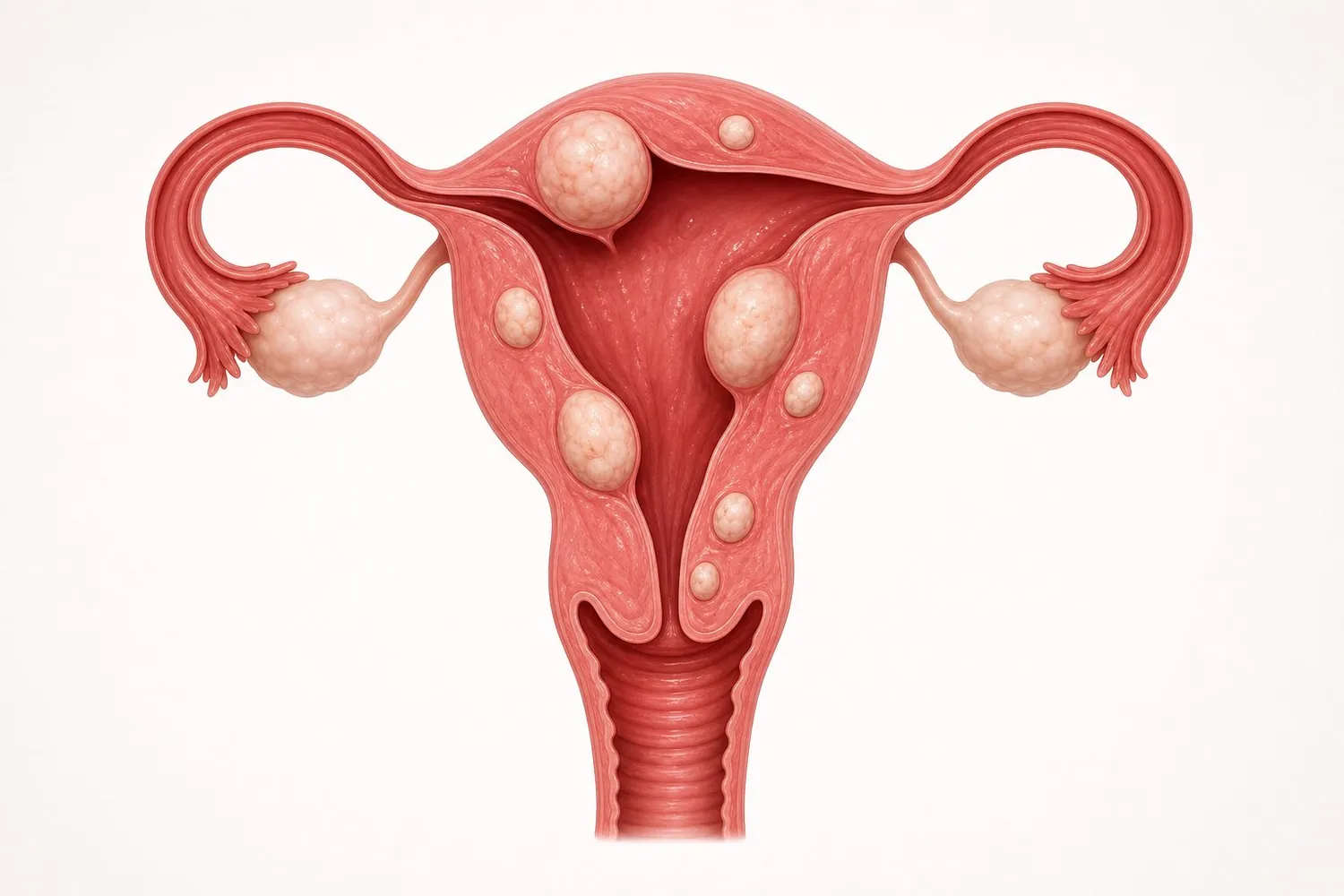
One woman in four lives through this. How to recognise if your periods are truly too heavy, what the possible causes are (fibroid, polyp, adenomyosis, endometriosis), and when to consider surgery — a clear guide to understand your situation.
Read article
FIGO 0–7 classification, three treatment options compared (hysteroscopy, laparoscopy, embolisation), fertility after surgery — everything a patient should know before deciding.
Read article
The most common benign tumour in young women: systematic biopsy before surgery, ultrasound surveillance by default, precise surgical indications.
Read article
Dr Zeitoun explains the actual timeframes (7 to 14 days), why they vary, how results are announced, and how to get through the wait.
Read article


Transmission routes, role of condoms, viral persistence, risk within the couple — real answers to common consultation questions.
Read article

HPV test positive? Management steps by age, colposcopy, CIN grades, prevention.
Read article

Decision criteria, reconstruction options (implant, lipofilling, flaps), equivalent survival.
Read article

Try other keywords or widen the filter.
Reading an article doesn't replace a consultation. If something worries you, book an appointment — the consultation commits you to nothing.
For patients: understand, anticipate, decide. For doctors: stay current on surgical practice in breast and gynaecological oncology. No advertising, one-click unsubscribe.
A consultation is always better than an article. This newsletter does not replace medical advice.