


Margins and the surgical margin
During a lumpectomy, the surgeon removes the focus with a layer of healthy tissue around it. In the laboratory, the pathologist (the specialist who examines tissue under the microscope) checks this layer over the whole surface of the surgical specimen. The edges of the specimen are called the margins. The distance between the lesion and the margin is called the surgical margin.
The report and the decision
Your report mentions involved or close margins. Another operation is often offered, but not always. The decision is made case by case. This article is based on SENORIF 2025-2026.
A decision made case by case
The edges of the specimen are often discussed at length at the multidisciplinary team meeting (MDT). This meeting brings together the surgeon, the oncologist, the radiation oncologist, the radiologist and the pathologist. The surgeon then explains the proposal to you in clinic.
The risk of re-excision of the tumour bed, that is of having to operate again on the area where the tumour was, is estimated at between 10 and 15%.
Does the report on your lumpectomy mention involved or close margins, and do you want to understand what comes next?
Dr Jérémie Zeitoun, surgical oncologist and breast specialist, sees you at 241 rue du Faubourg Saint-Honoré (Paris 8th) and at Clinique Hartmann (Neuilly-sur-Seine). Bring the operation report, the pathology report and the images. Surgery takes place at Clinique Hartmann.

Reading the margins: what the report says
Each side of the specimen
After surgery that preserves the breast, the margins are always examined. Under the microscope, the pathologist looks at each side of the specimen: superior, inferior, outer, inner, towards the skin and towards the muscle. The page on understanding the pathology report explains the other terms.
Three situations
- The tumour lesion is away from the margins: the excision is complete. The tumour has been removed entirely, with healthy tissue around it.
- The tumour lesion is close to the margins: the distance between the margins and the lesion is measured.
- The tumour lesion is in contact with the margin: there is no healthy tissue around it.
The words in the report
- Clear margin: the lesion is away from the margins.
- Close margin: cells are close to the margin, without touching it. For an invasive cancer, the margin is not involved. For ductal carcinoma in situ alone, it is inadequate as soon as it is 2 mm or less.
- Involved margin: cells are on the margin. The report states the side, the size in millimetres, whether one area or several are involved, and the type of cancer facing the surgical margins.
And after a mastectomy?
After a mastectomy, the edges are also examined. Re-excision of the tumour bed is never performed. But the result can count when deciding on radiotherapy after the operation.

The type of cancer changes the rule
According to what the specimen shows
The rule depends on what the pathologist finds in the specimen. Three situations are always set apart.
Ductal carcinoma in situ alone
Ductal carcinoma in situ (DCIS) is a cancer that has stayed inside the breast ducts. When it is alone, the margin must be strictly greater than 2 mm. A margin of 2 mm or less is inadequate: re-excision of the tumour bed is offered.
Invasive cancer and carcinoma in situ together
Invasive ductal carcinoma (IDC) is a cancer that has crossed the basement membrane of the ducts. It is often associated with DCIS. In the specimen, one or the other may make up the majority.
- Re-excision is performed if the margin is in contact with one or the other.
- If DCIS makes up the majority of the operative specimen, the reasoning is the same as for DCIS alone: the margin must be strictly greater than 2 mm.
Invasive cancer alone
For IDC alone, re-excision is performed only if the lesion is in contact with the margin. If it is close, without touching it, there is no re-excision.
After chemotherapy
After chemotherapy given before the operation, the margins to consider are the same.
Lobular carcinoma in situ
LCIS (lobular carcinoma in situ) follows other rules. For classic LCIS, there is no indication for re-excision if the margins are involved. For pleomorphic or florid LCIS, re-excision is indicated if the margins are involved. The report then states the size and the distance to the margins.

What is taken into account at the MDT
Beyond the rule
The rule is not enough to decide. Each case is discussed at the multidisciplinary meeting, then with you.
Your situation
- Your age.
- Your other illnesses (comorbidities), which can make another operation heavier.
- The size of the breast and the volume already removed, so as to keep a harmonious shape.
The limit of the gland
A margin can be involved when there is no longer any gland beyond it. One is then at the anatomical limit of the gland. This is to be taken into account.
A very particular case
For DCIS, in a woman over 50, not operating again can be discussed when the involvement is unifocal and not extensive, on a single margin, at the anatomical limit of the gland, and with no residual microcalcifications on the mammogram after the operation. Breast irradiation with a boost is then given. This is a very particular case, discussed case by case at the MDT.
The extent of the involvement and the imaging
- The extent of the involvement: the side, the size in millimetres, a single area or several.
- Imaging: if the margins are borderline, or if there was a large initial focus of microcalcifications, a mammogram after the operation checks that the whole focus has disappeared.
The treatments that follow
Necessary chemotherapy must not be delayed. It can happen that the excision is incomplete and that chemotherapy is given first. Re-excision of the tumour bed takes place afterwards, before radiotherapy.
Your view counts
When keeping the breast remains possible, some patients prefer a mastectomy, so as not to risk a third operation. Others are determined to keep their breast. Both choices are discussed. The page on lumpectomy or mastectomy sets out the elements of this choice.

The possible options
What is offered
Three proposals are possible.
The three proposals
- Re-excision of the tumour bed by lumpectomy: the surgeon removes tissue on the involved side, most often through the same scar. The breast is preserved, and radiotherapy follows after healing.
- A mastectomy: it is offered if you accept it, as a second or even a third step, when re-excision of the tumour bed has not achieved satisfactory margins. It may be accompanied by immediate or delayed reconstruction.
- No further operation: when the margin is adequate, or when the MDT has chosen not to re-operate, for example at the limit of the gland. Radiotherapy to the breast then completes the treatment.
Reviewing the report
When the report is not clear, the surgeon can ask the pathologist for clarification. A second opinion is also possible.
Has a further operation been offered, and are you hesitating between a new lumpectomy and a mastectomy?
Dr Zeitoun goes through the report with you, one side at a time, examines the breast and the scar, and explains what each option involves. Consultation at 241 rue du Faubourg Saint-Honoré (Paris 8th) and at Clinique Hartmann (Neuilly-sur-Seine).
How re-excision of the tumour bed is carried out
In the operating room, usually as day surgery
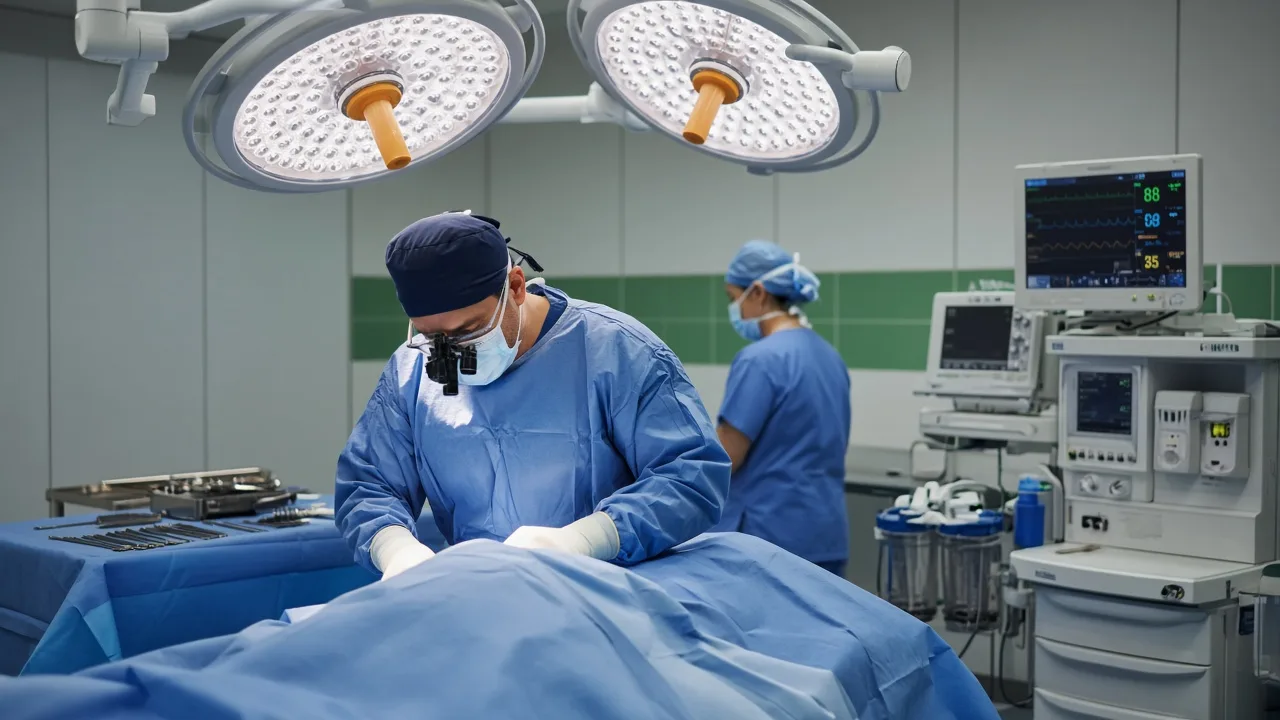
The re-excision is done under general anaesthesia, at Clinique Hartmann, most often as day surgery (home the same day).
A guided re-excision
Re-excision of the tumour bed by lumpectomy is often helped when it is close to the first operation. The same scar is used again. Guidance comes from the seroma (the fluid that has formed in the operated area), which is emptied.
The clips placed the first time
The surgical clips placed the first time are often found, precisely for this situation. These are not the biopsy clips placed by the radiologist. The surgeon places them at the top, at the bottom, on the inner side, on the outer side and in the depth. They make it possible to re-excise the correct margin.
Localization
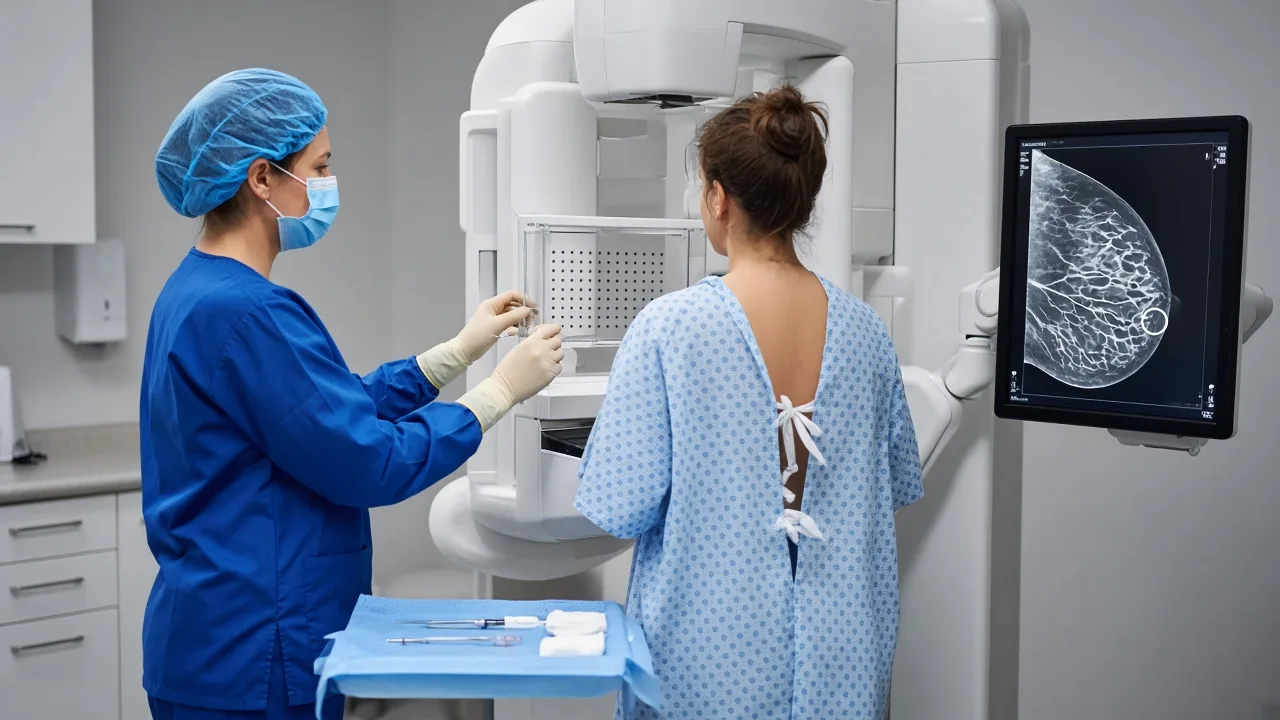
If the re-excision takes place 2 to 3 weeks after the first operation, no localization is planned. If chemotherapy comes first and the operation is 6 months later, the radiologist performs a localization before the operation. The clip of the margin or margins to be removed is localized. See localization before the operation.

The analysis and the shape of the breast
The new specimen is examined in the same way as the first. When the volume removed is large compared with the size of the breast, an oncoplastic technique can reshape the breast during the re-excision. This point is discussed before the operation.
The lymph nodes
The re-excision concerns the breast, not the armpit. Except if, for example, a high-risk lesion was being operated on and an invasive cancer with incomplete excision is found. A sentinel lymph node procedure may then be performed.
Where the consultation and the operation take place
Consultations take place at 241 rue du Faubourg Saint-Honoré (Paris 8th) and at Clinique Hartmann (Neuilly-sur-Seine). Surgery takes place at Clinique Hartmann. Practical advice is on the page on preparing for your operation.

The results, then the rest of treatment
Discussed at the MDT, then in clinic
The result of the new analysis is discussed at the MDT, then explained in clinic.
What the result can show
- No cancer cells in the new specimen: this is common. The first operation had already removed everything, or the re-excision removed what remained.
- A margin that is now clear: treatment continues as planned.
- A margin that is still involved: a new discussion takes place. A mastectomy may be offered, if you accept it.
The rest of treatment
Radiotherapy starts after healing. When chemotherapy or hormone therapy is planned, the order of treatments is set at the MDT. Care after the operation is on the page on recovery after surgery.
When mastectomy changes the radiotherapy
In some cases, when a mastectomy is decided for re-excision of the tumour bed at a second or third operation, it can avoid radiotherapy. This is true only in some cases: it is discussed at the MDT.

Questions to prepare
- Which side is involved, and over what extent?
- Is it DCIS alone, IDC alone, or both together? Which one makes up the majority?
- Is the lesion close to the margin, or in contact with it?
- Can a new lumpectomy preserve a correct shape of the breast?
- What happens if the margin remains involved after the re-excision?
Follow-up
After treatment ends, follow-up combines a regular clinical examination and a mammogram every year. It can be shared between the surgeon, the oncologist, the radiation oncologist and the gynaecologist.
Frequently asked questions
The questions asked most often after a report of involved or close margins. If yours is not among them, ask it in clinic, or ask Sophie, at the bottom right of the screen.
Does an involved margin mean the cancer has spread?
No. An involved margin means that the margin is invaded: the main tumour has not been removed in its entirety. Cells may therefore remain in the breast, near the operated area.
Is another operation always needed when a margin is involved?
Not always. The decision is made case by case, at the MDT. For DCIS alone, a margin of 2 mm or less leads to offering a re-excision. For IDC associated with DCIS, re-excision is performed if the margin is in contact with one or the other; if DCIS makes up the majority, the reasoning is the same as for DCIS alone. For IDC alone, re-excision is performed only if the lesion is in contact. The MDT takes into account your age, your other illnesses, an anatomical limit of the gland, and chemotherapy that must not be delayed.
Does a close margin call for a re-excision?
It depends on the type of cancer. A close margin means that cells are close to the margin, without touching it. For IDC alone, the margin is not involved: there is no re-excision. For DCIS alone, or predominant DCIS, the margin must be strictly greater than 2 mm: at 2 mm or less, it is inadequate and a re-excision is offered. The final decision is made at the MDT, according to your situation.
Is the re-excision done through the same scar?
Yes. The surgeon uses the same scar again. Guidance comes from the seroma and from the surgical clips placed at the first operation.
Is a mastectomy required?
A mastectomy is offered if you accept it, as a second or even a third step, when re-excision of the tumour bed has not achieved satisfactory margins. When conservation remains possible, you can also choose a mastectomy. Reconstruction can then be discussed.
Does the re-excision delay radiotherapy?
Radiotherapy starts after the re-excision has healed. The order of treatments is organised at the MDT. If chemotherapy is needed, it is not delayed: the re-excision can then be done after it, before radiotherapy.
What happens if no more cancer cells are found in the re-excision?
This is common. It does not mean that the re-excision was unnecessary: it confirms that the breast does not keep cancer cells at the edge of the operated area.
Can I ask for a second opinion?
Yes. Bring the operation report, the pathology report and the images. See second opinion for breast cancer.
Sources
- SENORIF 2025-2026 — Cancers et pathologies du sein : attitudes diagnostiques et thérapeutiques, protocoles de traitement: excision limits, lumpectomy margins for intraductal carcinoma, margin for breast-conserving surgery for invasive carcinoma.
Are you waiting for a re-excision, or would you like an opinion on your report before deciding?
Dr Jérémie Zeitoun sees patients at 241 rue du Faubourg Saint-Honoré (Paris 8th) and at Clinique Hartmann (Neuilly-sur-Seine), and operates at Clinique Hartmann. Bring the operation report, the pathology report and the images.