


The word, simply
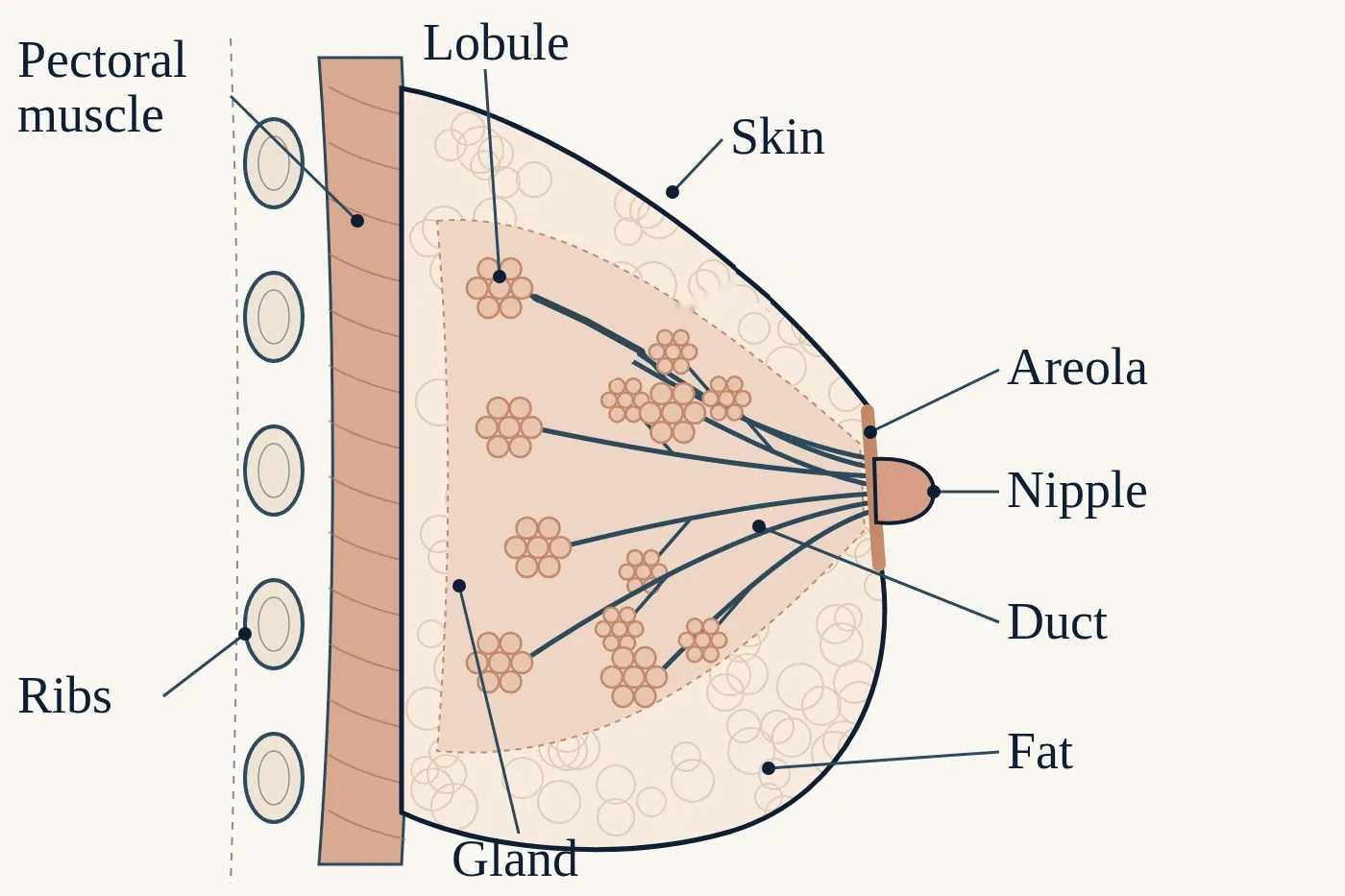
“Lobular” means that the disease starts in the lobules, the small glands that make milk. It does not start in the ducts, the ones that carry milk to the nipple.
The breast diagram shows these two places. It shows the mammary glands, that is the lobules, and the milk ducts.
“Infiltrating” and the basement membrane
- “Infiltrating” (also called invasive, it is the same word) means that the cells have crossed the basement membrane. They are no longer contained inside the lobule.
- The basement membrane, which can be pictured as the floor on which the cells rest, is the thin boundary that keeps them inside the lobule.
- “In situ” is a different situation. The cells have stayed on the inner side of the basement membrane. They have not crossed it. This article is about the infiltrating form.
E-cadherin
E-cadherin is a protein that sticks the cells together. The presence of E-cadherin on the biopsy often proves the ductal nature. Its absence rather proves the lobular nature. The biopsy report says whether this protein was looked for.
Grade and receptors
The same report also gives:
- the grade
- the estrogen receptors
- the progesterone receptors
- the HER2 status.
These lines matter for what follows. They are read with you.
Mammography and ultrasound
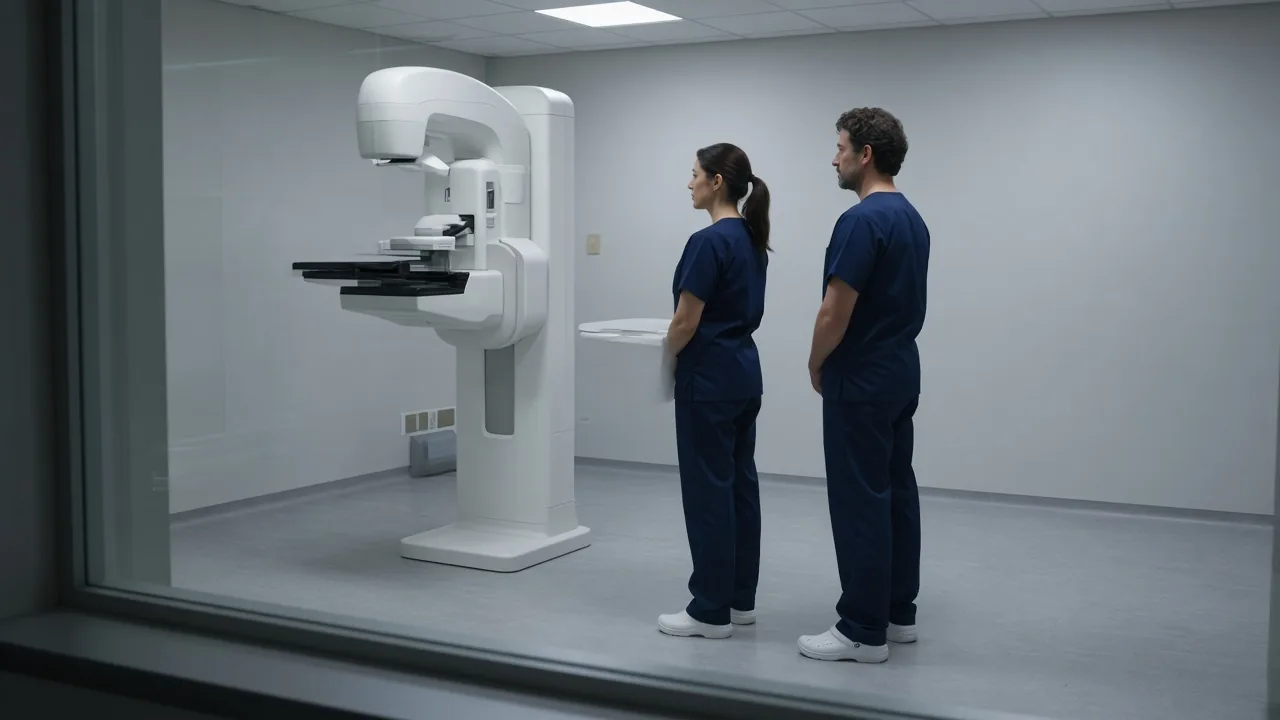
Invasive lobular carcinoma has a particular feature: it is often poorly seen on mammography and on ultrasound. It is more insidious. The real size can be underestimated on the images.
The reference examination
The reference examination is breast MRI and/or contrast-enhanced mammography. Contrast-enhanced mammography is a mammogram done with an iodine contrast agent, in a radiology practice.
Ultrasound
The breast ultrasound is done by the radiologist. The surgeon reads it. He does not perform it.
Better seen on MRI
This tumour is better seen on MRI than on mammography or ultrasound.
The safety margins
Because the size can be underestimated, it may be necessary to operate in two stages. After the first operation, the laboratory looks at the border of healthy tissue around the tumour, the safety margins. If these margins are not satisfactory, a second operation is needed. This is known only from the report on the tissue that was removed.
Invasive lobular carcinoma is often poorly seen on mammography and on ultrasound.
The appointment is made through the secretary, or on Doctolib.
Contrast-enhanced mammography and breast MRI
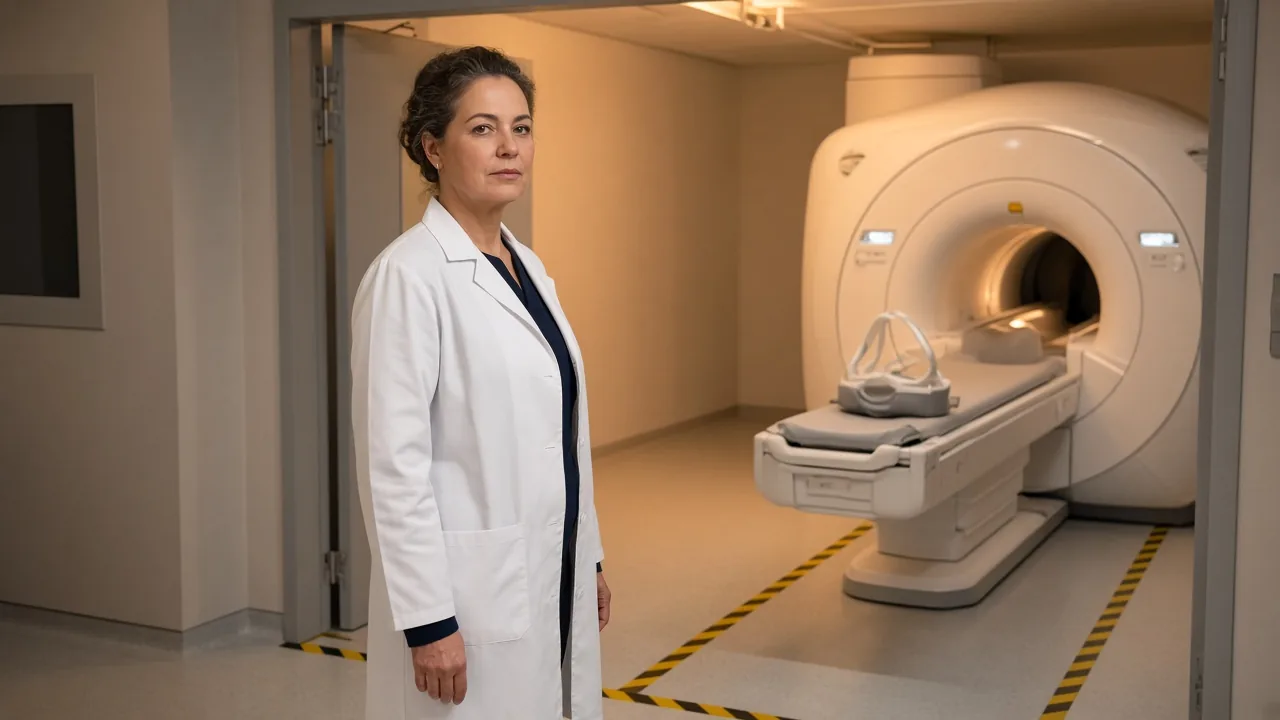
Invasive lobular carcinoma often calls for contrast-enhanced mammography and/or breast MRI. This choice is reconsidered case by case, according to the equipment of the radiology practice: the machines it has, and the examination it can carry out in good conditions.
Breast MRI looks at both breasts. A contrast agent is injected into a vein. The examination takes a while, lying in the machine. The report is written by the radiologist.
Contrast-enhanced mammography is also done at the radiology practice, on a mammography unit designed for the injection. It also looks at both breasts.
This extent
These examinations can show a lesion that is clearly larger than the mammogram had suggested. They can also show a lesion in the other breast. This extent, read again with you, is what is used to prepare the operation. They do not replace the biopsy: the biopsy is what named the disease.
Keeping the breast or removing it

The decision to keep the breast, or to remove it, is made with you. This choice takes in:
- your wish
- bra cup size
- the size of the lesion or lesions
- how they are arranged
- any previous breast surgery
- any cardiovascular history
- other elements of the file.
How the foci are arranged
The arrangement is named with precise words.
- Unifocal: a single focus.
- Multifocal: several foci.
- Unicentric: these foci are in the same region of the breast.
- Multicentric: they are in regions far from one another.
Keeping the breast
Keeping the breast means removing the diseased area and keeping the rest. Several foci do not, by themselves, mean that the breast has to be removed.
Removing the breast
Removing the breast, mastectomy, is discussed if the area is too extensive, if you choose it, or if radiotherapy is impossible. There are also rare contraindications, such as inflammatory breast cancer.
The decision to keep the breast, or to remove it, is made with you.
The appointment is made through the secretary, or on Doctolib.
The armpit

What is looked at
- As in every breast cancer, there is always a radiological review of the lymph-node areas: mammography, ultrasound, and here breast MRI.
- The ultrasound is done by the radiologist.
- There is also a clinical review, done by the surgeon, in consultation.
- As a routine, during surgery, the sentinel nodes are analysed. They are the first relays in the armpit. Their result is in the report after the operation.
After the operation
The tissue removed
The laboratory describes the tissue removed:
- the real size
- the margins
- the lymph nodes.
This report completes the biopsy. It is what says whether a second operation is needed for the margins.
When radiotherapy is indicated, the sessions are given by the radiation oncologist, in a radiotherapy department. The surgeon does not deliver the radiotherapy. He does not give the sessions. He passes the file to the radiation oncologist, who explains to you how it will go.
Hormone therapy
Most often
Most often, breast cancers are called hormone-sensitive. They carry estrogen receptors and progesterone receptors. Lobular carcinoma very often does.
The treatment blocks the action of hormones. It is taken for several years. It is not an operation, and it is not a radiotherapy session. The report says whether this is your case.
If the breast is removed: reconstruction

Several techniques exist.
The options
- The DIEP takes skin and fat from the abdomen.
- The gracilis takes tissue from the thigh.
- The latissimus dorsi uses muscle and skin from the back.
- The implant restores breast volume.
- Lipofilling reinjects your own fat.
The DIEP and the gracilis use your own tissue and microsurgery. These two procedures are done with a plastic surgeon colleague. The choice depends on your body, on your medical history, and on what you want. No technique is promised in advance.
Immediate or delayed
Reconstruction is discussed only if mastectomy is the choice that is kept. It can be immediate, during the same operation, or delayed. It is talked through before the operation.
Frequently asked questions
Are infiltrating and invasive the same word?
Yes. “Infiltrating” (also called invasive, it is the same word) means that the cells have crossed the basement membrane. It can be pictured as the floor on which the cells rest.
How is the in situ form different?
In the in situ form, the cells have not crossed the basement membrane. This article is about the infiltrating form.
What is E-cadherin for?
It is a protein that sticks the cells together. The presence of E-cadherin on the biopsy often proves the ductal nature. Its absence rather proves the lobular nature.
Does mammography show it well?
Often, no. Invasive lobular carcinoma is often poorly seen on mammography and on ultrasound. It is better seen on MRI. The reference examination is breast MRI and/or contrast-enhanced mammography. The real size can be underestimated. The breast ultrasound is done by the radiologist.
Is an MRI always needed?
Most often, a breast MRI or a contrast-enhanced mammography is done, depending on the equipment at the radiology practice. These examinations can show a lesion that is clearly larger than expected, and a lesion in the other breast.
Can the breast be kept?
This is decided with you: your choice, bra cup size, the size of the lesion or lesions, whether it is unifocal or multifocal, unicentric or multicentric, any previous breast surgery, and any cardiovascular history. Several foci do not, by themselves, mean the breast has to be removed. Mastectomy is discussed if the area is too extensive, if you choose it, if radiotherapy is impossible, or in rare contraindications, such as inflammatory breast cancer.
Why a second operation?
Because the real size may have been underestimated. If the safety margins are not satisfactory, the operation has to be done in two stages.
What is done for the armpit?
As in every breast cancer: a radiological review of the lymph nodes (mammography, ultrasound by the radiologist, breast MRI) and a clinical examination by the surgeon. During the operation, the sentinel nodes are analysed systematically.
Who gives the radiotherapy?
The radiation oncologist, in a radiotherapy department. The surgeon does not deliver the radiotherapy.
Does hormone therapy concern you?
Most often, breast cancers are called hormone-sensitive, with estrogen and progesterone receptors. Lobular cancer very often is. Hormone therapy concerns most hormone-sensitive cancers. It has no place without hormone receptors. The treatment blocks the action of hormones, for several years. The report says whether this is your case.
Where to talk about it
Dr Zeitoun goes through the biopsy, the images and the reports with you. The consultation takes place at the practice, or by teleconsultation. The appointment is made through the secretary, or on Doctolib.