Home
Breast & breast cancer
Breast cancer Benign breast lesions Prophylactic mastectomy
Breast reconstruction
All techniques Implant reconstruction Latissimus dorsi flap DIEP flap (abdomen) Gracilis flap (thigh) Fat grafting (lipofilling) Flat closure Intimate surgery
Benign gynaecological surgery
Uterus Ovaries and tubes Cervix Vulva and vagina
Gynaecological cancers
Cervical cancer Ovarian cancer Uterine cancer Vulvar cancer Borderline tumours Articles About
Request a callback Book on Doctolib →
Has a preventive mastectomy been indicated?
Would you like to discuss it before deciding?

BRCA mutation, family history, or a second opinion before prophylactic mastectomy: Dr Zeitoun sees patients in consultation — on the file and after clinical examination. This is not a decision to take in one sentence.

Book an appointment → Request a callback

After a genetics result, or with a heavy family history, two paths coexist: enhanced breast surveillance — including MRI — and risk-reducing surgery. Many patients then wonder whether they “must” have surgery, and how soon. The appointment page is how to arrange a consultation or a first contact.

The page on prophylactic mastectomy covers the general framework and the technical pathway. Here the subject is narrower: the decision pathway once a bilateral indication has been made. Bilateral preventive mastectomy is an option to reduce a risk. It is never imposed on its own. It is discussed with the surgeon, often after genetic counselling, and is linked to a multidisciplinary meeting.

This article follows the pathway in order: what this surgery is, when it is discussed, the file to gather, how the decision consultation runs, and what it changes — and what it does not — before you decide.

Are you hesitating between surveillance and surgery?

This is not a decision to take alone, nor in an emergency. A consultation with the surgeon, in person or by video as a first contact, to set the options against your file.

WHAT THIS SURGERY IS — AND IS NOT

Understanding preventive mastectomy

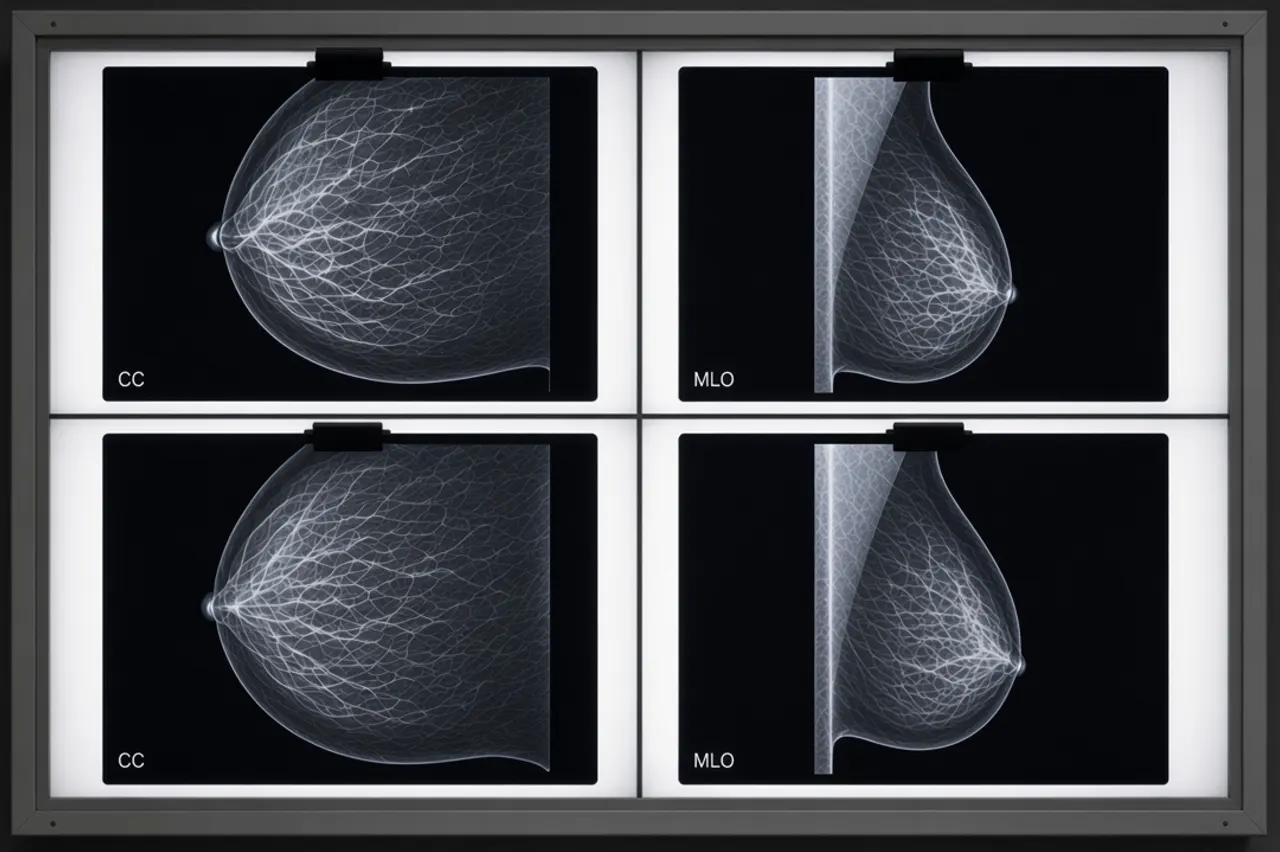
Surgeon reviewing a mammogram and a breast MRI before a preventive mastectomy decision — illustration
The decision is built on imaging, the genetics report if there is one, and a clinical examination — not on a single sentence.

This is removal of both breasts before a cancer appears, in a woman whose risk is clearly increased. It is neither an oncological emergency nor a cosmetic procedure. Technique is on the prophylactic mastectomy page; here the subject is the decision pathway.

What it aims at

Removing almost all breast tissue on both sides to lower substantially the risk of breast cancer. A residual risk remains: a little tissue can be left. It is not a 100 % guarantee. The page on BRCA mutation and preventive surgery places this option in hereditary risk.

The objective is reduction of risk

The aim is risk reduction, not treatment of a tumour already identified. After a breast cancer diagnosis the framework, the timetable and the issues are different. After a positive genetic test, enhanced surveillance remains a legitimate path.

SITUATIONS IN WHICH IT IS DISCUSSED

When to discuss it — without rushing it

Genetic counselling before a discussion of preventive surgery
Genetic counselling places the risk. It is not an order to operate.
Laparoscopy in theatre, the route discussed for ovarian surgery
Ovarian risk has its own timetable. The laparoscopic route is discussed separately.

Bilateral preventive mastectomy is discussed mainly when a high risk is established. It is not reserved for disagreement, nor for emergencies. The right moment is when you want a clear comparison of surveillance and surgery.

The most frequent situations

→Confirmed BRCA1 or BRCA2 mutation — or another predisposition gene, after genetic counselling.
→A heavy family history, even before a test, when hereditary breast and ovarian risk already shapes the strategy.
→After cancer on one side, when mastectomy of the other breast is also discussed — that is not automatic. After cancer treated on one side, the clinical framework, timetable and documents are different; this should be clarified at the first consultation.
→Surveillance that has become too heavy: repeated MRI, biopsies, anxiety that weighs on daily life.
→A second opinion before saying yes — or no — to a proposal already made elsewhere.

What this discussion does not replace

It comes in addition to genetic counselling and, where relevant, the multidisciplinary meeting. It also does not settle the question of the ovaries and tubes, which has its own timetable — see risk-reducing salpingo-oophorectomy.

→A genetic test is not an operating order. Being a carrier increases a risk; it does not create a certainty of cancer.
→Age is discussed (often from 25–30 for BRCA1, a little later for BRCA2) in light of family cancers, plans for breastfeeding and your pace.
→Reconstruction is part of the decision from the first consultation. If reconstruction is wanted, it is planned for both breasts in a coherent project, most often in the same operation when the indication is bilateral.
PREPARATION

The file to gather

Axial breast MRI: surveillance or work-up before a decision on bilateral preventive mastectomy
Breast MRI is often at the centre of enhanced surveillance — and of the file reread before choosing surgery.
File gathered before a decision consultation
Imaging, the genetics report if there is one, family history: the file before an opinion.

A decision on preventive mastectomy is made on a file, not on isolated anxiety. Before the consultation, it is useful to gather the genetics report if there is one, recent imaging — mammogram, ultrasound, breast MRI — and, if there has already been surgery, the operative and pathology reports. The page preparing your first consultation lists the rest.

Bring the images themselves (CD, USB, sharing link), not only the written reports: reviewing the pictures shapes the discussion, including nipple preservation and the type of reconstruction.

A family tree — even a sketch — helps: ages at diagnosis in the family, sides affected, other cancers. This is not an interrogation: it is what allows your risk to be placed, not that of a general statistic.

HOW IT RUNS

How the decision consultation works

First remote discussion before a preventive mastectomy consultation: imaging file on screen — illustration
A first remote discussion prepares the visit, without forcing a decision the same day.
Consultation for a preventive mastectomy decision
The consultation compares surveillance and surgery. It is not an obligation.

The choice is supported: the surgeon explains, and does not decide for you.

A first contact can be made by video or in person via Doctolib. The callback form cannot take file attachments: for a video call or a consultation, send your written documents via Doctolib (the appointment messaging). That prepares the discussion, especially if you are far from Paris or abroad.

In consultation, the surgeon reviews the imaging, the genetics report if there is one, and your history. A clinical examination is necessary before any operative proposal: this is not an opinion given by email on the file alone. You also discuss what you expect of the result — shape, sensation, scars, timing, daily life.

When anatomy allows, a skin-sparing mastectomy with, if possible, nipple preservation (nipple-sparing) is preferred. Reconstruction is most often immediate, in the same operation: implant, DIEP, latissimus dorsi, lipofilling — according to your morphology and priorities. Dr Zeitoun, a reconstructive surgeon, offers all of these techniques; the microsurgery of a free flap is done with a microsurgeon colleague.

The tissue removed is analysed in the pathology laboratory: even in preventive surgery, one checks that no unnoticed lesion was present. It is a framed procedure, with a written report.

Would you like to set the decision with a surgeon?

Bring the file: imaging (MRI if it exists), genetics report, reports already received. The consultation is to compare options, not to sign within the hour.

THE REAL IMPACT OF A DECISION

What it changes, and what it does not

Reconstruction discussed with preventive mastectomy
Reconstruction is discussed at the same time as the operation, not afterwards.

It is better to know in advance what bilateral preventive mastectomy can, and cannot, bring. The final decision remains yours.

It falls substantially

In a woman with a documented genetic predisposition (notably BRCA), bilateral preventive mastectomy reduces the risk by about 90 to 95 %. A residual risk remains: clinical follow-up, and sometimes imaging depending on the technique, is still needed.

It is discussed now

Most often immediate. Implant, flap, nipple preservation: this is decided on your anatomy and after clinical examination. See all techniques.

It is not an emergency

Unlike a cancer already diagnosed, there is usually time to think, to review the file, to talk with those close to you, to come back. Organising is not slowing oncological care.

What it does not settle for you

→The ovaries and tubes have another timetable. Mastectomy does not replace the discussion of risk-reducing salpingo-oophorectomy.
→The final decision remains yours: the surgeon clarifies, he does not decide in your place.
→Choosing surveillance is not a failure. It is a strategy, which can be reassessed later.

Frequently asked questions

The questions that come up most often in consultation. If yours is not here, ask it at the appointment — or Sophie, the site assistant, at the bottom right.

Must I have surgery if I carry a BRCA mutation?

No, never. Preventive surgery is an option, not an obligation. The other path is enhanced breast surveillance (clinical examination, MRI, mammogram/ultrasound on a defined rhythm). The decision is yours, after full information and time to think.

How is this different from a mastectomy for cancer?

Preventive mastectomy aims to reduce a risk in a woman without breast cancer being treated for that indication. After a breast cancer diagnosis, the framework, the timetable and often the axillary procedure are not the same. Both are discussed in consultation, but they are not the same operation in the mind.

By how much does preventive mastectomy reduce the risk?

In a BRCA carrier, bilateral prophylactic mastectomy reduces the risk of breast cancer by about 90 to 95 %. A residual risk remains because a little breast tissue can be left; simple clinical surveillance is maintained.

Can the nipple be kept and reconstruction done at the same time?

Often yes. When anatomy and imaging allow, the skin envelope and the nipple are preserved, and reconstruction is done in the same operation. The technique is defined with you: implant, latissimus dorsi, lipofilling, DIEP.

At what age should the operation be considered?

There is no imposed age. It is often discussed from 25–30 years (BRCA1) and a little later for BRCA2, taking into account the age of family cancers, anxiety, difficulties of surveillance and plans for breastfeeding. It is a considered decision, never urgent.

Which documents should I bring?

The genetics report if it exists, imaging (mammogram, ultrasound, MRI) on a digital medium, and reports already received. The more complete the file, the more precise the discussion. For a video call or a Doctolib appointment, send written documents via Doctolib. See preparing your first consultation.

Can the decision be made by video consultation?

A first contact, yes — especially if you are far from Paris or abroad. The definitive surgical opinion rests on the file and a clinical examination in person, not on an opinion given by email on the file alone.

What if I choose surveillance rather than surgery?

Enhanced breast surveillance combines clinical examination, breast MRI and mammogram/ultrasound on a defined rhythm. This is not giving up: it is a strategy that can be reassessed later. There is no reliable screening for ovarian cancer: for the ovary, preventive surgery is discussed separately, at the right time.

Is this surgery covered?

Risk-reducing surgery in a BRCA carrier is recognised and covered by French social insurance. Dr Zeitoun charges extra fees (secteur 2 non-OPTAM), explained in consultation and set out in a written quote given before the operation.

Who should I contact to discuss this?

Dr Jérémie Zeitoun sees patients in Paris 8e and at Clinique Hartmann in Neuilly-sur-Seine, in person or by video; his background is on the site. Booking or requesting a callback allows the file to be organised in advance.

REFERENCES

Sources

→French National Cancer Institute (INCa) — e-cancer.fr: genetic predisposition, care pathway and patients’ rights.
→Haute Autorité de Santé (HAS) — has-sante.fr: oncology care-pathway guides.
→For operative technique: prophylactic mastectomy · for the BRCA framework: BRCA preventive surgery.

Read also

To go further on hereditary risk, operative technique and reconstruction.

A decision to set before operating

BRCA mutation, family history, proposal of prophylactic mastectomy: Dr Jérémie Zeitoun sees patients in Paris 8th and at Clinique Hartmann (Neuilly-sur-Seine), where he operates. Bring your file (imaging, genetics report). The surgical opinion is given after clinical examination — a video call is a first contact, not an opinion on the file alone.

FR EN
ONLINE CONSULTATIONVideo consultation · by appointment