
The focus here is reconstructing both breasts, in the same operation, in a patient free of any cancer. The decision to have surgery is covered on the bilateral preventive mastectomy page, and the question of whether or not the nipple-areola complex is preserved on the preserving the nipple and areola page. For reconstruction related to cancer, the question of timing is discussed in the immediate or delayed reconstruction article. The overview of all techniques is on the breast reconstruction page.
Considering a preventive mastectomy? Dr Zeitoun examines your body shape and presents the options for reconstructing both breasts.
A different situation from reconstruction after cancer

With no tumour and no further treatment to plan after the operation, nothing delays or gets in the way of reconstruction: it can be planned from the outset for both sides, on the date that suits you.
This changes the way reconstruction is done:
Reconstruction happens at the same time.
Removal of the breast tissue and reconstruction are performed under the same anaesthetic. On waking, both breasts already have volume.
The envelope is preserved.
The breast skin, called the skin envelope, is preserved as far as possible, and often the nipple-areola complex (NAC) too. This envelope is what gives the reconstructed breast a natural shape.
Both sides are worked on together.
Both breasts are reconstructed with the same technique and the same plan, which makes symmetry easier.
The conditions for preserving the NAC, the risk of necrosis (part of the skin or NAC not getting enough blood) and the tissue sample taken behind the areola are described on the preserving the nipple and areola page. They are not repeated here.
Recreating volume is not compulsory. Some women choose a flat closure, meaning the chest is closed without recreating volume. This choice is just as legitimate and is discussed in the same way.
Symmetry: the advantage of bilateral reconstruction

When only one breast is reconstructed, the other, non-operated breast keeps changing with age and weight, while the reconstructed breast changes little: over time, a difference may appear between the two. When both breasts are reconstructed together, with the same technique, they start from the same point and change in a more comparable way.
Symmetry is not automatic, though. Your two breasts are never perfectly identical to begin with: one slightly larger, a fold under the breast higher on one side, a slightly asymmetrical chest. These differences are noted at the consultation, on photographs taken before surgery, and the aim is to reduce them. After surgery, the two sides do not always heal at the same pace. A difference in shape or height may appear and can be corrected, if needed, during a touch-up procedure.
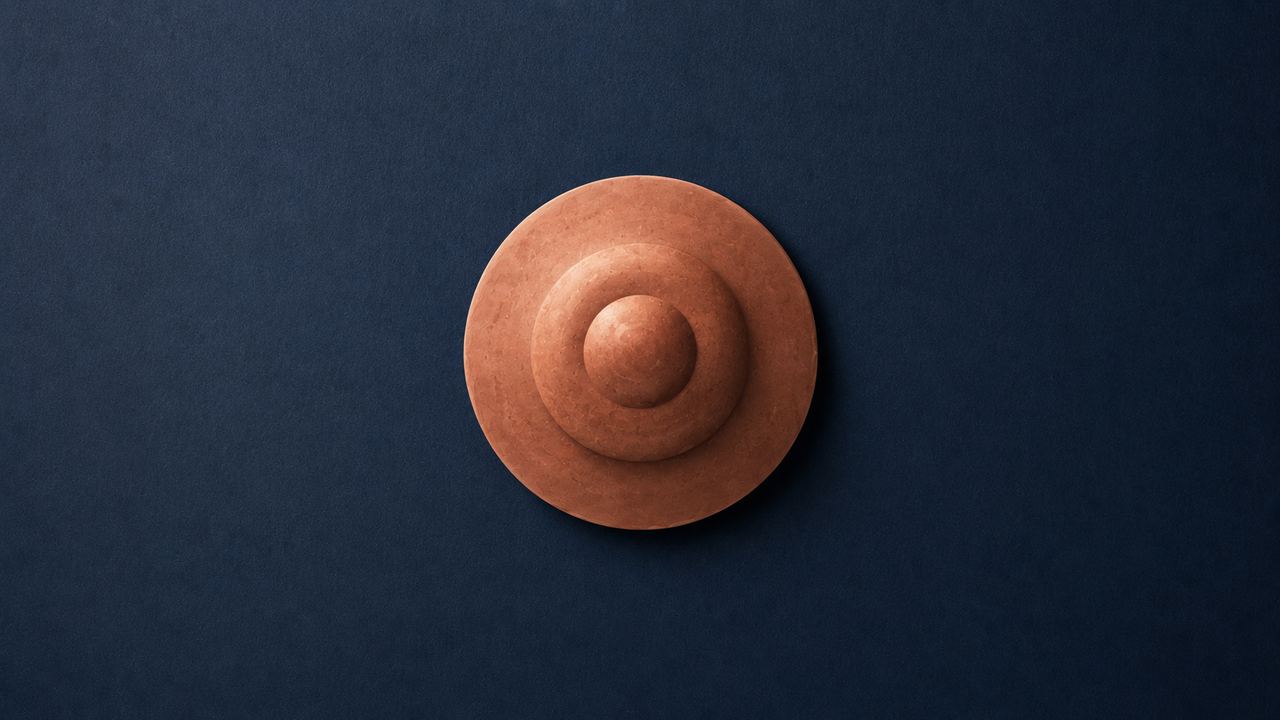
The NAC may be preserved on one side and removed on the other: each side is assessed separately. In that case, symmetry of the areolas and nipples is worked on later, at the stage of nipple reconstruction or areola tattooing.
The possible techniques
The choice is made with you, according to your body shape, skin quality, breast size, figure, activities and wishes. Each technique is detailed on its own page; here is what changes when both sides are involved.
Direct-to-implant reconstruction
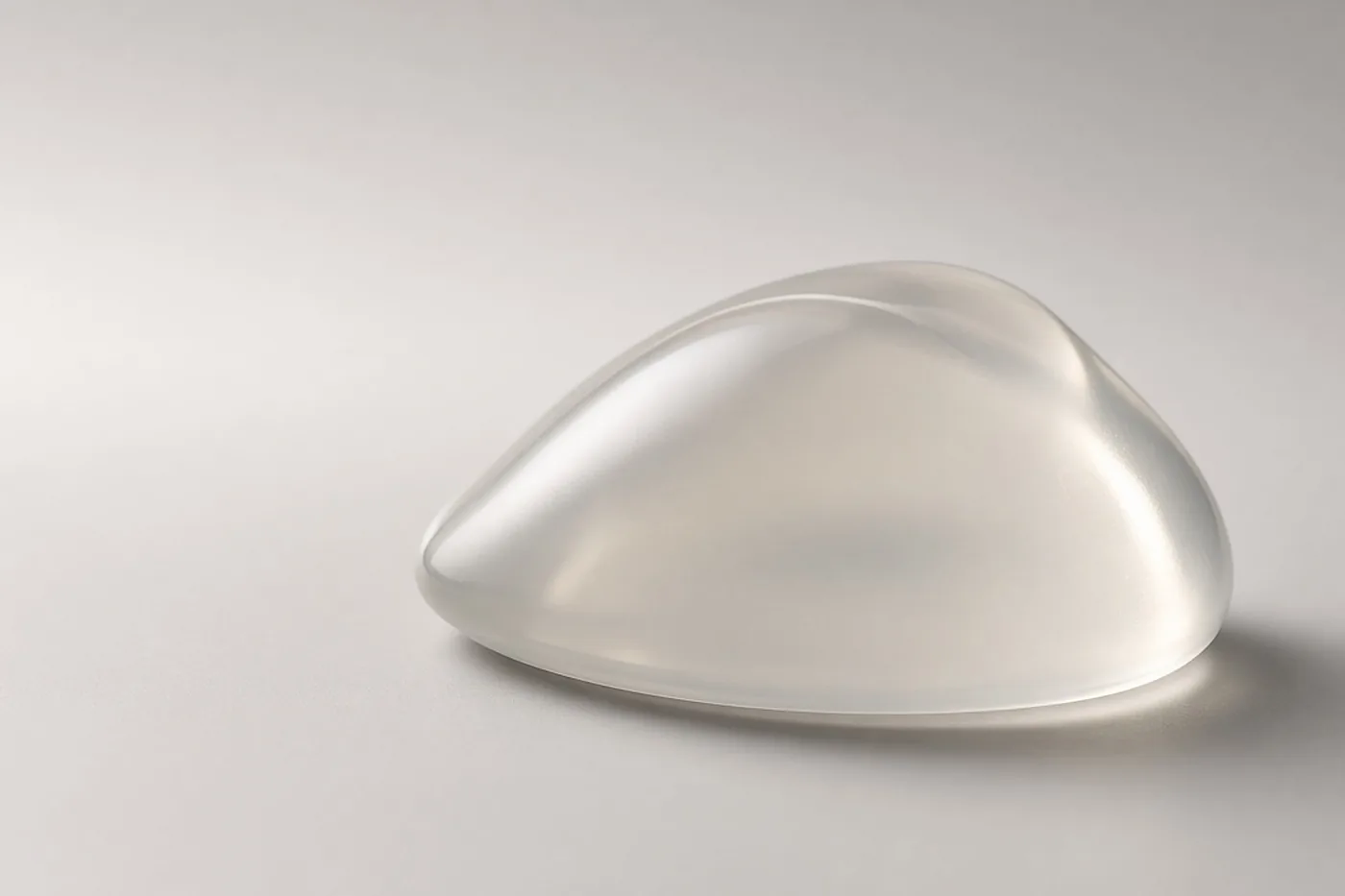
A permanent silicone implant is placed on each side, under the same anaesthetic as the mastectomy. This is a fairly common situation in preventive surgery: a single operation for the reconstruction itself, with a faster recovery than with a flap.
The implant is placed in front of or behind the pectoral muscle, depending on the indications; an absorbable matrix or mesh can reinforce the lower part of the breast and stabilise the implant. Size and shape, round or anatomical, are chosen with you for both sides.
No implant is fitted for life. There is no obligation to replace it on a fixed date, but a rupture, a capsular contracture or a displacement leads to its replacement. These choices are detailed on the implant reconstruction page.
Flaps: reconstruction with your own tissue
For both sides, there must be enough tissue for two breasts.
- The abdomen (DIEP). The abdominal apron, meaning the skin and fat removed as in an abdominoplasty, is shared between the two breasts to give them volume again. The microsurgical step (joining the small blood vessels under the microscope) is carried out with a plastic surgeon colleague. Given the length of the operation, one breast may sometimes be reconstructed and then the other.
- The thigh (gracilis). If the abdomen is flat, each thigh reconstructs a breast of moderate size.
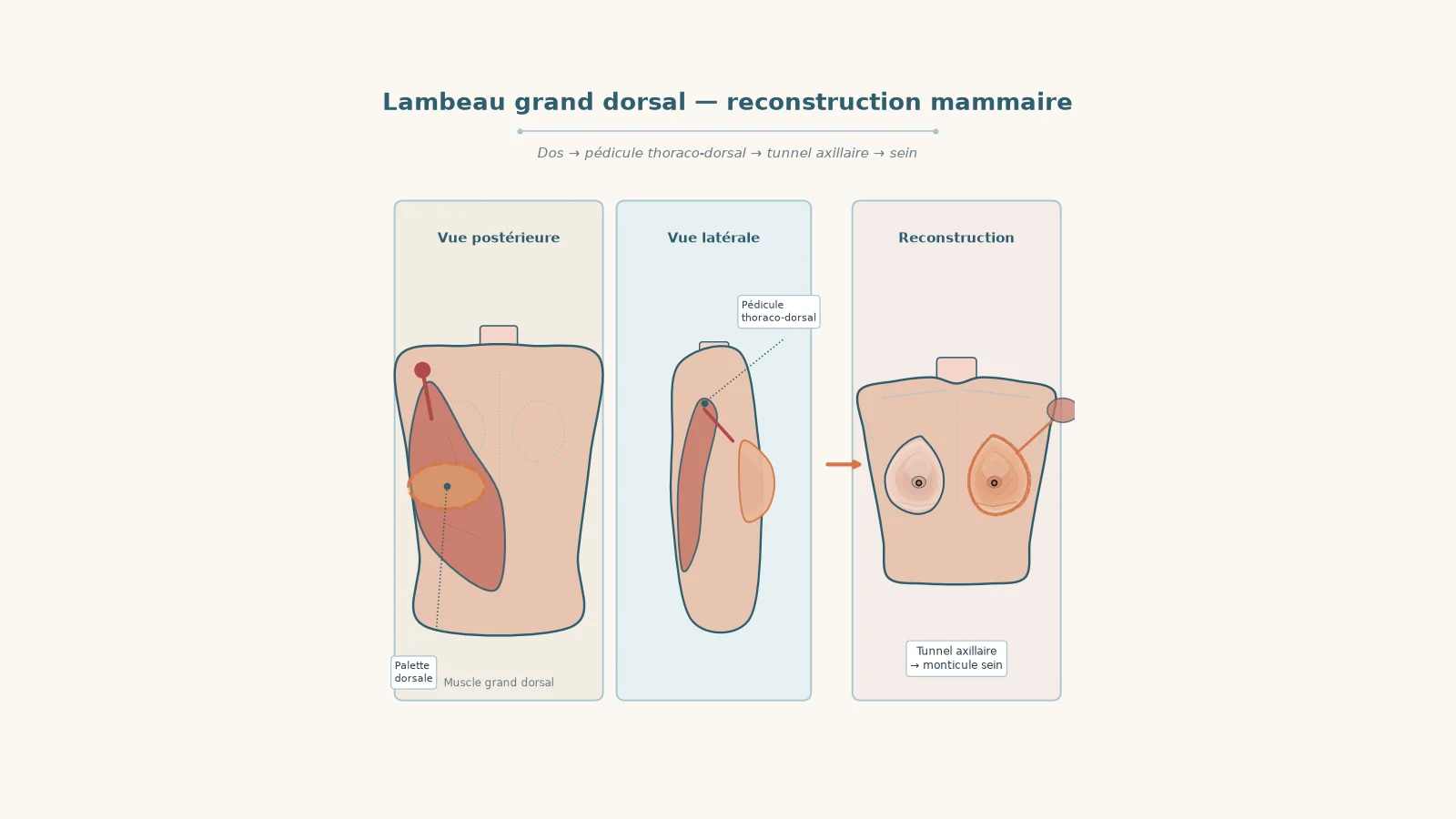
- The back (latissimus dorsi). It is mainly used to cover an implant or to revise a reconstruction.
The breasts, soft and implant-free, follow your weight. In return, recovery is longer, with a scar at the donor site.
Lipofilling, often as a finishing step
Lipofilling consists of taking your own fat, most often from the abdomen, thighs or hips, and reinjecting it into the breasts. After an implant or a flap, it is used to refine the result on both sides: filling a hollow, softening a contour, balancing the volume.
It is performed under general anaesthesia, as a day case, a few months after the reconstruction. Part of the injected fat is reabsorbed; the fat that takes is living tissue, which changes with your weight. It is advisable to keep a stable weight, and several sessions a few months apart may be needed. The technique is described on the breast reconstruction page.
Choosing the size
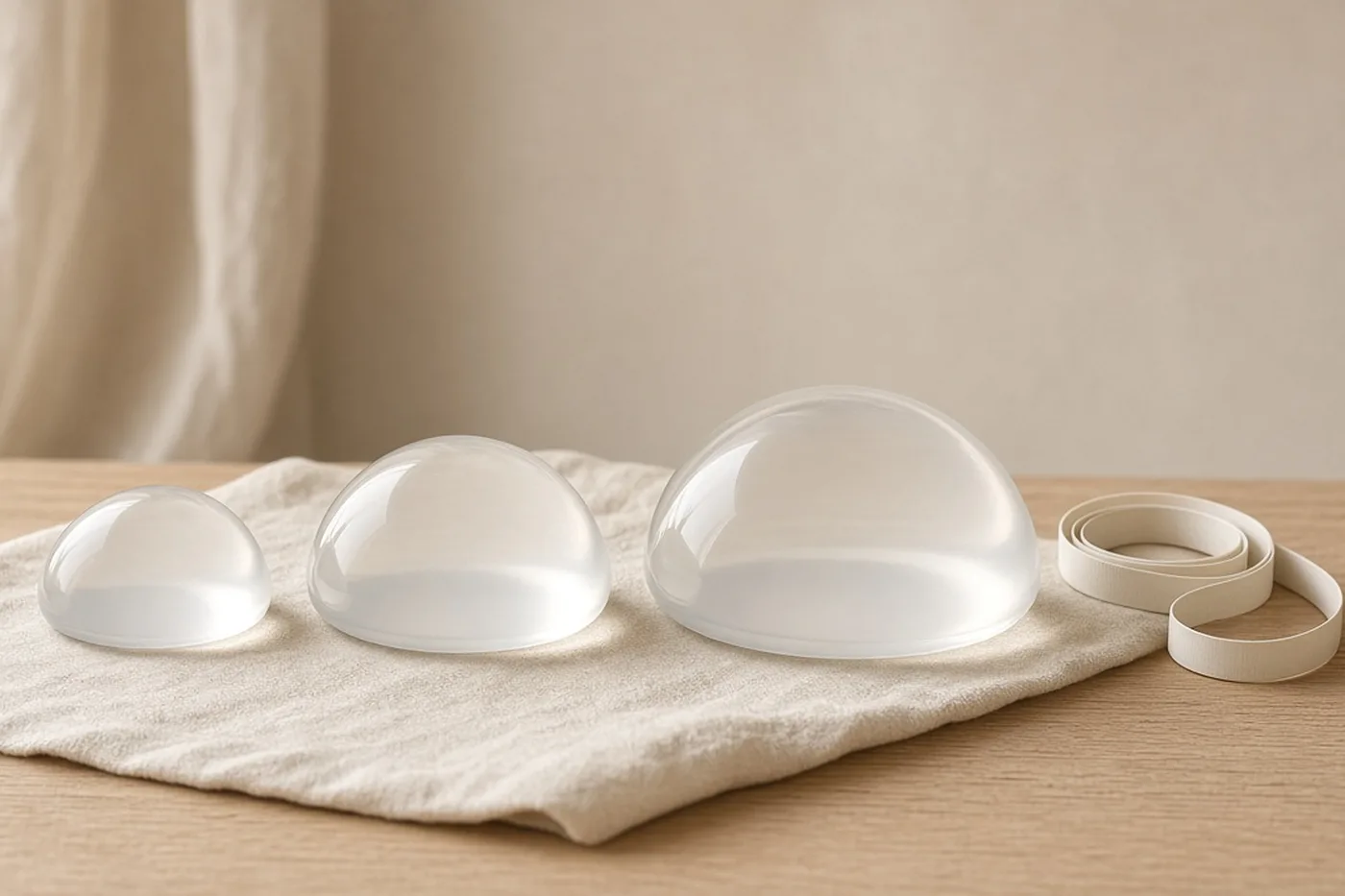
This is one of the first questions asked: can the size stay the same, be reduced, be increased?
When the skin and NAC are preserved, the envelope already exists and the new volume must fit inside it. During immediate reconstruction, unlike cosmetic surgery, your size is kept or slightly reduced, to limit the risk of necrosis. Later, once the skin envelope has its own independent blood supply, often at around 3 months, the size can be increased with a lower risk of necrosis.
A large cup size or ptosis (“droopy breasts”) is less suited to preserving the skin and the NAC; to avoid secondary necrosis, the NAC sometimes has to be sacrificed. To avoid this, a bilateral breast reduction can be done first, a few months before the mastectomy. The preserving the nipple page details this point.
The implant (size, round or anatomical shape, projection) is chosen with you, using measurements taken on your chest. The implant reconstruction page details these choices.
Undecided between implant and flap, or wondering about the size of both breasts: Dr Zeitoun compares the options that suit your body shape.
The operation and hospital stay

The operation takes place under general anaesthesia at the Clinique Hartmann (Neuilly-sur-Seine). Its length depends mainly on the technique: implant reconstruction on both sides is considerably shorter than flap reconstruction.
Incisions are chosen to be discreet: most often in the fold under the breast, sometimes around the areola or following a reduction pattern.
The stay lasts a few days for implants, longer for flaps. When you leave, you are given a precise schedule: dressings, bra, follow-up appointments.
Recovery when both sides are operated on
This is the big difference from surgery on one breast: you have no “good side” to rely on. It is best to plan ahead.
Pain
It is real in the first days, especially when the implant is placed behind the muscle, and is often described as tightness or a feeling of weight on the chest. It is managed with suitable pain relief and gradually eases. Pain that increases instead of decreasing, or a breast that swells on one side only, should be reported without waiting. Pain that persists after healing is covered on the post-mastectomy pain page.
Drains
There is usually one on each side, sometimes more with a flap. They are removed when the fluid decreases, in hospital or by a home-care nurse.
Going home
Because both sides are operated on, arranging help for the first days makes all the difference: shopping, small children to carry, housework, laundry. Clothes that open at the front and everyday items stored at chest height make the return home easier.
Sleeping, showering, driving
You sleep on your back for the first weeks, often slightly propped up, with pillows under your arms. Showering is allowed depending on the type of dressing, which you are told when you leave. Driving resumes once the drains are out and you can turn the wheel and brake sharply without pain.
Returning to work and sport
Return to work depends on your job: earlier for office work, later for physical work or work that uses the arms. Sport resumes in stages: walking from the first days, then gentle activities, then, after several weeks, sports that use the chest muscles and arms (swimming, upper-body weight training, racket sports). With a flap, the donor site (abdomen, thigh or back) has its own pace. The schedule is tailored at the post-operative check-up.
Touch-up procedures
Reconstruction is often done in several operations, spread over 18 to 24 months. One or more touch-ups are common, usually lighter than the first operation: lipofilling, correction of a fold or an asymmetry, adjustment of an implant’s position, revision of a scar. They are planned once the tissues have settled, generally several months later.
If the NAC was not preserved, or was lost, nipple reconstruction and areola tattooing come last. They are described on the areola tattooing and nipple reconstruction page.
Possible complications are discussed before surgery: haematoma, infection, necrosis of the skin or NAC, delayed healing. With an implant, later issues may include capsular contracture (hardening of the membrane the body forms around the implant), displacement, or more rarely rupture. With a flap, there may be a problem with the flap’s blood supply, closely monitored in the first days. Smoking increases these risks: stopping before surgery protects the skin and healing.
Follow-up afterwards
Follow-up has two parts.
The reconstruction. Check-up visits become less frequent over the months. An implant is not a lifetime device: it may need to be replaced one day, with no fixed schedule. An implant that changes shape, hardens or becomes painful should be shown to the surgeon.
The residual risk. Follow-up of the risk that remains after a preventive mastectomy is described on the BRCA mutation and preventive surgery page.
Breastfeeding is no longer possible after a mastectomy. Pregnancy remains possible; it may slightly change the figure and symmetry, which can be adjusted later if needed.
What to expect from the consultation

The reconstruction consultation is dedicated time. Dr Zeitoun examines both breasts, the quality of the skin, the shape of the chest, and the abdomen and thighs if a flap is being considered. With your consent, he takes photographs and measurements. He presents the techniques that are realistic in your case, with their advantages, constraints and risks, and what each involves in terms of recovery and touch-ups.
The pathway before preventive surgery is described on the bilateral preventive mastectomy page. Choosing the reconstruction technique may require a second appointment: coming back with your questions, with your partner or someone close, is part of the process.
Consultations at the practice at 241 rue du Faubourg Saint-Honoré (Paris 8th) and at the Clinique Hartmann (Neuilly-sur-Seine). Surgery takes place only at the Clinique Hartmann.
Risk-reducing surgery for mutation carriers is covered by French national health insurance (Assurance Maladie). Sector 2, not part of OPTAM, with possible fees above the standard rate. The amount is explained at the consultation and set out in a written quote before surgery.
Frequently asked questions
Are both my breasts reconstructed during the mastectomy?
Yes, this is the usual situation in preventive surgery. Removal of the breast tissue and reconstruction on both sides are performed under the same anaesthetic. On waking, volume is already present. With a flap, given the length of the operation, one breast may sometimes be reconstructed and then the other, to limit the length of each operation.
Will I wake up with a “normal” chest?
You wake up with two breasts, whose appearance changes over several months: swelling, tightness, skin relaxing, implant settling. The result can be very good, but it will be a different chest from the one you had before. It is judged once the tissues have stabilised and can be refined with a touch-up.
Implant or flap: how do I choose?
An implant requires a single, short operation, but may need replacing one day. A flap gives a soft breast with no implant that follows your weight, at the cost of a longer operation and a scar at the donor site. Your body shape, the amount of tissue available, your activities and your preference guide the choice.
Can I choose a different size from my current breasts?
Not straight away. In immediate reconstruction, your size is kept or slightly reduced, to limit the risk of necrosis, unlike cosmetic surgery. Later, once the skin envelope has its own independent blood supply, often at around 3 months, the size can be increased with a lower risk of necrosis.
Will my two breasts be perfectly symmetrical?
Reconstructing both sides together makes symmetry easier, but does not guarantee it. Your breasts were not identical to begin with, and each side heals at its own pace. A small asymmetry can be corrected during a touch-up.
Who takes care of my dressings when I get home?
For the first days, Dr Zeitoun prescribes visits from a home-care nurse for your care (dressings, drains).
When can I go back to work and sport?
It depends on the technique and on your job. Office work resumes earlier than physical work. Walking resumes from the first days; sports that use the arms and chest muscles, after several weeks. The schedule is set out at the post-operative check-up.
Will I need another operation?
Often, yes, for a touch-up: lipofilling, symmetry, fold, scar. These procedures are generally simpler than the first operation. With an implant, replacing it may also be needed one day.
Do implants get in the way of follow-up?
No. The implant does not interfere with clinical examination or with any imaging that is planned; follow-up of the residual risk is described on the BRCA mutation and preventive surgery page. Report any lump, redness or change in the skin.
Can I have reconstruction later if I am not ready?
Yes, reconstruction remains possible after a mastectomy, with no time limit. In preventive surgery, reconstructing on the same day allows the skin and often the NAC to be preserved: that is why immediate reconstruction is discussed first.
What if I prefer not to have reconstruction at all?
That is a valid and respected choice. Flat closure closes the chest neatly, without volume. It is discussed with the same care.
Can I have children and breastfeed?
Pregnancy remains possible after reconstruction. Breastfeeding, however, is no longer possible after a mastectomy. The timing of surgery in relation to plans to breastfeed is discussed on the bilateral preventive mastectomy page.
Sources
SENORIF guidelines 2025-2026, chapters “Surgical prevention” (BRCA1/2 and PALB2 mutations: bilateral prophylactic mastectomy, immediate reconstruction, residual risk, multidisciplinary meeting with genetics input and psychology consultation) and “Plastic and reconstructive surgery”. French National Cancer Institute (INCa), “Women carrying a BRCA1 or BRCA2 mutation: early detection of breast and adnexal cancer and risk-reduction strategies” (2017).
Preparing the reconstruction of both breasts before the mastectomy: book an appointment with Dr Zeitoun to discuss it.