Home
Breast & breast cancer
Breast cancer Benign breast lesions Prophylactic mastectomy
Breast reconstruction
All techniques Implant reconstruction Latissimus dorsi flap DIEP flap (abdomen) Gracilis flap (thigh) Fat grafting (lipofilling) Flat closure Intimate surgery
Benign gynaecological surgery
Uterus Ovaries and tubes Cervix Vulva and vagina
Gynaecological cancers
Cervical cancer Ovarian cancer Uterine cancer Vulvar cancer Borderline tumours Articles About
Request a callback Book on Doctolib →
Ovarian and tubal surgery — Dr Jérémie Zeitoun Paris
Logo Dr J. Zeitoun
Benign gynaecological surgery · Paris 8th & Neuilly

Ovaries & tubes cysts & surgery Dr Jérémie Zeitoun · Surgeon Paris 8th

Ovarian cysts, endometrioma, hydrosalpinx. Minimally invasive laparoscopic surgery, preserving fertility as much as possible.

Dr Jérémie Zeitoun surgeon Paris
Scroll
KEY FIGURES

What to remember

A few figures to situate ovarian and tubal surgery.

7%
of women develop an ovarian cyst in their lifetime
95%
of ovarian surgeries performed via minimally invasive laparoscopy
Day surgery
for most cystectomies — home the same evening
Fertility
preserved whenever possible — cystectomy preferred
< 1%
of major complications — controlled and safe surgery
The pathologies

Ovarian and tubal pathologies: when to see a surgeon?

Ovarian cysts, endometriomas, adnexal torsion, hydrosalpinx — all these ovarian and tubal conditions do not necessarily require surgery. The surgical decision depends on symptoms, evolution over time, and your fertility plans. Each situation is assessed individually.

01
Ovarian cyst

The different types of cysts

There are two main categories. Functional cysts (90% of cases) are linked to the menstrual cycle — follicular cyst or corpus luteum cyst. They disappear spontaneously within a few weeks, without any intervention. Organic cysts do not regress on their own: the serous cyst (thin wall, clear fluid); the mucinous cyst (multilocular, thick fluid); the dermoid cyst or teratoma (contains fat, teeth, hair — benign but requires surgery); the serous or mucinous cystadenoma (benign epithelial tumour, can become very large); the borderline tumour (atypical cells, requires oncological management); and more rarely ovarian cancer (thick wall, vegetations, abnormal vascularisation, elevated markers — indications for specialised oncologic management). Surgery is indicated when the cyst persists, grows, is symptomatic, or appears suspicious on imaging (O-RADS ≥ 3).

02
Ovarian endometriosis

Endometrioma

An endometrioma is an ovarian cyst filled with menstrual blood, linked to endometriosis. It can cause significant pelvic pain and weaken the ovary by reducing its egg reserve. For a long time, it was systematically operated on. Today we know that classical surgery (cystectomy) always removes a small amount of healthy ovarian tissue around the cyst — which can reduce the chances of pregnancy, especially if the operation is repeated. This is why specialised centres now offer techniques that spare the ovary: plasma energy vaporisation, which destroys the inner wall of the cyst without touching the surrounding tissue, and ultrasound-guided sclerotherapy (ethanol sclerotherapy), particularly useful when the cyst recurs after a first operation or when the ovarian reserve is already weakened. Cystectomy still has its place for very large cysts or when there is doubt about the nature of the cyst. A fertility assessment (AMH measurement) is offered before any decision, and the question of egg freezing is systematically addressed.

03
Surgical emergency

Adnexal torsion

Adnexal torsion is a surgical emergency. The ovary and/or tube twist on themselves, interrupting blood supply. Without prompt intervention, the ovary may become necrotic. The main sign is sudden and intense pelvic pain, often accompanied by nausea and vomiting. The operation is performed urgently by laparoscopy — the aim is to untwist the adnexa and preserve the ovary if possible. In case of suspected adnexal torsion in Paris, Hartmann Clinic has an operating theatre available for emergencies.

04
Tubal obstruction

Hydrosalpinx

Hydrosalpinx is a dilated and obstructed Fallopian tube, filled with serous fluid. It is often the consequence of an old pelvic infection or endometriosis. It can impair fertility — particularly in the case of in vitro fertilisation, where it reduces success rates. Treatment is surgical: salpingectomy (removal of the tube) or salpingostomy depending on the case.

Not to be confused

PCOS (polycystic ovary syndrome) — PCOS is often confused with ovarian cysts. It is a hormonal disorder that causes the appearance of many small follicles on the ovaries — these are not true cysts. It manifests as irregular cycles, acne, and may cause difficulty conceiving. Its management is medical, not surgical in the vast majority of cases.

Would you like fast-track care or a second opinion on the results of your pelvic ultrasound and/or pelvic MRI?

Book on DoctolibDoctolib
Real-time availability — fully secured online booking
Request a callback
Assessment & diagnosis

Work-up of an ovarian mass in Paris: ultrasound and O-RADS score

The discovery of an ovarian cyst or mass on ultrasound does not mean that surgery is necessary. Diagnosis relies on a structured imaging assessment, now codified by the O-RADS classification.

Step 1
Pelvic ultrasound

Endovaginal ultrasound with Doppler is the first-line examination. It characterises the mass: fluid or solid content, septa, vegetations, vascularisation. Each mass is classified according to the O-RADS US score (1 to 5), which reflects the risk of malignancy and guides further management.

Step 2 — if needed
Pelvic MRI with contrast

When ultrasound is not sufficient to decide — complex cyst, large mass, uncertain result — a pelvic MRI with contrast is requested. It better characterises the nature of the mass and assesses the risk of malignancy. Its result is expressed as an O-RADS MRI score, recommended by the French National Cancer Institute, which directly guides the decision: surveillance, surgery, or oncological care.

Step 3 — in case of organic cyst
Tumour markers CA-125, HE4, ROMA score

For an organic cyst (persistent > 3 months) or one that appears suspicious on imaging, a biological workup is requested. CA-125, HE4 and the ROMA score (combining both based on menopausal status) are the reference markers.

Important: these markers do not diagnose cancer. They can be elevated in benign situations (endometriosis, fibroid, pregnancy, menstruation, peritonitis) and normal in some early cancers. Their role is to guide the surgical decision (diagnostic laparoscopy vs oncological multidisciplinary management) and to provide a baseline for subsequent monitoring in case of confirmed cancer, where their evolution mirrors the disease.

→ When in doubt, the case is systematically presented at a multidisciplinary oncology board (MDT) before any surgical decision. Learn more about ovarian cancer →

The O-RADS classification — what your score means
1
Normal ovary
2
Almost certainly benign — surveillance or nothing
3
Low risk — MRI recommended
4
Intermediate risk — surgical opinion
5
High risk — oncological management
2
Almost certainly benign — surveillance or nothing
3
Low risk — MRI recommended
4
Intermediate risk — surgical opinion
5
High risk — oncological care
Key point: an O-RADS 4 or 5 score does not necessarily mean cancer — it indicates that specialised care is needed. An O-RADS 5 score points toward oncological management.
The ADNEX modelAssessment of Different NEoplasias in the adneXa — is a calculator complementary to O-RADS. Based on 9 ultrasound criteria and CA-125, it estimates the probability that a cyst is benign, borderline, early-stage or advanced cancer. Recommended by international learned societies (INCa, IOTA Group).

Do you have an ultrasound or MRI report with an O-RADS score ≥ 3, a suspicious cyst or an ovarian mass? Bring your results — we analyse them together in consultation to decide on the most appropriate management.

Book on DoctolibDoctolib
Real-time slots — 100% secure online booking
Request a callback
When to seek care

Ovarian cysts, torsion, hydrosalpinx: signs not to ignore

Some symptoms warrant a prompt consultation. A pelvic ultrasound can often clarify the situation within minutes. If your report mentions an O-RADS 3, 4 or 5 score, or a suspicious adnexal mass, a surgical opinion is recommended.

Sudden and intense pelvic pain — suspect adnexal torsion as an emergency
Cyclical pelvic pain (before or during periods)
Persistent heaviness or discomfort in the lower abdomen
Known ovarian cyst that grows or does not disappear
Unusually heavy or painful periods
Difficulty conceiving (infertility)
Pain during intercourse (deep dyspareunia)
The surgery

Ovarian surgery in Paris: laparoscopy as the gold standard

Almost all these operations are performed by laparoscopy — 3 to 4 small incisions on the abdomen, without opening the abdominal wall. Quick recovery, short hospital stay, discreet scars.

Ovarian cystectomy

Remove the cyst while preserving the ovary

What it is. Cystectomy consists in removing the cyst by separating it from healthy ovarian tissue. The ovary is preserved. It is the reference operation for benign cysts in women of childbearing age.

For an endometrioma. Classical surgery (cystectomy) is increasingly avoided because it always removes a small amount of healthy ovarian tissue, which can reduce the chances of pregnancy — especially if the operation is repeated or if both ovaries are affected. In specialised centres, techniques that spare the ovary are preferred: plasma energy vaporisation, which destroys the inner wall of the cyst without touching the surrounding tissue, and ultrasound-guided sclerotherapy (ethanol sclerotherapy), particularly useful when the cyst recurs after a first operation or when the egg reserve is already weakened. Cystectomy still has its place for very large cysts or when there is doubt about the nature of the cyst. A fertility assessment is offered before any decision, and the question of egg freezing is systematically addressed.

When is the ovary removed? Adnexectomy (removal of the ovary and tube) is reserved for specific situations: suspicious cyst, ovary that cannot be preserved, or post-menopausal woman. It is not the default decision.

The recovery. Return home the next day or the same day depending on the case. Resumption of light activity within 1 week, sport after 3 to 4 weeks.
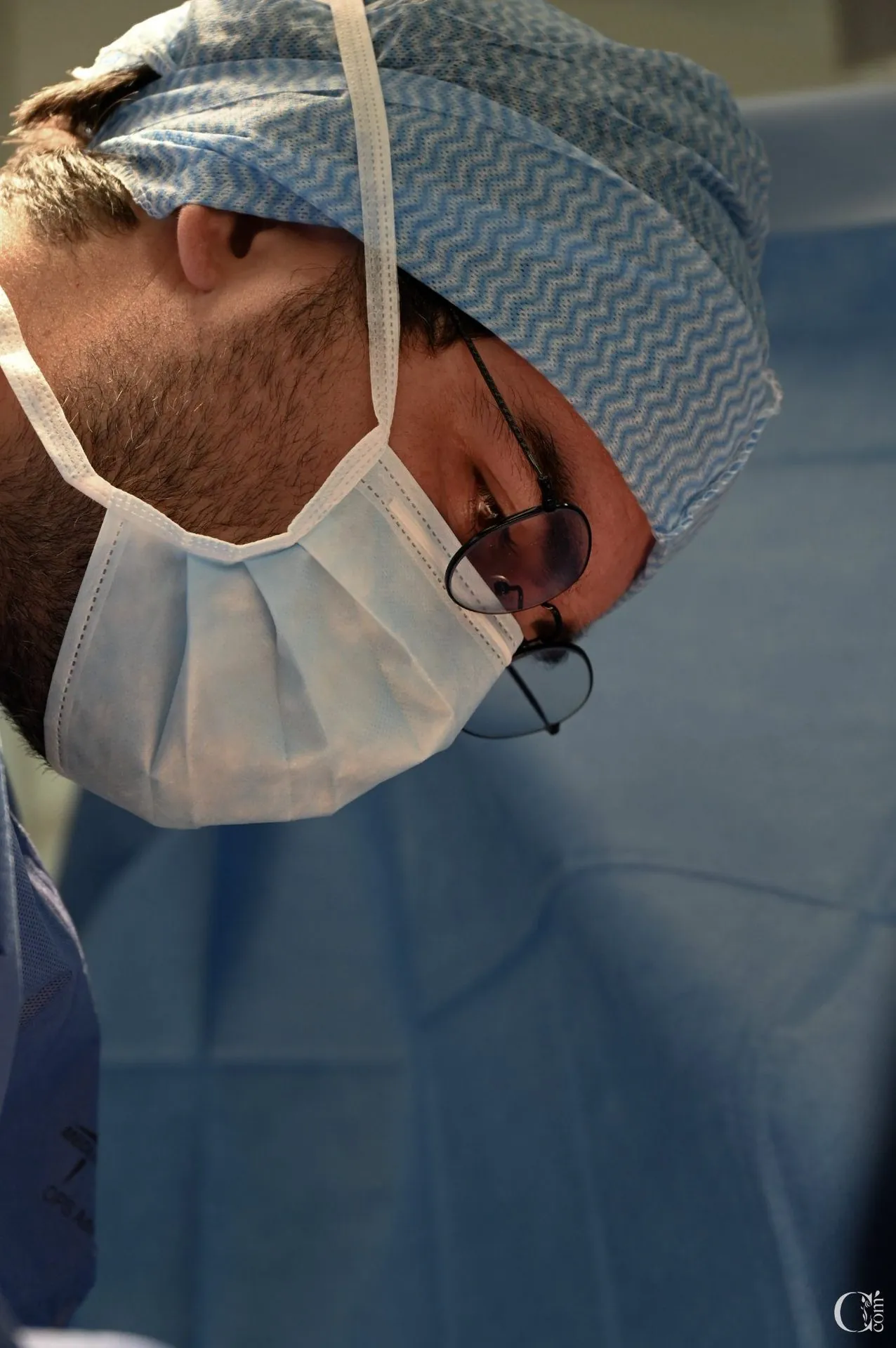

Adnexal detorsion

An emergency operated on within hours

An absolute emergency. In case of adnexal torsion, every hour counts. The faster the intervention, the higher the chances of preserving the ovary. Emergency laparoscopy allows the adnexa to be untwisted and blood supply restored.

Is the ovary always preserved? The aim is to preserve it, even if the ovary appears necrotic to the eye — it often recovers after detorsion. Adnexectomy is performed only if the ovary is definitively non-viable.

And afterwards? If a cyst was at the origin of the torsion, it will be treated during the same operation or in a secondary intervention depending on the situation.

Salpingectomy for hydrosalpinx

Removal of the obstructed tube

Why operate? A hydrosalpinx reduces IVF success rates — the fluid from the tube refluxes into the uterus and impairs embryo implantation. Salpingectomy (removal of the tube) significantly improves IVF success rates.

The contralateral tube. Removal of one tube does not prevent a natural pregnancy if the other tube is healthy. In case of an IVF plan in Paris, salpingectomy is discussed with your ART team before stimulation. In case of bilateral hydrosalpinx, IVF becomes the route to conception.

The recovery. Short procedure, often performed as day-case surgery. Resumption of normal activity within 5 to 7 days.

A question about the procedure that concerns you? Let's discuss it in consultation.

Book on DoctolibDoctolib
Real-time availability — fully secured online booking
Request a callback
Confidentiality
Absolute medical confidentiality
Your information is never shared without your consent.
Second opinion
Always welcome
Bring your reports — no commitment, no judgement.
Wait times
Fast-track appointment
Consultation available within a few days via Doctolib.
After surgery

After ovarian laparoscopy: recovery and timelines

Laparoscopy allows rapid recovery. Timelines vary according to the extent of the surgical procedure.

Hospital stay
Day-case to 2 days
Simple cystectomy: often day-case or 1 night at Hartmann Clinic. More complex procedures (extensive endometriosis, torsion): 1 to 2 days.
Return to work
5 to 10 days
For office work: 5 to 7 days. If physical work: 10 to 14 days. These timelines vary according to your personal recovery.
Physical activity
3 to 4 weeks
Walking from the day after surgery. Light sport after 3 weeks. Intense activities and swimming after 4 weeks.

A word on fertility. Any ovarian surgery can affect ovarian reserve, especially in case of endometrioma or repeated surgery. If you have a pregnancy plan, this point is discussed before the operation at Hartmann Clinic (Neuilly-sur-Seine) or at the Paris 8th practice — and an ovarian reserve assessment may be offered beforehand.

Learn more

What if it were ovarian cancer?

If your ultrasound shows a cyst with unusual features, or if your blood tests come back elevated, your doctor may be concerned about cancer. Don't panic: it's not a certainty, but it should be taken seriously.

Dr Zeitoun, surgical oncologist, manages these situations from start to finish — from diagnosis to surgery, working with a specialised oncology team.

  • Understanding what your ultrasound means
  • Your questions on workup, surgery, and what comes next
  • Human, personalised care
  • If you have a family history: what to do?
Discover the ovarian cancer page
When to suspect cancer?
Imaging Thick wall, vegetations, abnormal vascularisation
Biology High CA-125, ROMA > menopause cut-off
Family BRCA mutations, Lynch, family history
→ In case of doubt, the case is presented at a multidisciplinary oncology board (MDT) before any surgical decision.
Your questions

Frequently asked questions about ovarian cysts and surgery

From what size should an ovarian cyst be operated on?

There is no universal threshold, but in practice: a functional cyst is monitored up to 3 months regardless of its size. For an organic cyst, surgery is discussed from 5 to 6 cm, especially if it grows, causes pain, or shows suspicious features on imaging. Beyond 10 cm, the risk of torsion almost always justifies an intervention. Size is only one of the criteria — appearance, symptoms and age count just as much.

Can I get pregnant with an ovarian cyst?

Yes, in the vast majority of cases. A functional cyst does not prevent pregnancy and often disappears spontaneously. An endometrioma or organic cyst may reduce ovarian reserve and hinder conception — but this is not systematic. If you have a pregnancy plan with a known cyst, a consultation will assess whether prior management is useful or whether IVF is directly indicated.

Is an ovarian cyst after menopause dangerous?

Not necessarily, but it always warrants a serious evaluation. After menopause, functional cysts no longer exist — any cyst is therefore organic. The risk of malignancy is higher than before menopause (around 15% of postmenopausal cysts). An ultrasound with O-RADS score, an MRI if necessary, and a CA-125 measurement help guide the decision. A prompt surgical opinion is recommended.

What is the difference between PCOS and an ovarian cyst?

These are two very different things. Polycystic ovary syndrome (PCOS) is a hormonal disorder that causes the appearance of many small follicles on the ovaries — these are not true cysts. It manifests as irregular cycles, acne, weight gain, and may cause difficulty conceiving. An ovarian cyst, on the other hand, is an isolated fluid pocket, often benign, with no link to PCOS. The two can coexist but require very different management.

What is sclerotherapy of an endometrioma?

Sclerotherapy is a non-surgical technique, performed under ultrasound guidance. A needle punctures the cyst, empties it, then injects ethanol which destroys its inner wall — without touching the surrounding ovarian tissue. It is mainly offered when the cyst has recurred after a first operation, to avoid operating again on an ovary that is already weakened. It can also be useful before IVF if the cyst interferes with egg retrieval.

My report mentions an O-RADS score — what does it mean?

The O-RADS (Ovarian-Adnexal Reporting and Data System) is a standardised classification of ovarian masses on ultrasound and MRI, recommended by the French National Cancer Institute. It ranges from 1 (normal ovary) to 5 (high risk of malignancy). An O-RADS 2 score is reassuring and requires only surveillance. A score of 3 or 4 indicates that an MRI and/or surgical opinion are necessary. A score of 5 directs towards specialised oncological care. This score does not make a diagnosis — it guides the management plan.

Do all ovarian cysts need to be operated on?

No. The vast majority of ovarian cysts are functional and disappear spontaneously within a few cycles. Surgery is indicated when the cyst persists, grows, is symptomatic, or shows suspicious features on ultrasound. The decision also depends on age and fertility plans.

What is an ovarian endometrioma?

An endometrioma is an ovarian cyst linked to endometriosis, filled with menstrual blood accumulated over the cycles. It often causes pelvic pain, especially during periods, and may weaken the ovary's egg reserve. Its management depends on pain, pregnancy plans and the state of the ovary — and does not necessarily go through surgery.

Is adnexal torsion an emergency?

Yes, absolutely. Adnexal torsion is a surgical emergency that requires intervention within hours to avoid ovarian necrosis. The main sign is sudden and intense pelvic pain, often accompanied by nausea. In case of suspicion, go to gynaecological emergencies without delay.

What is hydrosalpinx and why operate?

Hydrosalpinx is a dilated and obstructed tube filled with fluid. It reduces IVF success rates because the fluid refluxes into the uterus and disrupts implantation. Salpingectomy (removal of the tube) significantly improves pregnancy chances with IVF. Removing one tube does not prevent a natural pregnancy if the other tube is healthy.

Can ovarian surgery affect fertility?

Yes, potentially. Any ovarian surgery can reduce ovarian reserve, especially in case of recurrent endometrioma or repeated surgery. This is why the surgical technique and fertility plan are discussed before the operation. An ovarian reserve assessment (AMH) may be offered beforehand.

How long does the hospital stay last?

For a simple cystectomy or salpingectomy, the hospital stay is short — often day-case or 1 night at Hartmann Clinic, Neuilly-sur-Seine. For more complex procedures (extensive endometriosis, torsion), 1 to 2 days. Resumption of light activity within 5 to 7 days.

Is the ovary always removed during surgery?

No. The aim is to preserve the ovary whenever possible. Adnexectomy (removal of the ovary and tube) is reserved for specific situations: suspicious cyst, ovary that cannot be preserved, or post-menopausal woman. It is not the default decision.
COMPARISON

Comparison: ovarian surgery

Overview of the 3 main procedures on the ovary and tube.

Criterion Cystectomy Adnexectomy Salpingectomy
ProcedureCyst removal onlyOvary + tube removalTube alone
Main indicationBenign cyst, young womanComplex cyst, post-menopauseHydrosalpinx, EP, prophylactic
FertilityPreservedReduced (1 ovary)Preserved (ovaries intact)
Surgical approachLaparoscopyLaparoscopyLaparoscopy
Hospital stayDay surgery1-2 nightsDay surgery
Return to activities7-10 days10-14 days7-10 days
REFERENCES

Scientific references

Book your appointment

Bring your ultrasound results and your questions. We take the time to discuss them together.

Book appointment on DoctolibDoctolib Request a callback
READ ALSO
Patient guide

Ovarian cyst: do you need surgery, and how?

Functional or organic cyst, dermoid, endometrioma: which to monitor, which to operate on. Surgical criteria (O-RADS, IOTA), laparoscopy and fertility preservation.

Fees & Reimbursement

Transparency on fees

Dr Zeitoun practises in French sector 2 (non-OPTAM) and applies fee supplements for all consultations and procedures. The French national health insurance (Assurance Maladie) reimburses on the basis of the Social Security tariff — this reimbursement is improved in case of cancer (ALD 30 long-term illness), but does not cover fee supplements. Your private health insurance (mutuelle) may cover all or part of these fee supplements according to your contract.

Fee supplements
Dr Zeitoun applies fee supplements — including for patients with long-term illness status (ALD). A detailed quote is systematically provided before any procedure. No quote is issued without a prior consultation at the practice or via teleconsultation.
Private health insurance
Your private health insurance may cover all or part of the fee supplements according to your contract. Please check with them.
FREN