
Understanding your
mammogram
3D tomosynthesis, BI-RADS classification, breast density, reading the report: a step-by-step guide to understand what is being looked for, what is found, and what it means for you.
The mammogram, reference examination
The mammogram is the cornerstone examination for breast cancer screening and diagnosis. Before going further, let's take a moment to understand how it is performed, what it sees, and why it remains the reference test.
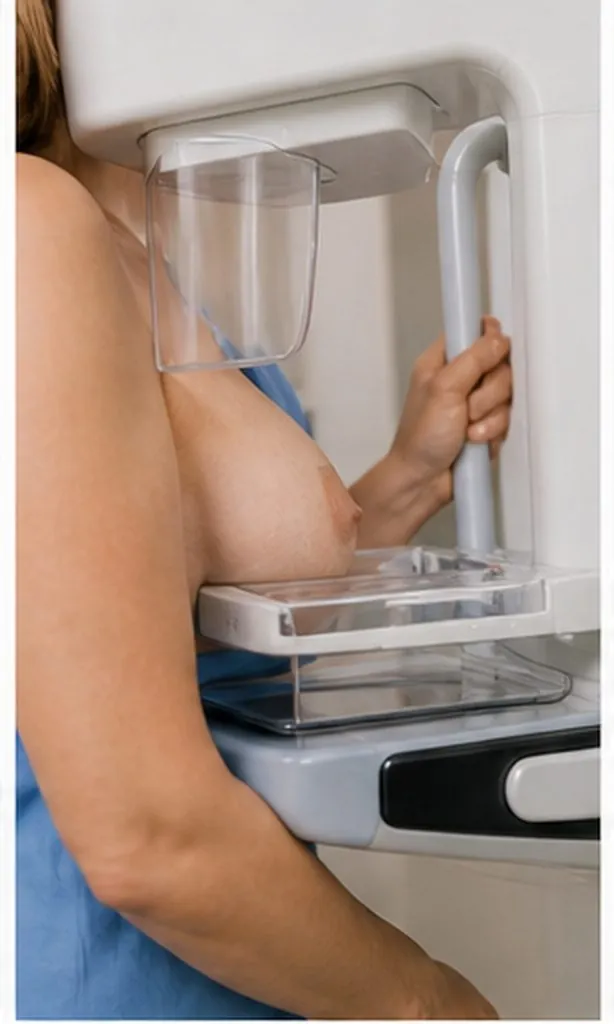
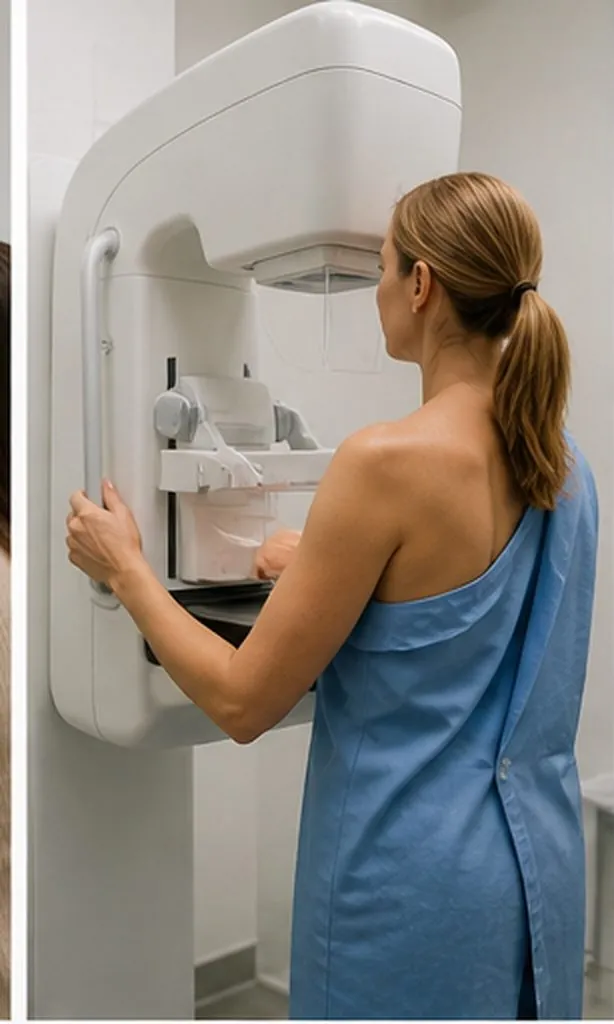
Concretely, a mammogram is an X-ray of the breast. The breast is placed on a plate, compressed for a few seconds by a second plate, and a radiographic view is acquired. The procedure is repeated for the second breast, and each breast is imaged from two angles: craniocaudal (top to bottom) and mediolateral oblique (at an angle).
Compression is essential. It can be uncomfortable, sometimes painful — but it has three indispensable roles: reducing radiation dose, immobilizing the breast to avoid blurry images, and spreading the glandular tissue to see it better. Without compression, interpretation is impossible.
The complete examination takes 10 to 15 minutes. You leave with the images (often transmitted digitally to your physician). The written report is generally available the same day or within 24-48 hours.
One important point: in the French organised screening program (women 50-74, every 2 years, fully covered by the French national health insurance), images are systematically reviewed by a second independent radiologist. This double reading detects 5 to 10% additional cancers compared to a single reading — a recognised French quality safeguard.
3D tomosynthesis, the new standard
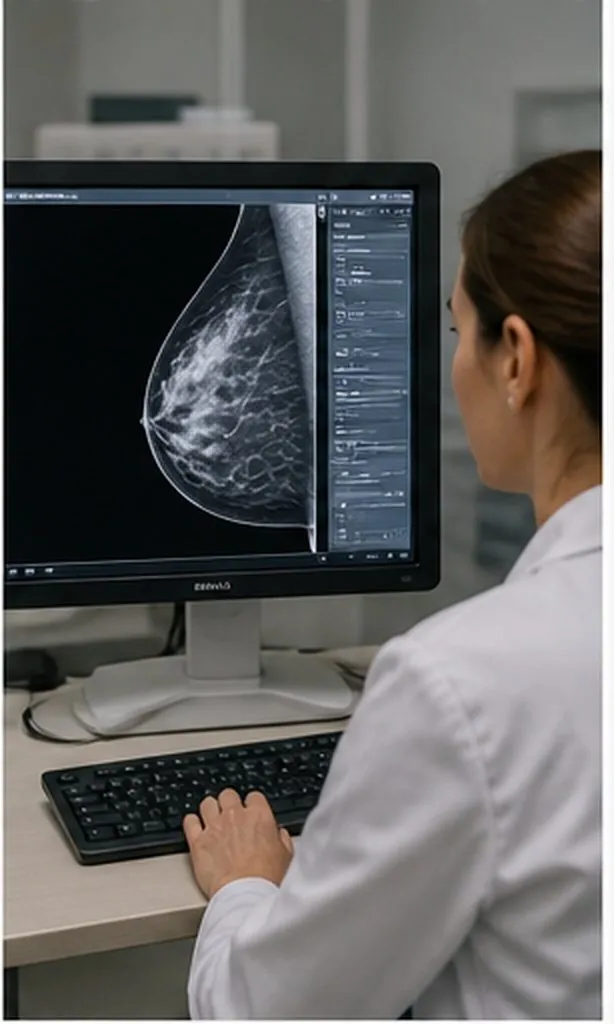
For decades, mammography produced two 2D views per breast. The challenge: breast tissue is composed of glands, fat, and fibrous structures that overlap. A lesion can be hidden behind a dense structure ; conversely, normal structures can mimic a lesion (false positive).
Tomosynthesis, or 3D mammography, changes the game. The machine takes about ten views from different angles, in an arc above the breast. A computer then reconstructs 1mm-thin slices — somewhat like a CT scan. Each slice can be examined separately, without overlap.
The benefits are measurable. The Italian STORM trial (2013) showed a +40% improvement in cancer detection rate compared to 2D mammography alone. The British TOMMY trial (2015) confirmed better lesion characterization, particularly in women with dense breasts. The Marinovich et al. (2019) meta-analysis concludes a significant reduction of false positives and unnecessary recalls.
Today, in equipped centres, tomosynthesis has become the standard. The radiation dose is very slightly higher than 2D (0.5-0.7 mSv vs 0.4 mSv) but remains very low. The diagnostic benefit far outweighs it.
A word on contrast-enhanced spectral mammography (CESM). More recently, some centres offer CESM (also called angio-mammography). The principle: an iodinated contrast agent is injected intravenously, then two image series are acquired at different energies. Subtraction of the two images highlights the enhancing areas — that is, the highly vascularized zones, typically cancers. CESM is an alternative to breast MRI for claustrophobic patients, pacemaker carriers, or when MRI is unavailable. Main indications: staging of a known cancer, exploration of an ambiguous abnormality, surveillance of high-risk dense breasts. The dose is higher than a standard mammogram but remains reasonable, and the exam requires a peripheral IV line.
treat better."
Understanding breast density
On a mammogram, glandular tissue appears white, fatty tissue appears dark. The greater the proportion of glandular tissue, the more the breast is called "dense". This is a normal anatomical characteristic that varies between women and evolves with age (breasts generally become less dense after menopause).
Density has two practical consequences: it makes mammogram interpretation more difficult (a white cancer on a white background is harder to detect), and it constitutes an independent risk factor for breast cancer. The radiologist systematically reports your density according to a 4-grade classification:
If your density is C or D, do not be concerned: this is a normal anatomical variation seen in nearly 40% of women. The discussion about complementary examinations (ultrasound, MRI) is decided case by case, depending on age, family history and overall context. To understand it all — masking effect, interval cancer, complementary ultrasound or MRI, screening in France —, read our dedicated article Dense breasts: what it means for your screening.
Understand what it concretely changes: masking effect, risk factor, interval cancer, and when to complement the mammogram with an ultrasound or an MRI.
What does a mammogram show?
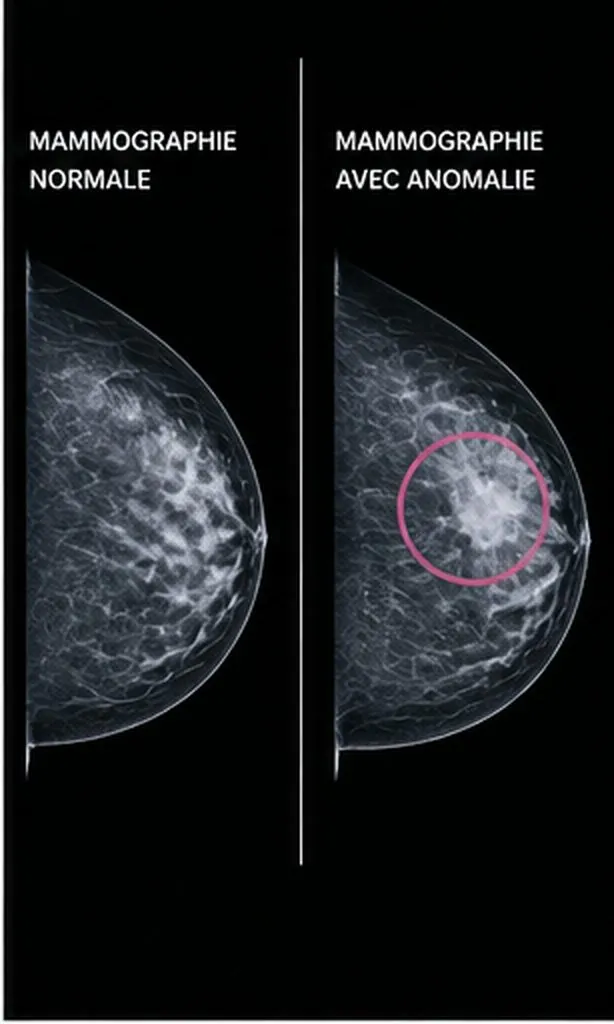
The radiologist interpreting your mammogram looks, in practice, for four main families of abnormalities. Knowing their names helps you understand your report — each technical term corresponds to a precise visual reality.
On the left, a comparison between a normal mammogram and a mammogram with an abnormality (circled area). The trained eye of the radiologist spots these signs within breast tissue whose appearance varies widely from one woman to another.
Microcalcifications
Small calcium deposits, often less than 1 mm. Most are benign (glandular involution, calcified cyst, old fibroadenoma). Some, however, are suspicious by their shape and distribution: clustered, in linear or branching pattern, or with a powdery appearance. Suspicious microcalcifications are often the only visible sign of a ductal carcinoma in situ (DCIS).
Mass or opacity
Area denser than the surrounding tissue. The radiologist analyses three criteria: shape (round, oval, irregular), margins (sharp and regular = rather reassuring; blurred, irregular or spiculated = more suspicious), and density. A round mass with sharp margins suggests a cyst or fibroadenoma; a spiculated mass suggests an invasive cancer. Ultrasound almost systematically completes the analysis.
Density asymmetry
One area of the breast appears whiter than the corresponding area of the opposite breast, without being a true mass. Often this is a normal anatomical variation, especially if present on prior films. But a new, focal, or evolving asymmetry should prompt a search for an underlying lesion — either by complementary view or ultrasound.
Architectural distortion
Normal breast tissue is organised in radial trabeculae from the nipple. When this architecture is deformed, pulled or twisted without an identifiable mass, this is called distortion. Possible causes: a benign radial scar, but also a small invasive cancer. It is a finding in its own right, often justifying complementary work-up (targeted views, ultrasound, sometimes MRI or biopsy).
Other findings may be mentioned in the report: skin thickening, nipple retraction, visible axillary lymph nodes, or intramammary lymph nodes. Each has its own meaning — your physician or breast surgeon is here to sort them out in consultation.
Reading the BI-RADS classification
The BI-RADS classification (Breast Imaging Reporting And Data System), used by radiologists worldwide, is the universal language of breast imaging. Every mammogram results in a score from 0 to 6, summarizing the level of suspicion and guiding management.
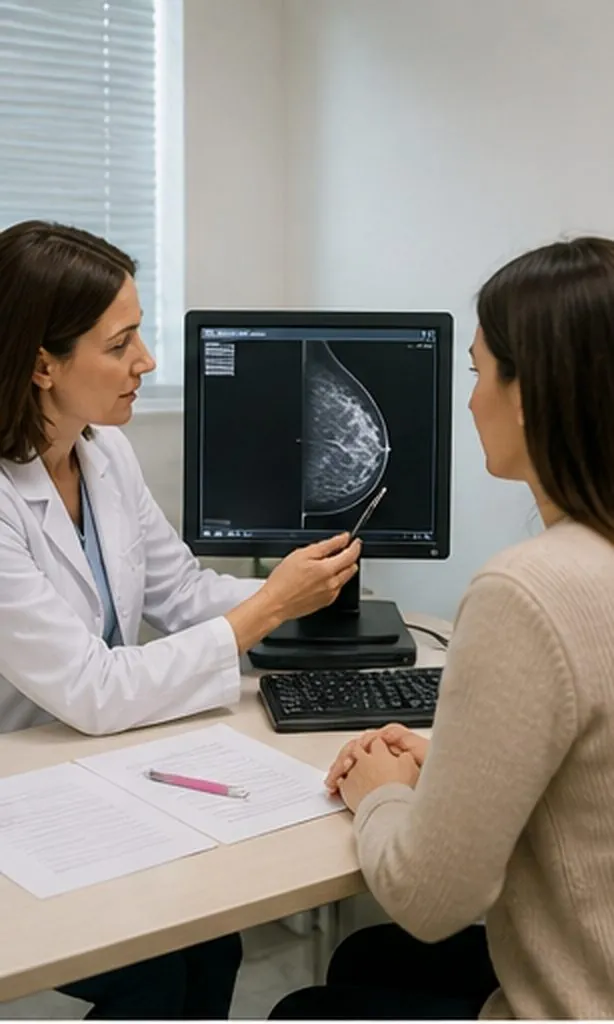
On your written report (right, sample shown in French), you will find this score, together with a precise description of any abnormalities, the breast density and a conclusion. Bring this document to the consultation so that everything is interpreted in context.
Important: a BI-RADS score is never discussed in isolation. It is always interpreted in the global context — your age, your history, the precise appearance of the lesion, its stability or evolution on prior films. If you have any doubt about your report, discuss it with your physician or schedule a dedicated consultation.
What happens next
Here, by score, are the next steps — and the complementary exams that may be proposed.
Reassuring exam
No specific action. Continue routine surveillance based on age and risk factors. Next mammogram in 1 to 2 years.
Close surveillance
For a mass: targeted ultrasound follow-up. For microcalcifications: 6-month mammogram follow-up, then 12 and 24 months if stable. Upfront biopsy possible if the patient is anxious.
Biopsy required
Tissue sampling under local anesthesia, most often in office (ultrasound-guided microbiopsy) or in radiology (stereotactic macrobiopsy for microcalcifications).
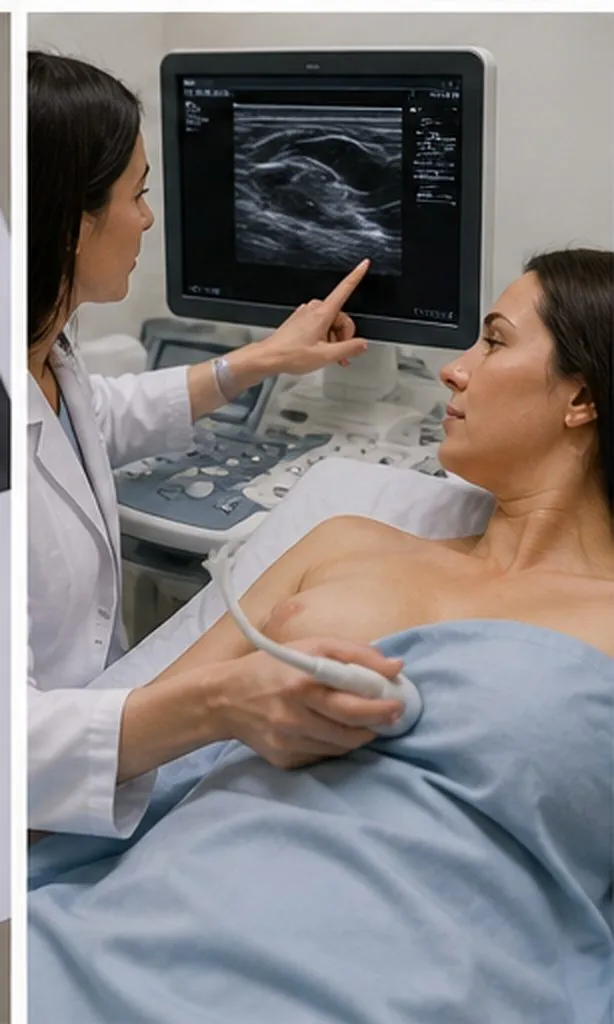
Depending on context, complementary exams may be discussed: breast ultrasound (systematic in dense breasts C/D or to characterise a lesion), breast MRI (for ambiguous lesions, BRCA mutation, or staging of known cancer), fine-needle aspiration (for suspicious axillary lymph nodes), biopsy (microbiopsy or macrobiopsy depending on the abnormality).
Your questions
Organized breast cancer screening targets women aged 50 to 74, with a mammogram every 2 years (fully covered by the French national health insurance, double reading by 2 radiologists).
Before age 50, a mammogram may be indicated earlier in case of risk factors: family history of breast cancer, known BRCA1/2 mutation, personal history of breast cancer, prior chest irradiation (Hodgkin lymphoma). For BRCA carriers, annual MRI is the primary examination, supplemented by mammogram/ultrasound.
After age 74, surveillance is continued case by case, depending on overall health and life expectancy.
2D mammography produces two views per breast (craniocaudal and oblique). 3D tomosynthesis acquires multiple images at different angles, reconstructed into 1mm-thin slices.
Benefits of 3D: improved cancer detection (+40% per the STORM trial), fewer false positives and unnecessary recalls, better visualization in women with dense breasts. Today, tomosynthesis is the standard in equipped centres.
The exam requires breast compression between two plates for a few seconds. This compression can be uncomfortable but is essential: it reduces radiation dose, immobilizes the breast and improves image quality.
Pain perception varies among women. Practical tip: avoid scheduling the exam just before menstruation, when breasts are more sensitive. Ideally, schedule between days 5 and 12 of the cycle.
BI-RADS classification standardizes image interpretation. Each mammogram results in a score:
BI-RADS 1: normal exam. BI-RADS 2: clearly benign abnormality. BI-RADS 3: probably benign abnormality (>98% benign) — 6-month follow-up. BI-RADS 4: suspicious abnormality — biopsy indicated. BI-RADS 5: highly suggestive of cancer — biopsy mandatory. BI-RADS 0: incomplete exam, additional examination needed. BI-RADS 6: cancer already proven histologically.
Breast density describes the proportion of glandular tissue (dense, white on mammogram) compared to fatty tissue (clear, dark).
A: almost entirely fatty breasts. B: breasts with some dense areas. C: heterogeneously dense breasts. D: extremely dense breasts.
The denser the breast, the harder the mammogram is to read — complementary ultrasound is often recommended for C and D.
A BI-RADS 3 lesion (probably benign) has less than 2% risk of being a cancer. The standard approach is close surveillance.
The rhythm depends on the type of lesion:
— For a mass (round or oval opacity): follow-up is often by targeted ultrasound, completed if needed by a mammographic view.
— For microcalcifications: follow-up is classically by mammogram at 6 months, then 12 and 24 months if stable.
If the lesion remains stable, it is reclassified BI-RADS 2 (benign). If it changes, a biopsy is performed.
An upfront biopsy may also be offered if the patient is anxious, cannot tolerate uncertainty for 2 years, or if a pregnancy / IVF project is in progress. This decision is made in consultation, after discussion.
BI-RADS 4 means suspicious abnormality (cancer probability between 2% and 95% depending on subtype 4a, 4b or 4c). BI-RADS 5 means highly suggestive of cancer (>95%).
In both cases, a biopsy is mandatory to establish histological diagnosis. BI-RADS 4 does not mean cancer: most BI-RADS 4a biopsies turn out benign. BI-RADS 5 requires prompt management. In all cases, the biopsy decides.
A 2D mammogram delivers about 0.4 mSv per breast, equivalent to 7 weeks of natural background exposure (cosmic rays, ground radiation). 3D tomosynthesis delivers a slightly higher dose (0.5-0.7 mSv).
This dose is very low and far outweighed by the screening benefit. Radiation-induced risk is considered negligible above age 40.
Not systematically. Ultrasound is recommended as a complement when:
— breasts are dense (C or D) ;
— there is a palpable clinical abnormality ;
— an abnormality detected on the mammogram requires further characterization ;
— in young women (before 35, ultrasound can even be the first-line examination).
Ultrasound does not replace the mammogram for screening in women aged 50 and over.
A positive recall means the radiologist detected an abnormality requiring additional examinations (targeted views, ultrasound, sometimes MRI or biopsy).
It does not mean there is cancer: most recalls turn out benign. The right approach is to promptly schedule the requested complementary exams, without panicking but without delay.
Both exams are complementary, not competing. The mammogram is the first-line exam for screening and diagnosis from age 50. Breast MRI is more sensitive (it detects cancers invisible to mammography) but also less specific (it generates false positives).
MRI is indicated for: BRCA1/2 mutation or high family-history risk (annual surveillance from age 30), staging of known cancer, persistent ambiguity after mammogram + ultrasound, suspected occult cancer, or post-lumpectomy surveillance in young women.
Contrast-enhanced spectral mammography (CESM) can replace MRI if you are claustrophobic or carry a pacemaker.
Images are available right after the exam — either printed or digitally transmitted. The radiologist's written report is available the same day or within 24 to 48 hours.
Within the French organised screening program (ages 50-74), an official letter is sent within 15 to 21 days after second-reader double reading. If an abnormality is detected by either reader, you will be recalled sooner (positive recall) for additional examinations.
Fibroadenoma is the most common benign tumour of the breast, especially in young women. On a mammogram, it appears as a mass with sharp, oval margins, sometimes with "popcorn" calcifications (highly suggestive). On ultrasound, it appears as a homogeneous hypoechoic mass.
Management depends on typicality and size: if all criteria are met (BI-RADS 2 or 3), simple surveillance is sufficient. If the mass is larger than 2-3 cm, painful, or growing, a biopsy or surgical excision may be proposed.
For more detail on management: dedicated breast fibroadenoma page.
Not all visible calcifications on a mammogram are suspicious — on the contrary, the vast majority are benign.
Typically benign (BI-RADS 2): vascular calcifications (railroad-track in arteries), skin calcifications (empty rings), "popcorn" calcifications of fibroadenoma, "milk of calcium" cyst calcifications, coarse stable macrocalcifications.
Suspicious and requiring investigation: fine microcalcifications, clustered, in linear or branching pattern, or with a powdery appearance. These forms can be the only sign of a ductal carcinoma in situ (DCIS).
Comparison with prior films is one of the most powerful diagnostic tools in breast imaging. A lesion that has been stable for 2 years is almost always benign. Conversely, an area that has changed between two mammograms, even subtly, must be investigated — this is sometimes the only sign of an early cancer.
Bring all your old films (paper or CD), even if performed in another centre. The radiologist will compare them with today's exam. This comparison can avoid an unnecessary biopsy or, conversely, trigger life-saving exploration.
Yes, systematically. Follow-up after breast cancer relies on an annual mammogram of the operated breast and the contralateral breast, supplemented if needed by ultrasound or MRI. This follow-up continues for at least 5-10 years.
After lumpectomy, the treated breast may show scarring, density changes or fat changes — this is normal. The radiologist knows these aspects and compares with prior films. After mastectomy, no mammogram is possible on the operated side (no remaining glandular tissue) — surveillance is clinical and via ultrasound/MRI if needed.
Going further
Let's talk about your situation
A consultation to discuss your mammogram report, understand your options, or get a second opinion — feel free to schedule an appointment.