

Abnormal smear, HPV lesion? Day surgery, no impact on fertility.
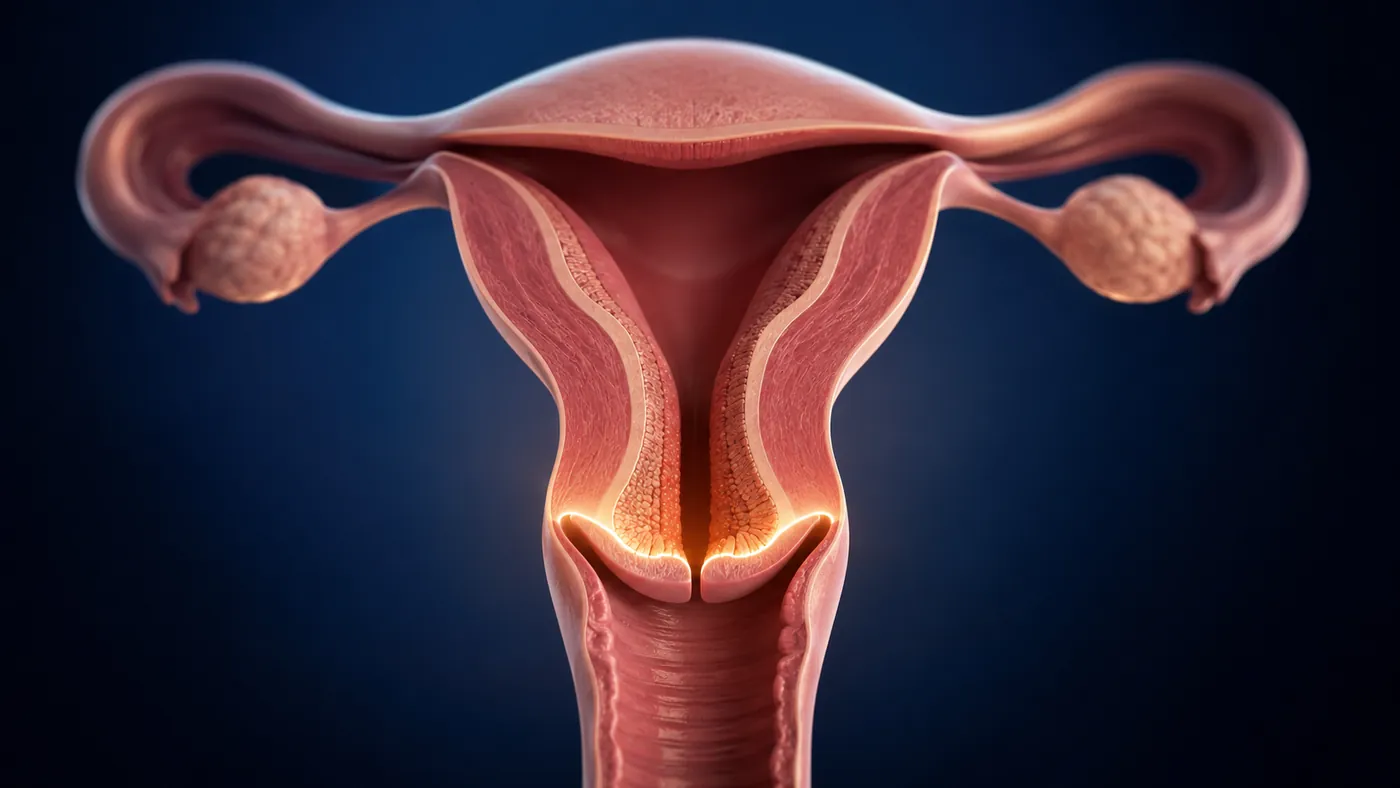
The cervix is the gateway to the uterus. Its outer surface and inner canal meet at the transformation zone — this is where almost all HPV-related lesions develop, and where colposcopy and biopsies are targeted.
The human papillomavirus (HPV) is a very common sexually transmitted virus. In 90% of cases, the immune system eliminates it on its own. In other cases, certain "high-risk" genotypes (HPV 16, 18, 31, 33…) can, over many years, lead to the development of precancerous lesions. This is why regular screening — via cervical smear and HPV test — is essential.
Cervical lesions are classified in increasing grades: CIN 1 — mild dysplasia, often regressive, monitored. CIN 2 — moderate dysplasia, treatment discussed depending on context. CIN 3 / AIS — high-grade lesion that systematically requires treatment (conisation). Regular screening by Pap smear and HPV test allows these lesions to be diagnosed and treated at an early stage.
No. A positive HPV test means the virus is present in your cervical cells — not that there is cancer, or even a lesion. In 90% of cases, the immune system eliminates the virus on its own within 1 to 2 years, without any consequence. Only persistent infection with a "high-risk" HPV can, over many years, favour the development of precancerous lesions. This is precisely why regular follow-up is recommended — not because there is urgency, but because monitoring is the best prevention tool.
No, not necessarily. HPV can remain dormant for years or even decades before being detected. A positive result today says nothing about the date of transmission or your partner's behaviour. Nearly 80% of sexually active people have carried HPV at some point in their lives — it is the most common sexually transmitted infection in the world. Having HPV is not a sign of infidelity or any particular risk behaviour.
The vast majority of abnormal smears are not cancers. An abnormal smear signals an anomaly in certain cervical cells — often transient, sometimes requiring monitoring or simple treatment. There are several levels of anomaly: ASC-US (mild, often benign), LSIL (low grade, frequently reversible), HSIL (high grade, requiring management). Colposcopy with targeted biopsies allows precise characterisation before any therapeutic decision.
This is a frequent and reassuring situation. The virus is present but has not yet visibly altered the cervical cells. The recommended approach is a repeat HPV test at 1 year — regardless of the HPV type. Colposcopy is not indicated immediately: it is only proposed if the HPV test remains positive on 2 consecutive checks 1 year apart. In the majority of cases, the virus disappears spontaneously before even the first check.
Yes — this is in fact the most common situation. In 9 cases out of 10, the immune system eliminates HPV naturally within 1 to 2 years. There is no specific antiviral treatment against the virus itself. What is treated are the lesions induced when they do not regress on their own (CIN 2-3). Certain factors favour persistence of the virus: smoking, immunosuppression, infection with HPV 16 or 18. Regular monitoring is the most effective strategy to intervene at the right moment, with the most limited procedure possible.
Abnormal smear or biopsy results? Dr Zeitoun analyses your documents and explains what they mean from the very first consultation.
Source: INCa 2020 · CNGOF
Conisation removes the fragment of cervix bearing the lesion — in the shape of a cone centred on the transformation zone. It is both a diagnostic procedure (the specimen is analysed in the laboratory) and a therapeutic one (the lesion is removed). A 15-minute day-surgery procedure that preserves fertility.
Source: CNGOF 2024 · INCa
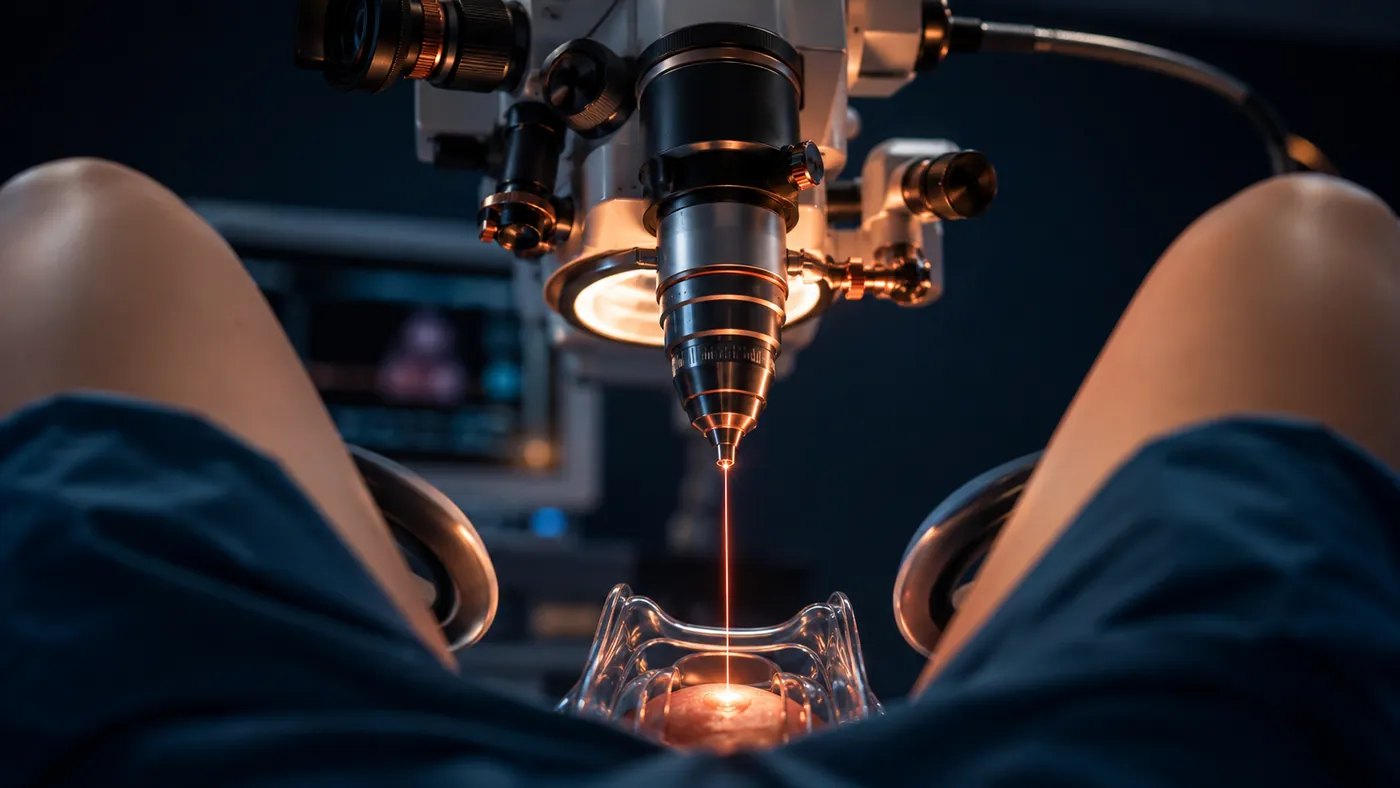
CO₂ laser is an alternative to conisation for certain cervical lesions — persistent CIN 1 (over 18 months), haemorrhagic ectropion, cervical condylomas, well-defined multifocal lesions. It vaporises abnormal cells with millimetric precision, without removing any tissue fragment.
Main advantage: complete preservation of cervical anatomy — no shortening, fertility preserved, no increased risk of preterm delivery. Decisive asset for young women planning pregnancy.
Limitation: no pathological analysis of the vaporised tissue — reserved for lesions already confirmed by prior biopsy. CIN 2 and CIN 3 require a conisation, not a laser.
Dr Zeitoun performs the laser always in the operating theatre at Clinique Hartmann, under local or short general anaesthesia depending on comfort preference — never in consultation.
Source: CNGOF 2024 · SFCPCV
A cervical polyp is a benign outgrowth attached to the cervical canal by a thin stalk. It is frequently discovered incidentally during a gynaecological examination, and only causes problems if it bleeds or grows substantially.
Possible symptoms: intermenstrual bleeding (spotting), bleeding after intercourse, postmenopausal bleeding, abnormal discharge. Often, no symptoms at all.
Treatment: the technique depends on size, stalk base and age. A thin pedunculated polyp visible at speculum examination is removed with forceps in the clinic. A broad-based, large, endocervical polyp, or a polyp in a patient over 40, is removed by operative hysteroscopy in the operating theatre. Histopathology is systematic in all cases.
A hysteroscopy allows exploration of the uterine cavity, detection of an associated endometrial polyp (which is common), and removal under direct vision. In Dr Zeitoun's practice, diagnostic hysteroscopy is performed in the operating theatre.
Polyp discovered? A consultation is sufficient to evaluate and decide on treatment.
Source: CNGOF 2024
Beyond precancerous lesions, the cervix can be the site of other benign conditions that are straightforwardly treatable.
Heavy discharge, contact bleeding or unusual menstrual pain? A consultation can identify the cause and adapt the treatment.
Source: HAS 2019 · SFCPCV
Source: CNGOF 2024
Receiving a positive HPV result or an abnormal smear is often a source of intense anxiety — and that is entirely normal. Most patients immediately think of cancer, worry about their partner, or are concerned about their fertility. These reactions are human and universal. What the figures show, however, is reassuring: 90% of HPV infections clear on their own, precancerous lesions progress slowly over years and are treatable, and conisation — when necessary — is a well-mastered procedure that preserves fertility in the vast majority of cases.
Come with your results, your questions, your concerns. We take the time to discuss everything together.
Just received a positive HPV test result? Dr Zeitoun guides you step by step: what the result means, the screening algorithm by age, when to have a colposcopy, how CIN 1 is monitored, when CIN 2/3 requires surgery — and answers to the most frequently asked questions.
Read the HPV article →