Home
Breast & Breast cancer
Breast cancer Benign breast conditions Prophylactic mastectomy
Breast reconstruction
All techniques Implant reconstruction Latissimus dorsi flap DIEP flap (abdomen) Gracilis flap (thigh) Breast lipofilling Going flat Intimate surgery
Benign gynecologic surgery
Uterus Tubes and ovaries Cervix Vulva and vagina
Gynecologic cancers
Cervical cancer Ovarian cancer Endometrial cancer Vulvar cancer Borderline tumors Articles Profile
Request a call back Book online →
Phyllodes tumor — Dr Jérémie Zeitoun breast surgical oncologist Paris
Logo Dr J. Zeitoun
Benign & rare breast lesions · Paris 8 & Neuilly

Phyllodes tumor of the breast Dr Jérémie Zeitoun · Surgeon Paris 8

A rare fibroepithelial tumor, almost always benign, but whose surgery requires clear margins and careful follow-up.

Dr Jérémie Zeitoun surgeon Paris
Scroll
Section 01 · Understanding

The phyllodes tumor

Receiving a phyllodes tumor diagnosis can be unsettling. The word itself is intimidating. This page is here to explain what it really is, what comes next, and why — in most cases — there's no reason to panic.

A phyllodes tumor is a rare fibroepithelial tumor — fewer than 1% of breast tumors. It looks like a fibroadenoma, but stands apart through its ability to grow quickly and, in rare cases, to behave aggressively. The vast majority of phyllodes tumors — about 60 to 75% — are entirely benign.

Its name comes from the Greek phyllon, meaning "leaf" — a reference to the leaf-like architecture seen under the microscope. The older term "cystosarcoma phyllodes" has been abandoned because it is misleading: most of these tumors are neither cysts nor sarcomas.

My approach: walking you through this precise diagnosis, removing the tumor with adequate margins to prevent recurrence, and arranging a simple, reassuring follow-up. This is a codified surgery, now guided by the 2025–2026 SENORIF guidelines.
Uncertain about your diagnosis? The differential between fibroadenoma and phyllodes tumor can be subtle — a specialized second opinion clarifies the nature of the lesion and the right surgical strategy.

Section 02 · Diagnosis

How the diagnosis is made

The most frequent presenting feature is a breast mass that grows rapidly — sometimes over a few weeks. On palpation, it is firm, mobile, painless, with sharp contours: very similar to a fibroadenoma, but typically larger and in a slightly older woman (35 to 55 years).

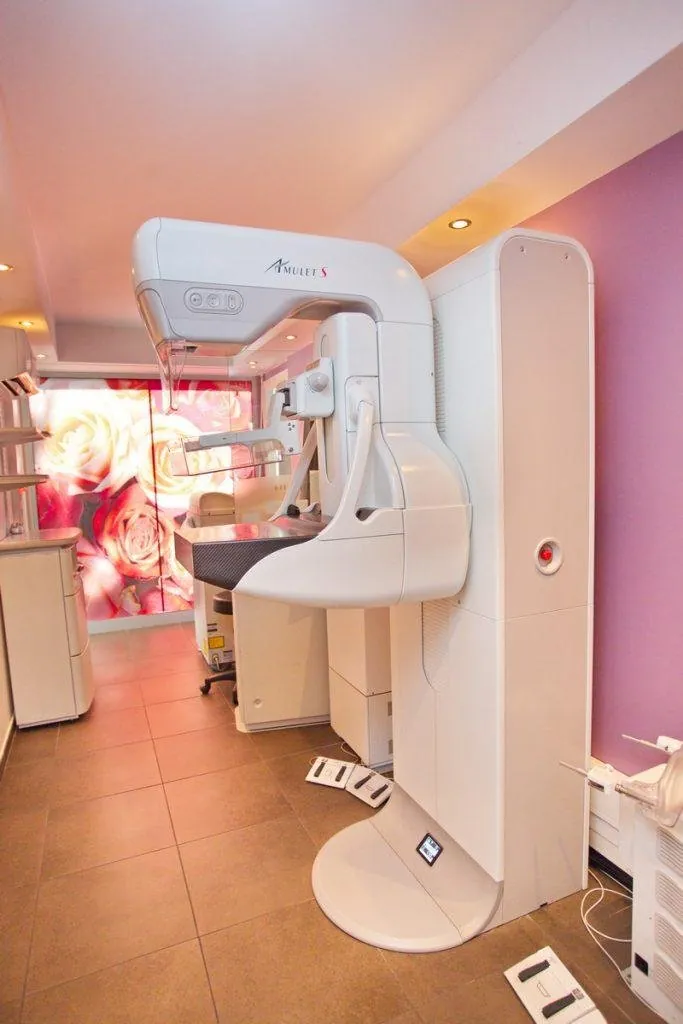
The diagnosis is built in three key steps: mammography and ultrasound, MRI when needed, and tissue sampling. These are the investigations that establish the diagnosis and properly prepare the surgery. Below, you will find a simple guide to reading your own report.

Reading your report

What will be on your report?

The report you receive after biopsy or surgery can look obscure. In reality, only three pieces of information really matter. Here's what to look for — and what I'll walk through with you, line by line, in consultation.

01

Which type of tumor?

The key term is "phyllodes tumor". This confirms we are dealing with that specific condition — and not breast cancer, which is an entirely different disease.

02

Which grade?

Grade I, II or III — the second key piece of information. It indicates how aggressive the tumor is and directly drives surgical strategy and follow-up intensity.

03

Are the margins clear?

After surgery, the report tells whether enough healthy tissue was removed around the tumor. This determines whether the excision is complete or whether re-excision should be considered.

Section 03 · Classification

Three grades, three management strategies

Not all phyllodes tumors are alike.

The World Health Organization (WHO) classification — reflected in the 2025–2026 SENORIF and Saint-Paul-de-Vence guidelines — distinguishes three grades, which simply describe how mild or aggressive the tumor looks under the microscope.

This classification is not merely academic: it directly drives surgical margin requirements, surveillance intensity, and any indication for adjuvant radiotherapy.

Grade I
Benign phyllodes
60 to 75% of cases

The most common and least aggressive form. Low recurrence risk with clear margins. The most reassuring scenario.

Grade II
Borderline phyllodes
15 to 25% of cases

An intermediate form, between benign and malignant. 10 mm margins recommended and slightly closer follow-up.

Grade III
Malignant phyllodes
10 to 25% of cases

The most aggressive form, but rare. Real but limited metastatic risk (< 5%), mostly pulmonary. 10 mm margins mandatory.

Report received
Have your phyllodes tumor report reviewed
Phyllodes grading can vary between laboratories. Expert review and a thorough surgical opinion ensure the right level of treatment.
Request a second opinion →
Section 04 · Surgery

Excision with clear margins

Treatment relies exclusively on surgery. Neither chemotherapy nor hormone therapy has shown benefit as first-line therapy — phyllodes are neither hormone-sensitive nor reliably chemosensitive. Radiotherapy may be discussed in a tumor board for selected borderline or malignant cases.

The principle is simple: remove the entire tumor en bloc, with a cuff of healthy tissue all around. The minimum margin recommended by SENORIF 2025–2026 is ≥1 mm for benign phyllodes and ≥10 mm for borderline and malignant phyllodes. This is what distinguishes phyllodes surgery from a simple fibroadenoma — where "shelling out" often suffices.

Surgical options are tailored to tumor size, breast volume, and grade.

Section 05 · Surveillance

Follow-up tailored to your grade

There is no strict national protocol in France for phyllodes surveillance. The most recent European recommendations — notably those of the UK Association of Breast Surgery, 2025 — together with international practice converge toward a 5-year follow-up, with intensity tailored to the grade reported on pathology.

In practice, the higher the grade, the closer the surveillance. Here is how I organize it for each of the three situations.

  1. D+15

    Postoperative consultation

    Review of the definitive pathology report. Confirmation of grade, margin status, and personalized follow-up plan. This is when we choose the cadence for the next five years together.

  2. Grade I

    Benign phyllodes — light follow-up

    Yearly clinical examination for 5 years, complemented by an annual mammography and ultrasound. Beyond 5 years, we return to age-appropriate standard screening.

  3. Grade II

    Borderline phyllodes — closer follow-up

    Clinical examination every 6 months for 2 years, then yearly up to 5 years. Annual mammography and ultrasound for 5 years.

  4. Grade III

    Malignant phyllodes — close follow-up with chest imaging

    Clinical examination every 6 months for 2 years, then yearly up to 5 years. Annual mammography and ultrasound for 5 years. In line with sarcoma guidelines (UK ABS 2025), chest imaging surveillance is added — chest X-ray or CT depending on context — since the rare metastases of malignant phyllodes are predominantly pulmonary.

Your questions

Frequently asked questions about phyllodes tumors

The questions patients most often ask — before surgery, after, or simply to understand.

Is a phyllodes tumor cancer?
The vast majority of phyllodes tumors are benign. The WHO classification distinguishes three grades — Grade I (benign), Grade II (borderline) and Grade III (malignant). Only malignant forms (10 to 25% of cases) can metastasize, mainly to the lungs. For most patients, this is an isolated surgical episode with no long-term consequences.
How can a phyllodes tumor be distinguished from a fibroadenoma?
The differential diagnosis can be subtle, even on core biopsy. Rapid growth, size greater than 3 cm in a woman over 35, or a suggestive ultrasound pattern (intratumoral cystic clefts) point toward phyllodes. Confirmation is always histological, on the complete surgical specimen. More on fibroadenoma →
Why do clear margins matter so much?
Phyllodes tumors carry a recurrence risk directly tied to surgical margin status. A margin ≥1 mm for benign and ≥10 mm for borderline-malignant — per SENORIF 2025-2026 — significantly reduces this risk. This is why simple "shelling out", often sufficient for a fibroadenoma, is inadequate for a phyllodes tumor.
Should the axillary lymph nodes be removed?
No. Unlike breast cancer, phyllodes tumors — even malignant ones — almost never spread through the lymphatic system. Sentinel lymph node biopsy and axillary dissection are not indicated, except in case of a clinically palpable suspicious axillary node.
Can a phyllodes tumor recur?
Yes, recurrence is possible at all grades but stays low (5 to 10%) when excision is complete with clear margins. It rises to 15-25% for borderline and 20-30% for malignant. Close clinical and ultrasound surveillance during the first 2 years is therefore essential.
Is chemotherapy or hormone therapy needed?
Not as first-line therapy. Phyllodes tumors are neither hormone-sensitive nor reliably chemosensitive. Radiotherapy may be discussed in a tumor board for selected borderline or malignant cases excised with close margins — a collegial decision, never automatic.
Can I have a pregnancy after a phyllodes tumor?
Yes, with no restriction for the vast majority of patients. No contraindication to a future pregnancy or to hormonal contraception is supported by current guidelines. Phyllodes tumors are not hormone-sensitive.
How long is the hospital stay?
Phyllodes tumor excision is most often performed as day surgery — you go home the same day. For very large tumors or in case of mastectomy, 1 to 2 nights may be required.
What happens if margins are not clear?
If the histological analysis shows insufficient margins for the given grade, a re-excision is generally proposed. This decision is made at the day-15 consultation, in light of the definitive report and — when needed — a tumor board.
Can I request a second opinion?
Yes, and it is encouraged — especially since phyllodes grading can vary between laboratories. Expert pathology review and a thorough surgical opinion are valuable. Bringing your biopsy report and imaging is enough.
Book an appointment
Phyllodes tumor management in Paris

Consultations at 241 rue du Faubourg Saint-Honoré (Paris 8), surgery at Hartmann Clinic in Neuilly-sur-Seine. Diagnosis, surgery with clear margins, personalized follow-up.

Book online → Secure form
Further reading
Benign lesion · Young women
Fibroadenoma of the breast
The most common benign breast tumor in young women — main differential diagnosis of phyllodes.
Read →
Borderline lesion · Risk modifier
Atypical ductal hyperplasia
A borderline lesion that modifies the breast cancer risk profile — frequently found on biopsy.
Read →
Overview · Benign surgery
Surgery for benign breast lesions
When to operate, how, and what to remember after surgery. Overview of benign breast lesions.
Read →
Related pages
Breast cancer → Lumpectomy → Breast reconstruction →
FREN