Accueil
Sein & Cancer du sein
Cancer du sein Lésions bénignes du sein Mastectomie prophylactique
Reconstruction mammaire
Toutes les techniques Reconstruction par prothèse Lipofilling mammaire Chirurgie intime
Chirurgie gynécologique bénigne
Utérus Trompes et ovaires Col de l'utérus Vulve et vagin
Cancers gynécologiques
Cancer du col de l'utérus Cancer de l'ovaire Cancer de l'utérus Cancer de la vulve Tumeurs borderline Articles Parcours
Être rappelé par le secrétariat Prendre RDV sur Doctolib →

Author and medical review: Dr Jérémie Zeitoun, surgical oncologist — gynaecologist and breast surgeon — RPPS 10101463296 — trained at Institut Gustave Roussy, Institut Curie and Centre François Baclesse. See full background →

Last updated: · Sources: CNGOF, HAS, INCa 2020, SFCPCV. References listed at the bottom of the page.

1 · Principle

What is a conisation?

Cervical conisation is the surgical removal of a cone-shaped fragment of the cervix, including the transformation zone and the precancerous lesion. The procedure is both diagnostic — the specimen is analysed in the laboratory to determine the exact grade and margin status — and therapeutic — the lesion is removed en bloc, which eliminates the risk of cancer progression in the vast majority of cases.

The cone removed measures on average 15 mm in height and 1 to 2 cm at the base. It includes the external part of the cervix (exocervix) and a portion of the cervical canal (endocervix) where the transformation zone sits — the location of 95% of precancerous lesions.

Conisation is performed via the vaginal route — no visible scar, no abdominal incision. Three techniques exist: the diathermic loop (most commonly used), CO₂ laser and cold knife. The choice depends on the size and location of the lesion, the clinical context (age, pregnancy plans) and surgeon preference.

2 · Indications

When is conisation indicated?

Conisation is proposed when colposcopic biopsies confirm a high-grade lesion. That is, from the stage where surveillance alone is no longer sufficient, and where surgical removal of the abnormal zone becomes necessary to prevent cancer progression.

CIN 2 and CIN 3

The two classic indications. CIN 2 (moderate dysplasia): treatment discussed based on age, pregnancy desire, and HPV status — surveillance is sometimes possible in younger women. CIN 3 (severe dysplasia): conisation is the rule.

Adenocarcinoma in situ (AIS)

AIS is a glandular precancerous lesion, rarer and deeper, affecting the endocervix. Conisation must be taller than a standard cone to fully remove the at-risk zone. Follow-up is stricter.

Smear-biopsy discordance

If the smear suggests a more severe lesion than that seen on colposcopy (e.g. HSIL cytology without visible lesion), conisation allows the full transformation zone to be analysed and a decision to be made.

Unsatisfactory colposcopy

When the transformation zone retreats up the canal and is not visible in full at colposcopy — frequent after menopause — conisation allows complete histological exploration.

CIN 1 (low-grade lesions) are not surgically treated. In 60% of cases, they regress spontaneously within 1 to 2 years. Follow-up is by HPV test and cytology. Conisation is only considered in case of persistence beyond 2 years, or progression to CIN 2/3.

3 · Procedure

How is the procedure carried out?

Conisation is a day-surgery procedure. You arrive at the clinic in the morning and go home the same day, on average 4 to 6 hours after admission. The procedure itself lasts 15 to 20 minutes.

1
Pre-operative consultation
Examination, explanation of the procedure, handover of the CNGOF patient information sheet, prescriptions for pre-operative work-up. Mandatory anaesthesia consultation in the preceding weeks.
2
Morning admission
Arrival at Clinique Hartmann fasting (6h before). Welcome to your room, IV line setup, verification of file and informed consent.
3
Surgery
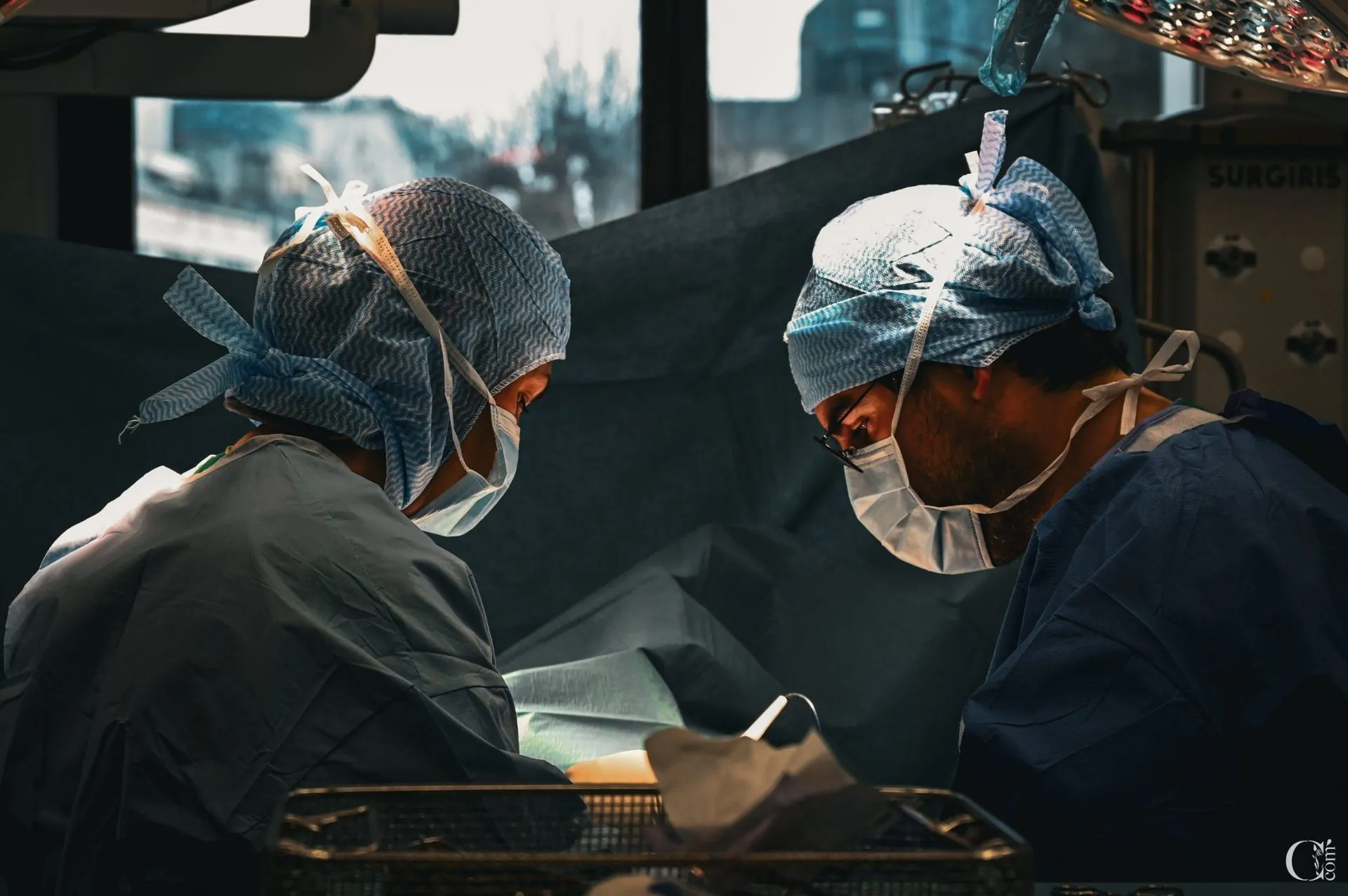
In theatre, gynaecological positioning, general anaesthesia (or locoregional depending on choice). The cervix is exposed with a speculum, the cone is removed using a diathermic loop or laser, and the specimen is sent for histopathological analysis.
4
Same-day discharge
Transit through the recovery room, return to your room for a light snack, discharge in the afternoon with prescriptions (simple painkillers) and written instructions. A vaginal packing is sometimes left in place and removed before discharge.

Anaesthesia: general, locoregional or local?

General anaesthesia is the most common in France for conisation: it offers maximum comfort, perfect pelvic stillness and optimal surgical precision. The duration of anaesthesia is very short (15-20 minutes). Locoregional anaesthesia (spinal) can be offered as an alternative, particularly in patients with contraindication to general anaesthesia. Pure local anaesthesia (by cervical infiltration) remains possible for small loop conisations, but is rarely used in France.

Diathermic loop, CO₂ laser or cold knife?

The diathermic loop (LEEP or LLETZ) is the reference technique: a thin metal loop, driven by high-frequency current, cuts the tissue while simultaneously coagulating it. It is fast, safe and widely validated. The CO₂ laser offers useful millimetric precision for very superficial or multifocal lesions; it is slower to deploy and more costly. The cold knife (cold knife cone) is reserved for complex cases — deep glandular lesions, AIS — because it better preserves the margins for histological analysis, at the cost of more bleeding.

4 · Recovery

The first weeks after conisation

The post-operative course is usually straightforward. Conisation does not cause significant post-operative pain. Some patients describe a transient discomfort similar to painful periods for 2 to 3 days, relieved by a simple painkiller (paracetamol).

Bleeding

Moderate blood loss for 2 to 3 weeks, gradually decreasing. Continuous bleeding or frank haemorrhage warrants urgent contact with the practice or clinic (rare: around 1-2% of cases).

Vaginal discharge

Sometimes abundant brown-blackish discharge between day 10 and day 20 — this is the eschar falling off the cervix. A normal phenomenon that should not cause concern.

Sexual intercourse

Wait 1 month after conisation before resuming sexual activity. This rule limits the risk of infection and secondary bleeding from eschar detachment.

Sport & travel

No sport for 20 days. Avoid long-distance travel for 15 days. Gentle walking is well tolerated from the day after.

Intimate hygiene

No baths or swimming pool for 15 days. Showers allowed without restriction. No tampons or menstrual cups for 1 month — pads only.

Return to activity

Time off work is not systematic. Most patients resume activity quickly, sometimes the day after for sedentary work. A few days may be useful for physical jobs. To be discussed in the pre-operative consultation.

When to seek urgent care? Heavy bleeding (exceeding a period), fever > 38 °C, intense pelvic pain, persistent dizziness or fainting. Contact the practice on +33 1 58 05 11 24, or outside working hours Clinique Hartmann on +33 1 89 86 70 07.

5 · Fertility & pregnancy

Conisation and pregnancy plans

This is the most frequent question in consultation. The answer is reassuring: conisation does not compromise fertility. The uterus, fallopian tubes and ovaries are fully preserved. Menstrual cycles resume normally within the first few weeks.

Premature birth risk: the real figures

The most recent studies (Kyrgiou 2016 meta-analysis, Danhof 2021) show that the risk of premature birth before 37 weeks rises from 7% in the general population to around 10-14% after standard conisation, and up to 20% after a deep cone (greater than 15 mm). This risk is proportional to the height of the cone removed — hence the critical importance of calibrating the procedure to the minimum necessary.

In practice, for a patient planning pregnancy: Dr Zeitoun systematically discusses the strategy in the pre-operative consultation, adapting the technique (thin loop, short cone) and the choice between operated CIN 2 vs surveillance when possible. It is essential to inform your future obstetrician of the history of conisation so that adequate obstetric follow-up is organised — regular measurement of cervical length on ultrasound, and possibly prophylactic cerclage in case of documented short cervix.

When to conceive after conisation?

There is no imposed delay after an uncomplicated conisation. Some practitioners recommend waiting 3 months — time to obtain definitive results and organise post-operative follow-up. A pregnancy starting before this delay is not at particular risk, and simply needs to be followed with the vigilance adapted to the history of conisation.

6 · Follow-up

Follow-up after conisation

Post-conisation follow-up relies on simple tests performed by your gynaecologist, midwife, or GP, at a rhythm adapted to the grade of the initial lesion and the margin status.

D+15
Post-operative consultation
Check of healing, handover of the histopathology report, discussion of follow-up strategy. An important moment to ask any questions.
M+6
HPV test + cytology
Co-testing (smear + HPV test) at 6 months. This is the best tool for detecting residual lesions. If negative and margins clear: excellent prognosis.
M+12
HPV test + cytology
New co-testing at 1 year. If both checks (6 months and 1 year) are negative, the recurrence risk is very low.
3 years
Long-term surveillance
Then co-testing every 3 years for at least 20 years. This close follow-up is indispensable: the risk of recurrence or new lesion remains higher than in the general population.

What if margins are not clear?

Around 15 to 25% of conisations report unclear margins (lesion involvement at the edge of the specimen). Contrary to popular belief, this does not mean immediate surgical re-excision is needed. In most cases, residual lesions regress spontaneously. Close surveillance by colposcopy and co-testing at 6 months allows the decision to be made. A re-excision (repeat conisation or hysterectomy depending on context) is only considered in case of documented persistence.

HPV vaccination after conisation

Post-conisation HPV vaccination is discussed on a case-by-case basis in patients under 45. It is not currently officially recommended in France, but several studies suggest a reduction in recurrence risk in patients vaccinated after CIN 2/3 treatment. Dr Zeitoun discusses this in consultation and can refer you to your GP or gynaecologist if you wish to consider this option.

7 · Risks

Risks and possible complications

Conisation is a safe, long-validated procedure with a low complication rate. Dr Zeitoun explains each risk in the pre-operative consultation — this information is a legal obligation and an essential part of shared decision-making.

Haemorrhage — 1 to 3%

Heavy bleeding within 15 days of the procedure, most often at the time of eschar detachment (D+10). Usually managed with simple compression or vaginal tamponade. Very rarely (< 1%), return to theatre may be required.

Cervical stenosis — 2 to 5%

Scarring narrowing of the cervical canal, sometimes occurring months after the procedure. Can cause painful menstruation, menstrual retention (haematometra), or interfere with follow-up. Treatment: simple dilation, rarely surgical revision. More common in postmenopausal women.

Recurrence — 5 to 15%

Risk of recurrent CIN lesion, mainly in the first 2 years. Higher in case of positive margins, persistent HPV, or active smoking. This is precisely why long-term follow-up is recommended for at least 20 years.

Infection — < 1%

Rare endometritis or pelvic infection. Presents with fever, pelvic pain, malodorous discharge. Managed with targeted antibiotics after swab. Compliance with post-operative instructions (no baths, no intercourse for 1 month) is the best prevention.

Smoking: a major risk factor

Smoking significantly increases the risk of surgical complications (bleeding, infection, delayed healing), but also the risk of HPV persistence and lesion recurrence. Stopping smoking 6 to 8 weeks before the procedure eliminates this additional risk. Tabac Info Service (3989) offers free support in France.

Abnormal smear, positive HPV or biopsy results?

Dr Zeitoun reviews your documents
and explains what they mean
at the first consultation.

Paris 8th & Clinique Hartmann Neuilly · Sector 2 non-OPTAM

Book an appointment → Request a callback
8 · Frequently asked questions

Your questions answered

The answers below are based on CNGOF, HAS, INCa 2020 and SFCPCV recommendations, and on the latest medical literature. Each question is frequently asked in consultation — this section is regularly updated.

Is conisation painful?

No, the procedure itself is painless because it is performed under anaesthesia (most often general). Post-operative course is usually well tolerated: no significant pain, sometimes a transient discomfort similar to painful periods for 2 to 3 days. A simple painkiller (paracetamol) is sufficient in the vast majority of cases.

Can I become pregnant after conisation?

Yes, in the vast majority of cases. Conisation does not compromise fertility. The risk of premature birth is slightly increased (7% in the general population → 10-14% after standard conisation), especially if the cone is deep. This is why Dr Zeitoun calibrates the procedure to the minimum necessary in patients planning pregnancy. It is essential to inform your future obstetrician of this history for adapted follow-up.

Is time off work required?

Time off work is not systematic. As conisation is day surgery and is minimally painful, many patients resume their activity quickly, sometimes the day after for sedentary work. For physical jobs or those involving heavy lifting, a few days of rest may be useful. Any sick leave is discussed individually in the pre-operative consultation and tailored to your situation.

What is the difference between CIN 1, CIN 2 and CIN 3?

These are the three grades of precancerous cervical lesions, called dysplasias. CIN 1 (low grade): mild anomaly, regressing spontaneously in ~60% of cases — simple monitoring. CIN 2 (intermediate grade): to be monitored or treated depending on age and context. CIN 3 (high grade): severe anomaly requiring treatment, most often conisation. But this is not yet cancer — it takes on average 10 to 15 years for an untreated CIN 3 to progress to invasive cancer, hence the fundamental interest of screening.

Will I have a visible scar?

No visible scar. Conisation is performed via the vaginal route: no skin incision, no external stitches. The cervix heals in 4 to 6 weeks. Slight shortening of the cervix is visible on follow-up colposcopy, but has no aesthetic or functional impact in daily life.

When can I resume sexual intercourse?

Yes, but you must wait 1 month after the procedure. This rule is essential: during healing, intercourse increases the risk of infection and can cause eschar detachment bleeding. After this time, sexual activity resumes normally, with no impact on pleasure or function.

What if margins are not clear?

This occurs in 15 to 25% of cases and does not mean immediate re-operation is required. In most situations, residual lesions regress spontaneously. Close surveillance by colposcopy and co-testing (smear + HPV test) at 6 months allows decision-making. Surgical re-excision is only considered in case of documented persistence, and the decision is always discussed in consultation with you.

Is HPV vaccination useful after conisation?

This is a question discussed on a case-by-case basis. Post-conisation HPV vaccination is not currently officially recommended in France, but several studies suggest it may reduce the risk of cervical lesion recurrence in patients vaccinated after CIN 2/3 treatment. Dr Zeitoun discusses this in consultation with affected patients and can refer you to your GP or gynaecologist if you wish to consider this option.

When are the final results available?

The histopathology result is available 2 to 3 weeks after the procedure. It specifies the exact grade of the lesion, the margin status (clear or not), and any micro-invasion. A post-operative consultation is organised on D+15 to comment on these results and plan follow-up. You systematically receive a copy of the report.

How much does conisation cost with Dr Zeitoun?

Dr Zeitoun practises in sector 2 non-OPTAM: additional fees are charged, including for patients with ALD (long-term condition). The social security reimbursement base for conisation (CCAM code JKFA031) is €93, but the fees practised are higher. A personalised quote is systematically provided after consultation — it allows your complementary health insurance to assess its coverage. Out-of-pocket cost depends on your insurance level.

References

Institutional sources and scientific references

This page is based on the recommendations of French and international medical societies, and on recent PubMed-indexed studies.

  1. CNGOF — Patient information sheet: Conisation. French College of Gynaecologists and Obstetricians. Drafted 1999, revised 2017. cngof.fr
  2. INCa — Cervical cancer screening. French National Cancer Institute. 2020 guidelines. e-cancer.fr
  3. HAS — Cervical cancer screening and prevention. French National Authority for Health. 2019 update. has-sante.fr
  4. Kyrgiou M, et al. Obstetric outcomes after conservative treatment for cervical intraepithelial lesions and early invasive disease. Cochrane Database Syst Rev. 2017. PMID: 29095502
  5. Di Donato V, et al. Adjuvant HPV vaccination to prevent recurrent cervical dysplasia after surgical treatment: a meta-analysis. Vaccines. 2021;9(5):410. PMID: 33919242
  6. SFCPCV — French Society for Colposcopy and Cervico-Vaginal Pathology. Clinical practice guidelines, 2020 version. sfcpcv.org
  7. Santesso N, et al. World Health Organization guidelines: treatment of cervical intraepithelial neoplasia 2-3 and screen-and-treat strategies. Int J Gynaecol Obstet. 2016;132(3):252-8.

Last review of this page: 18 April 2026 · Next review scheduled: July 2026.

Book an appointment with Dr Zeitoun

Paris 8th practice or Clinique Hartmann Neuilly. Second opinion possible on file.

Book on Doctolib → Request a callback
FREN