Waiting for breast biopsy results is often described as the hardest part of the diagnostic journey. How many days should it take? Why do timelines vary? Does a quick result mean bad news? Honest answers, from a breast surgeon who reads these reports every day.
For what to do concretely after a positive result, see our article Positive breast biopsy: what to do next?.
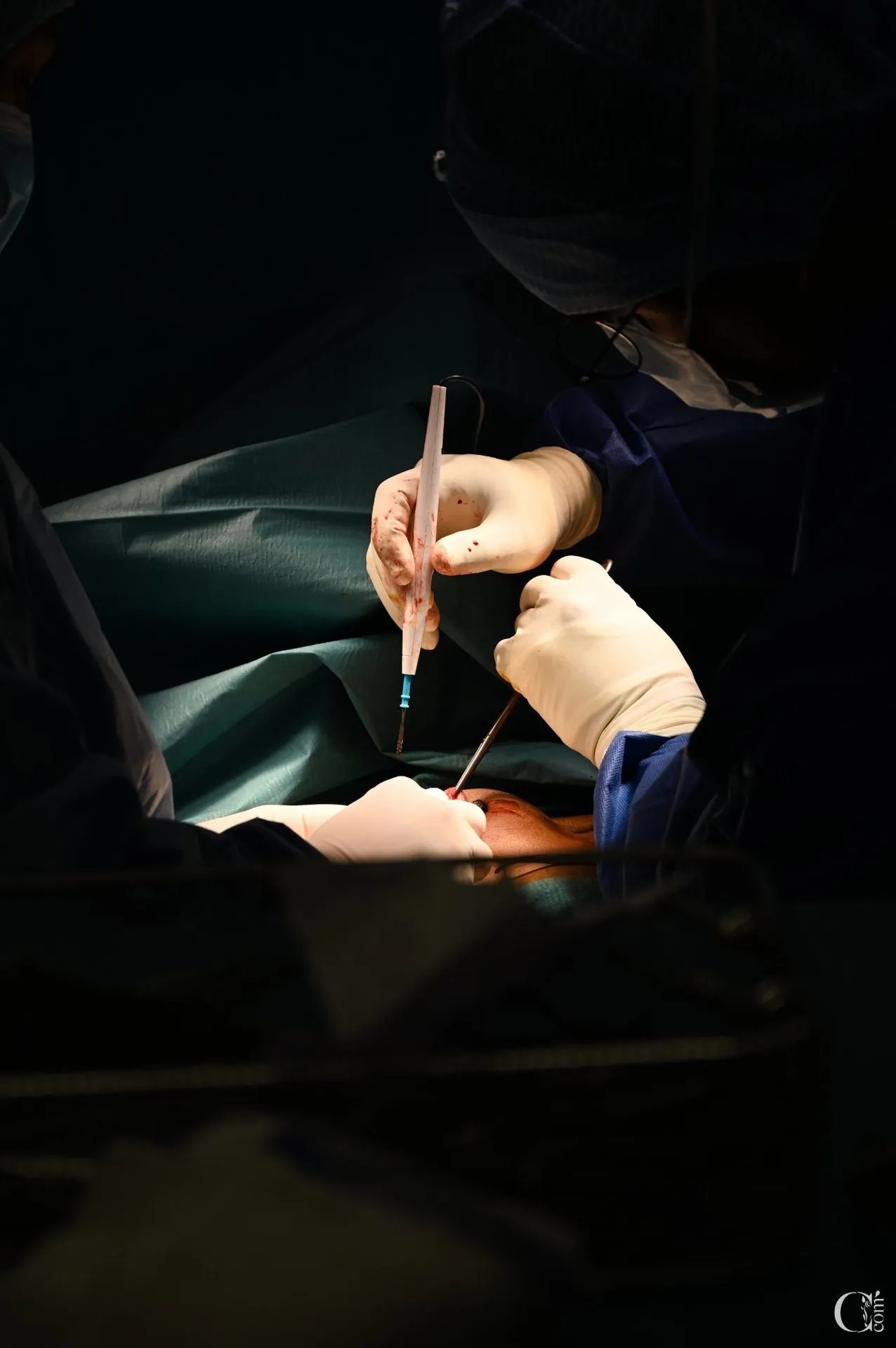
The standard timeline: 7 to 14 working days
In the vast majority of cases, breast biopsy results are available between 7 and 14 working days after the procedure. This timeline is not arbitrary — it reflects the time truly needed for the pathologist to analyse the sampled fragments and produce a reliable report.
Some centres quote shorter turnarounds (3 to 5 days), others longer (up to 3 weeks). These variations do not reflect the severity of your situation — they depend on laboratory workload, case complexity and the need for additional tests.
Key point: a 10-day turnaround is perfectly normal. Under 5 days is fast. Beyond 15 working days with no news, it is reasonable to follow up with the radiologist\'s office.
Why the timeline varies: what happens in the lab
Between the moment the needle leaves your breast and the moment the report lands in your radiologist\'s inbox, the sampled fragments go through several mandatory technical steps.

1. Tissue fixation (24 hours)
Fragments are immediately placed in formalin to preserve their structure. This step takes about 24 hours and determines the quality of every analysis that follows.
2. Paraffin embedding and sectioning (24 to 48 hours)
The fragments are embedded in paraffin, then cut into ultra-thin slices (a few microns thick) and mounted on glass slides.
3. Staining and initial reading (1 to 2 days)
The slides are stained — most commonly with haematoxylin and eosin — then examined under the microscope by the pathologist. This first reading is usually enough to conclude: benign lesion, at-risk lesion or malignant lesion.
4. Additional testing if needed (3 to 7 extra days)
When cancer is diagnosed or suspected, further tests are performed to characterise the tumour: immunohistochemistry for hormone receptors (oestrogen, progesterone), HER2 status, Ki67, sometimes other markers. These tests mechanically extend the timeline — which is actually good news, because it means the pathologist is taking the time to characterise the tumour precisely to guide treatment optimally.
5. Second opinion and radio-pathology concordance
When the imaging and the histology do not match — what we call radio-pathology discordance — the radiologist and the pathologist confer, and may request a second pathologist\'s opinion. This can add a week but ensures a robust diagnosis.

Fast or slow: does the timeline predict anything?
A fast turnaround does not mean it is serious. A slow turnaround does not mean it is serious either.
This may be the most important point of this article: the timeline does not predict the result. This belief is widespread and it is wrong. I hear it regularly in consultation.
A short turnaround (3 to 5 days) can reflect a lightly-loaded lab, a simple lesion or a case where the pathologist could conclude on the first reading. This applies equally to benign and malignant results.
A long turnaround (2 to 3 weeks) can reflect a busy lab, holidays, ongoing additional tests or a requested second reading. Again, this applies to both benign and malignant cases.
The only thing a timeline tells you is how much technical time was needed to produce a reliable report. Nothing else.
Delivering results: always in person
Whatever the nature of the result — benign, at-risk or malignant — I systematically communicate breast biopsy results during an in-person consultation. This is not an administrative rule: it is a clinical and human choice.
Delivering benign results by phone and reserving consultations for bad news mechanically creates a loaded asymmetry. Patients quickly pick up on it: a call = good news, a summons = bad news. This logic turns every call from the office into a moment of acute anxiety, and every scheduled consultation into an ominous signal.
By receiving all my patients in consultation, regardless of the result, I neutralise that anticipation. You come in to receive information — not to decode a signal. The consultation also allows me, whatever the conclusion, to take the time to explain the report, answer your questions, and define the next steps.
If the result is malignant, the consultation fits within the cancer disclosure framework (dispositif d\'annonce) established by the French National Cancer Institute: dedicated medical time, the right to be accompanied by a loved one, then review of your case at a multidisciplinary team meeting (MDT) before any treatment decision.
Waiting for biopsy results, or just received them?
Rapid consultation, in person in Paris 8th or via teleconsultation. Full review of your pathology report and imaging, clear answers to your questions, onward referral if needed.
Book an appointment →

Timelines by biopsy type
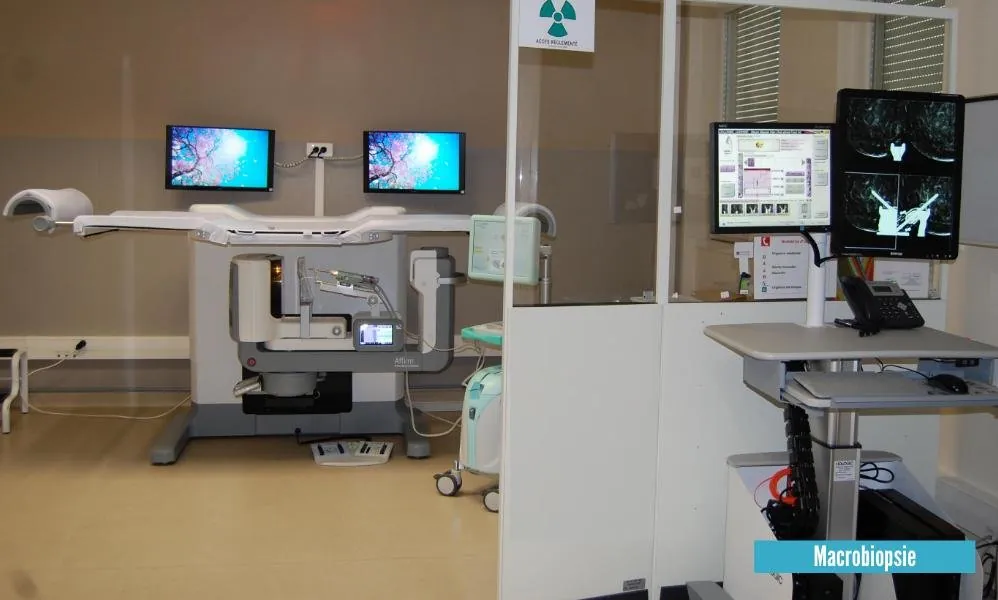
Turnaround also varies by biopsy type. A simple ultrasound-guided core needle biopsy is usually faster than a stereotactic vacuum-assisted biopsy for microcalcifications, which requires more analysis time. MRI-guided biopsies, rarer, typically follow a dedicated laboratory workflow. And whenever complementary immunohistochemistry is required — which is systematic in case of cancer — several days must be added to the initial timeline. Beyond these benchmarks, the most decisive factor remains the workload of the laboratory receiving your sample, not the nature of your lesion.
The 10 to 14-day wait: how to get through it
The period between the biopsy and the result is often harder than the biopsy itself. Many patients describe this phase as "suspended," as if life stops. This reaction is normal, proportional to the stakes.
A few practical anchors, from what I observe in consultation:
Maintain a framework, even a minimal one
Keep going to work, seeing loved ones, practising gentle physical activity — not to "forget," but to stop the wait from taking up all the mental space. Completely empty days leave more room for rumination.
Limit internet searches
Search engines foreground the most severe cases and the most anxiety-inducing forums. Reading hours of testimonials from patients in advanced disease helps no one — it builds a distorted picture of the statistical reality (to recall: the majority of breast biopsies come back benign or reveal cancers at a stage that is treatable with excellent outcomes).
Talk to someone
A partner, a close friend, sometimes a GP. If anxiety becomes overwhelming — persistent insomnia, uncontrollable crying, inability to eat — a rapid consultation with a psychologist or physician is fully warranted. There is no shame in asking for support during this time.
Prepare the results consultation
Write down your questions in advance. Plan to be accompanied — even if you think it "isn\'t necessary." In case of bad news, having someone else in the room who hears things you don\'t is invaluable.
After the result: what happens next
Whatever the result, the next step is clear.
If the result is benign: an explanatory consultation, a tailored follow-up rhythm (mammography, ultrasound or MRI depending on the case), and life resumes. Some "at-risk" benign lesions do warrant complementary surgical management or enhanced surveillance — full detail on our dedicated page on benign and at-risk breast lesions.
If the result is malignant: the disclosure consultation, the extension work-up, the MDT meeting, then the construction of a personalised treatment plan. The article Positive breast biopsy: what to do next? walks through each of these steps in detail.
In both cases, you are not alone. The wait, however difficult, is useful time — for the laboratory, for your medical team, and sometimes for you too, to prepare mentally for what comes next.

Dr Jérémie Zeitoun
Surgical oncologist, breast and gynaecological surgeon. Former resident trained at Centre François Baclesse and Institut Curie — Former senior specialist at Institut Gustave Roussy. Practises at Paris 8th (241 rue du Faubourg Saint-Honoré) and Clinique Hartmann, Neuilly-sur-Seine..