Accueil
Sein & Cancer du sein
Cancer du sein Lésions bénignes du sein Mastectomie prophylactique
Reconstruction mammaire
Toutes les techniques Reconstruction par prothèse Lipofilling mammaire Chirurgie intime
Chirurgie gynécologique bénigne
Utérus Trompes et ovaires Col de l'utérus Vulve et vagin
Cancers gynécologiques
Cancer du col de l'utérus Cancer de l'ovaire Cancer de l'utérus Cancer de la vulve Tumeurs borderline Articles Parcours
Être rappelé par le secrétariat Prendre RDV sur Doctolib →
Implant reconstruction — overview

An implant to
rebuild the breast

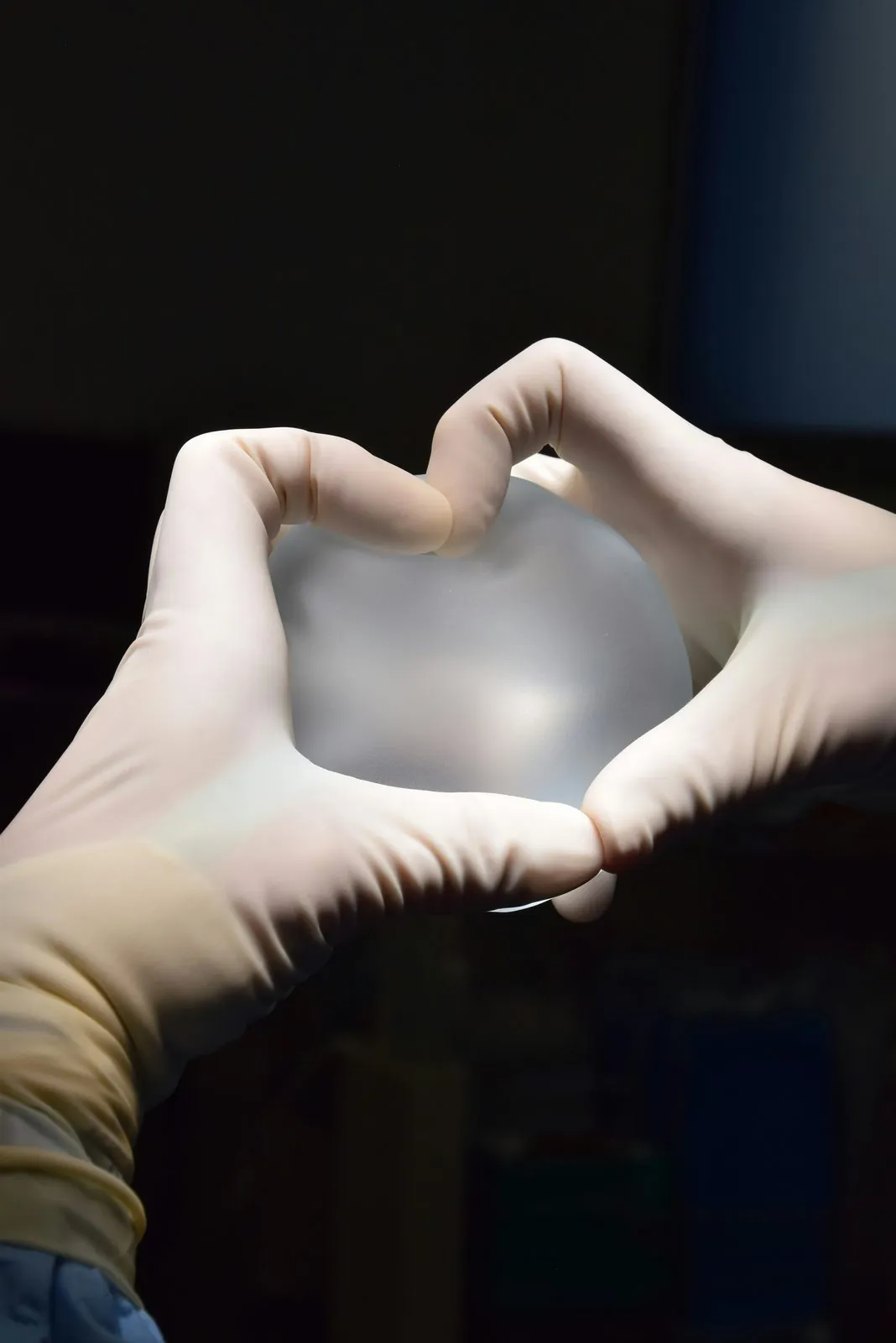
Implant-based (heterologous) reconstruction uses a breast prosthesis to restore breast volume after mastectomy. It is the most widely used reconstruction technique, particularly for immediate reconstruction.

Mastectomy always removes the entire mammary gland. The question is not how much is removed, but how to reconstruct — and when.

The procedure involves placing a breast implant, most often beneath the skin and pectoral muscle. In straightforward cases, a permanent implant is placed in a single stage. In others, a temporary tissue expander is first inserted, gradually inflated, then exchanged for the definitive implant.

Breast reconstruction does not affect cancer surveillance — oncological follow-up is maintained with the same rigour after the procedure.

Breast reconstruction is never compulsory. It remains a personal choice. An external prosthesis may be sufficient for some women. Flat closure is also an option. Prophylactic mastectomy (e.g. for BRCA mutation) follows the same reconstruction principles.

1 ou 2
Surgical stages depending on technique
Direct implant in one stage if skin is adequate. Expander then definitive implant in two stages if skin is tight or of poor quality.
100%
French Health Insurance base rate (ALD)
Covered on the standard French Health Insurance rate. Dr Zeitoun practises in secteur 2 — additional fees apply. A detailed quote is provided before any procedure.
2–3 mois
To assess the final result
The definitive result is assessed 2 to 3 months after the procedure, once tissues have settled and swelling resolved.
Before reconstruction

The choices that
shape everything

The nipple-areola complex (NAC)

The NAC — nipple and areola — is the visible, central part of the breast. At the time of mastectomy, the question of whether it can be preserved or must be sacrificed is always addressed.

The NAC can be preserved when the tumour is at a distance, the tissue is histologically healthy, and vascular and anatomical conditions allow it. When preserved, sensitivity is usually maintained.

The NAC is sacrificed when the tumour is close to the nipple, when breast ptosis is significant, or when vascular status raises concern about necrosis. This is not an arbitrary decision — it is a considered surgical decision, discussed with you before the operation.

If the NAC is sacrificed, nipple reconstruction and medical areola tattooing can be performed at a later stage, covered by French Health Insurance.

Surgical approach and scars

NAC preserved → inframammary incisionScar in the inframammary fold, barely visible when standing.
NAC sacrificed → central oblique incisionThe incision follows the position of the former areola. Scar placement is planned from the outset to maximise reconstruction options.
Endoscopic or robot-assisted approachIn selected indications, an endoscopic inframammary or axillary approach (discreet scar, video-guided dissection) or Da Vinci robot-assisted approach (atraumatic dissection in tight spaces) may be used.
Immediate or delayed reconstruction — and radiotherapy?
Immediate reconstruction

Performed under the same anaesthetic as the mastectomy. Advantage: no waking without a breast, fewer total procedures. Possible in the vast majority of cases. The only formal contraindication is inflammatory breast cancer.

Absolute rule: immediate reconstruction must never delay cancer treatment. If any doubt exists, reconstruction is deferred. Life comes before aesthetics.

Delayed reconstruction

Performed once all treatments are complete and tissues have stabilised. It allows time to process the decision and assess skin condition. After radiotherapy, it can begin 6 to 9 months after the end of irradiation. It is never too late.

Radiotherapy changes everything

If radiotherapy is planned, an implant is generally preferred first: irradiating a prosthesis is better tolerated than irradiating a flap. If no radiotherapy is planned, a flap may be discussed straight away. With rare exceptions, radiotherapy is given only once — all secondary modifications (flap, fat grafting, implant exchange) remain possible afterwards.

Two options

Direct implant
or expander?

The choice between a direct implant and a tissue expander depends primarily on the quality and quantity of skin available after mastectomy, and on the oncological context.

Direct implant
Single surgical stage

The definitive implant is placed immediately at the time of mastectomy (immediate reconstruction) or at a later stage (delayed). Possible when remaining skin is of good quality and sufficient quantity.

Advantages: single procedure, faster recovery, immediate result. The implant is placed subpectorally or prepectorally depending on the indication.

When radiotherapy is anticipated, an implant is often preferred over a flap during the irradiation period — it can subsequently be exchanged or supplemented with autologous tissue if needed.

1 surgical stage Immediate result Faster recovery
Expander then implant
Two surgical stages

A temporary tissue expander is placed at the first stage. It is gradually inflated with saline injections (usually weekly) over 4 to 12 weeks, stretching the skin to create the necessary space.

After a stabilisation period of 3 to 6 months, the expander is exchanged for the definitive implant. This second stage may be combined with symmetrisation of the opposite breast.

Typical indications: tight or poor-quality skin, reconstruction after radiotherapy, insufficient skin after extensive mastectomy.

2 surgical stages Better skin coverage Indicated if skin is tight or irradiated
Breast implants

What implants are used?

All breast implants available in France carry the CE mark and ANSM approval. They consist of a silicone elastomer shell, smooth or textured.

Fill

Cohesive silicone gel (most common, consistency close to natural breast tissue) or saline. Modern cohesive gels limit the risk of spread in the event of rupture.

Shape

Round or anatomical (more projected inferiorly, simulating the natural breast profile). Choice depends on body type, desired volume and skin quality.

Surface

Smooth or textured. Textured surfaces reduce the risk of capsular contracture but are associated in rare cases with BIA-ALCL. Macro-textured implants are now very rarely used.

The procedure

How does the
procedure work?

Implant reconstruction is performed under general anaesthesia at Hartmann Clinic (Neuilly-sur-Seine). It may be performed at the same time as mastectomy or as a separate stage.

01
Approach and incision
The mastectomy scar is used as the main approach, following the incision planned beforehand (inframammary if NAC preserved, central if sacrificed). The pocket is prepared subpectorally or prepectorally depending on the indication.
02
Creating the pocket
A pocket is created under the pectoral muscle (or prepectorally) to accommodate the implant. Dissection is performed atraumatically to preserve tissue quality.
03
Implant placement
The permanent implant or expander is placed. At the end of the procedure, a supportive dressing resembling a bra is applied. A drain may be left in place for a few days.
04
Progressive inflation (if expander)
Saline injections begin approximately 2 to 3 weeks after surgery, weekly, until the target volume is reached — slightly beyond to anticipate skin retraction.

Before surgery: pre-operative assessment

A standard pre-operative assessment is performed (blood tests, ECG, anaesthesia consultation at least 48h before). In all cases, imaging of the opposite breast is verified — if the last examination is more than a year old, a new assessment is arranged.

Complete smoking cessation at least 1 month before surgery — smoking significantly increases the risk of wound complications, implant infections and surgical failure. E-cigarettes are treated the same way.

No aspirin or anti-inflammatory drugs in the 10 days before surgery. Anti-thrombosis stockings may be prescribed to wear until discharge.

Anaesthesia

General anaesthesia.

Duration & hospitalisation

The procedure takes 1 to 2 hours. A hospital stay of several days is usual, until drainage is removed.

Coverage

Covered by French Health Insurance (ALD) for breast cancer. Additional fees apply (secteur 2) — quote provided in consultation.

National registry

Since November 2016, all breast implants placed in France are recorded in an anonymous national registry — guaranteeing traceability and follow-up.

Post-operative

Recovery
and results

The first weeks

Pain in the first daysRecovery can be quite painful initially, requiring strong analgesics. Beyond the first days, milder pain relief is generally sufficient.
Swelling and stiffnessAt the first dressing change, the breast may look stiff and skin sensitivity is reduced. Pectoral muscle spasms are possible. Results are assessed at 2 to 3 months.
Supportive braA supportive bra (day and night) may be necessary for several weeks. Dressings are changed regularly.
Recovery & sportRecovery period of 2 to 3 weeks. Return to sedentary work from 2 to 3 weeks. Sport from 1 to 2 months — pectoral muscle exercises are discouraged post-operatively.

The result

Implant reconstruction immediately restores volume, allowing normal dressing with a neckline. However, the final result is not immediate — 2 to 3 months are needed.

Some asymmetry will always remain between the two breasts: in volume (the base can never be perfectly identical), in shape (when lying down, the implant does not spread like natural tissue), and in height (the unoperated breast will gradually descend over time).

Scars initially appear pink and raised, then gradually fade. They never disappear entirely.

The aim is to bring a clear improvement without aiming for perfection. With realistic expectations, the result should bring great satisfaction.

Risks and complications

Possible
complications

Implant breast reconstruction is a genuine surgical procedure carrying risks inherent to any medical act. Serious complications are fortunately rare when performed by an experienced surgeon.

Coque contractile
Capsular contractureImplant-specific complication

A fibrous capsule around the implant always forms — it is the body's normal response to a foreign material. In some cases this capsule contracts abnormally, causing hardness, pain and visible breast deformity.

This risk is significantly higher after radiotherapy to the implant. It has decreased with newer implant designs but remains unpredictable. Surgical revision may be required.

Higher risk after radiotherapy Surgical revision may be needed
Rupture
Implant ruptureMRI monitoring every 2 years

Rupture may occur from trauma, excessive compression (e.g. mammography), or spontaneously through shell ageing. No implant can be considered permanent for life.

With cohesive silicone gel implants, clinical diagnosis is less obvious. Digital mammography confirms the diagnosis. Implant replacement is necessary. MRI monitoring every 2 years is recommended in France.

MRI monitoring every 2 years Replacement if rupture confirmed
Infection
InfectionAntibiotics — temporary removal if needed

Infection requires antibiotic treatment and sometimes reoperation, including temporary implant removal. The risk is higher after radiotherapy and in smokers, who are more prone to implant infections.

Systematic intraoperative antibiotic prophylaxis
LAGC-AIM
BIA-ALCL — rare lymphomaMainly with macro-textured implants

Breast Implant-Associated Anaplastic Large Cell Lymphoma (BIA-ALCL) is a very rare entity, observed mainly with macro-textured implants. In the event of recurring late peri-implant effusion, specialist breast imaging assessment is required.

If in doubt, surgical exploration with removal of the periprosthetic fibrous capsule (capsulectomy) may be proposed. Macro-textured implants are now very rarely used.

Mainly linked to macro-textured implants Report any late peri-implant effusion
Frequently asked questions

Your questions about
implant reconstruction

Timing
Immediate or delayed reconstruction — what is the difference?

Immediate reconstruction is performed at the same time as mastectomy — the patient wakes up with a reconstructed breast. It is an onco-surgical option discussed in multidisciplinary team meetings, proposed when disease status and tissue quality allow.

Delayed reconstruction is performed after all treatments are complete — months or years after mastectomy. It allows time for adjuvant treatments (chemotherapy, radiotherapy) and tissue stabilisation. It is never too late to undertake reconstruction.

Decision made in multidisciplinary team Never too late to reconstruct
Prise en charge
How much does reconstruction cost and how is it covered?

Breast reconstruction after breast cancer is covered at 100% on the French Health Insurance standard rate under the long-term illness scheme (ALD). This covers all surgical stages: volume reconstruction, symmetrisation of the opposite breast, and nipple-areola complex reconstruction.

Dr Zeitoun practises in secteur 2 — additional fees apply, including for ALD patients. A detailed, transparent quote is provided in consultation before any procedure. Your complementary health insurance may cover part or all of the additional fees.

100% French Health Insurance standard rate (ALD) Additional fees — secteur 2 Systematic quote in consultation
Radiothérapie
Does radiotherapy prevent implant reconstruction?

Radiotherapy does not prevent implant reconstruction, but it significantly increases the risk of capsular contracture and skin complications. If radiotherapy is planned, an implant is often preferred over a flap during the irradiation period — it can subsequently be exchanged or supplemented.

After irradiation, autologous tissue reconstruction (DIEP, latissimus dorsi flap) is often preferable as one's own tissue tolerates radiation sequelae better. Each situation is assessed individually.

Higher capsular contracture risk after irradiation Autologous tissue often preferred post-radiotherapy
Mammographie
Can I have a mammogram with a breast implant?

Yes. An implant can make mammography images more difficult to interpret — it must be reported to the radiologist so they can adapt the technique (Eklund views). Centres experienced in this follow-up handle it well.

After total mastectomy, there is no glandular tissue left to monitor on the operated side — mammography is reserved for the opposite breast. MRI monitoring every 2 years is recommended to detect rupture.

Inform the radiologist of the implant MRI monitoring every 2 years Contralateral breast mammography maintained
Durée de vie
How long does a breast implant last?

No implant can be considered permanent for life — it ages progressively. Contrary to common belief, there is no obligation to replace an implant every 10 years if it is causing no problems.

Replacement is necessary in cases of: confirmed rupture, significant capsular contracture, major displacement, or patient preference. MRI monitoring every 2 years is recommended to detect rupture early, even when asymptomatic.

No obligation to change every 10 years MRI monitoring every 2 years

See also

Let's discuss your reconstruction

Whether you are in treatment or operated several years ago — a consultation will assess the options best suited to your situation. Appointments within one week.

Book on Doctolib → Request a callback →
Fees & Reimbursement

Transparent pricing

Dr Zeitoun practises in the French private sector (secteur 2 non OPTAM) with fees above the standard Sécurité Sociale rate. The standard rate is reimbursed by French Health Insurance — with enhanced coverage for cancer (ALD) — but does not cover additional fees. Your complementary health insurance may cover part or all of these additional fees.

Additional fees (dépassements d'honoraires)
Dr Zeitoun charges fees above the standard rate — including for ALD patients. A detailed quote is always provided before any procedure. No quote is issued without a prior consultation.
Complementary health insurance
Your complementary health insurance may cover part or all of the additional fees. We recommend checking with your insurer beforehand.
FREN